 how-to
Do Retinol's Benefits for Fine Lines Justify the Hype?
Last Updated: October 25, 2026
Quick Summary
Retinol fine lines treatment works by speeding up skin cell turnover and supporting collagen production, which helps skin shed dull cells faster and look firmer and smoother over time. Most people see early texture changes within four to eight weeks, with more visible improvement in fine lines after three to six months of consistent use.
- Start with a low retinol concentration of roughly 0.1% to 0.3% two nights a week and build up slowly.
- Apply a pea-sized amount to dry skin, avoiding eyelids, nose corners, and lip lines.
- Use sunscreen every morning because retinol makes skin more sun-sensitive.
- Mild flaking and tightness in the first weeks are common; swelling, hives, or blistering mean stop and see a clinician.
- Retinal works faster than retinol because it needs only one conversion step to retinoic acid.
Table of Contents
- What Retinol Does for Fine Lines and Skin Renewal
- How Retinol Supports Collagen Production and Skin Texture
- How Long Does Retinol Take to Work on Fine Lines and Dark Spots?
- How to Use Retinol for Beginners: A Gradual Routine for Fine Lines
- Retinol Side Effects: Irritation, Dryness, and When to Stop
- Retinol vs Retinal for Wrinkles: Which One Should You Choose?
- Book a Skin Consultation with a Board-Certified Physician
- Frequently Asked Questions
What Retinol Does for Fine Lines and Skin Renewal
Retinol is a vitamin A derivative that speeds up skin cell turnover and supports collagen production, which is why retinol fine lines treatment remains one of the most studied approaches in skincare.
The mechanism matters. Retinol converts in the skin to retinoic acid, the active form that signals cells to renew. That process, called cell renewal, is why retinol fine lines results build gradually rather than overnight.
What retinol does for skin aging comes down to three jobs:
- Speeds up skin cell turnover so dull cells shed faster
- Supports collagen production for firmer skin
- Fades the look of dark spots and uneven skin tone
A common mistake is expecting retinol to work like a filter. It doesn't. It works with your skin's own renewal cycle, which is why consistent use matters more than a high concentration.
How Retinol Supports Collagen Production and Skin Texture
Collagen is the protein that keeps skin firm, and skin aging slowly reduces how much the body makes.
Photoaging from sun damage is a major driver of fine lines and wrinkles. Topical retinol helps address the visible result of that damage by encouraging skin renewal. It also supports blood vessel formation in the skin, which contributes to a healthier-looking tone.
In practice, this means smoother-looking skin and a more even skin tone. It won't erase deep wrinkles, and it won't replace sun protection. But for early fine lines and texture, it's one of the better-supported options available without a prescription.
How Long Does Retinol Take to Work on Fine Lines and Dark Spots?
Most people see early changes in skin texture within four to eight weeks, with more visible improvement in fine lines and dark spots after three to six months of consistent use. Retinol works slowly because it works with your skin's natural renewal cycle, not against it.
Realistic timelines look like this:
| Timeframe | What Most People Notice |
|---|---|
| Weeks 1-4 | Mild dryness, some flaking, smoother texture |
| Weeks 4-8 | Brighter skin tone, fewer rough patches |
| Months 3-6 | Softer fine lines, faded dark spots |
| Months 6-12 | Firmer skin, more even skin discoloration |
The biggest variable is consistency. Skipping nights stretches the timeline. So does starting too strong and irritating the skin barrier, which forces a pause.
How to Use Retinol for Beginners: A Gradual Routine for Fine Lines
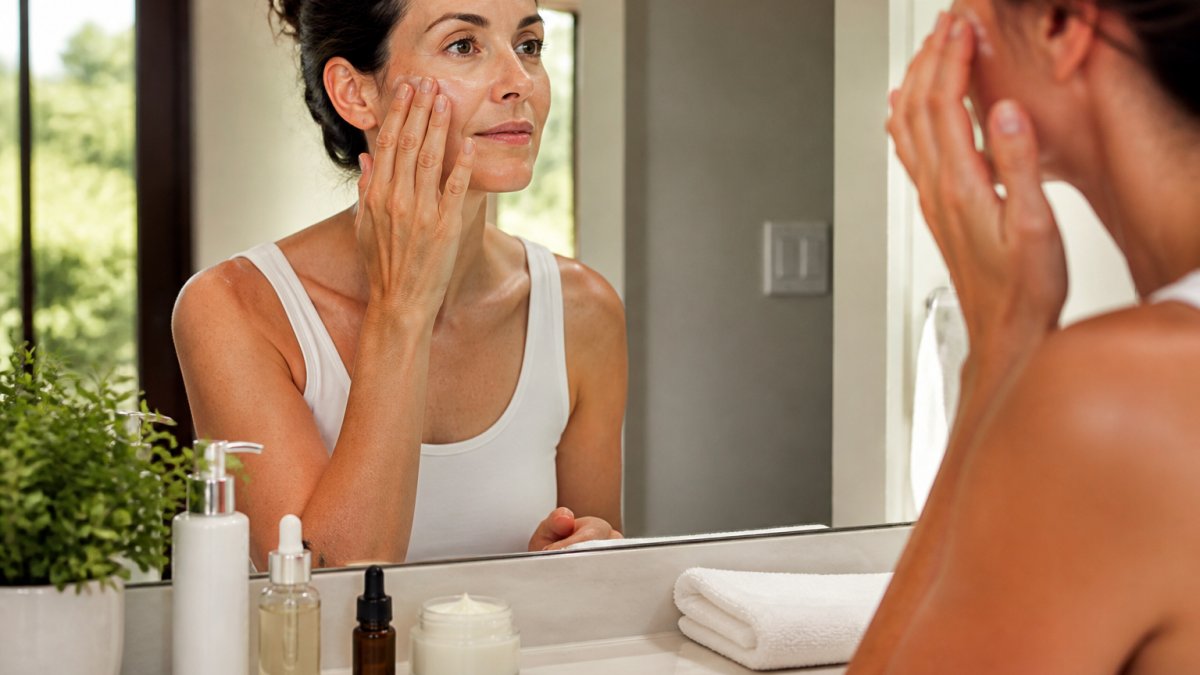
Beginners should start with a low retinol concentration two nights a week and build up slowly. A gradual introduction gives the skin barrier time to adjust and lowers the odds of redness, dryness, and peeling. What most guides leave out is the actual schedule, how much to apply, when to move up, and what to do when your skin pushes back.
Pick a starting concentration
Over-the-counter retinol products typically range from about 0.1% to 1%. For fine lines, a sensible starting point is the lowest end of that range, roughly 0.1% to 0.3%, especially if you have dry or sensitive skin. Higher percentages are not automatically better for fine lines; they mainly raise the risk of irritation, which can set your routine back weeks. If a product lists a retinol derivative (retinyl palmitate, retinyl propionate) rather than retinol itself, expect a gentler, slower effect.
The starting schedule
| Week | Frequency | Amount | Notes |
|---|---|---|---|
| 1-2 | 2 nights per week | Pea-sized for the whole face | Apply to dry skin after cleansing |
| 3-4 | 3 nights per week | Pea-sized | Add a moisturizer on top |
| 5-6 | Every other night | Pea-sized | Watch for flaking |
| 7-8 | 4-5 nights per week | Pea-sized | Hold here if irritation appears |
| 9+ | Nightly, if tolerated | Pea-sized | Maintain with daily sunscreen |
A pea-sized amount is roughly the size of a small pea, enough to cover the face in a thin layer, not a thick mask. More product does not speed results; it only increases irritation risk.
Application technique that reduces irritation
- Cleanse and pat dry. Wait a minute or two so skin is fully dry; damp skin increases penetration and stinging.
- Apply a thin layer over the face, avoiding the eyelids, corners of the nose, and lip lines where skin is thinner.
- Wait a few minutes, then follow with a plain moisturizer to buffer the barrier.
- Use sunscreen every morning. Retinol makes skin more sun-sensitive, and UV exposure undoes the fine-line benefits you are working for.
- Skip other actives at first. Hold off on strong acids, benzoyl peroxide, and exfoliants until your skin adjusts.
What to do when irritation appears
Mild flaking and tightness in the first few weeks are common. If redness or stinging lasts more than a week, reduce frequency, apply moisturizer first (the "buffer" method), or switch to a lower concentration. If you see swelling, hives, blistering, or a spreading rash, stop use and speak with a clinician.
For a fuller at-home plan, see how to reduce fine lines without surgery at home.
Book your consultation today →
Watch out: Applying retinol to damp skin or layering it with strong acids in the first weeks is the fastest way to trigger redness and peeling.
Retinol Side Effects: Irritation, Dryness, and When to Stop
The most common retinol side effects are dryness, redness, peeling, and mild stinging, especially in the first few weeks. These usually ease as the skin adjusts to consistent use.
Irritation is expected. An adverse reaction is not. Know the difference:
- Normal adjustment: light flaking, mild tightness, fading within days
- Slow down: steady redness or stinging that lasts more than a week
- Stop and call a professional: swelling, hives, blistering, or a rash that spreads
Sensitivity varies by skin type. Dry or sensitive skin often does better with a lower retinol concentration and a buffer layer of moisturizer. Oily skin may tolerate a slightly stronger formulation.
One safety note that matters: people who are pregnant or breastfeeding, or who take certain medications, should talk to a physician before starting retinol. A board-certified physician can review your skin and history and recommend what's appropriate.
Retinol vs Retinal for Wrinkles: Which One Should You Choose?
Retinal works faster than retinol for wrinkles because it is one step closer to retinoic acid, the active form. Retinol must convert to retinal and then to retinoic acid in the skin; retinal needs only one conversion step. That difference is why retinal products often produce visible change sooner, and why they can also irritate sooner. Retinol is gentler and better studied for beginners; retinal suits people whose skin already tolerates retinoids.
The conversion ladder, in plain terms
- Retinyl esters (retinyl palmitate, retinyl propionate): weakest, two or more conversion steps, best for very sensitive skin.
- Retinol: one to two conversion steps, the most studied cosmetic retinoid, widely available over the counter.
- Retinal (retinaldehyde): one conversion step, faster-acting, increasingly available over the counter.
- Retinoic acid (tretinoin): the active form, available by prescription only, strongest and most irritating.
Practical split
- Choose retinol if you are new to retinoids, have sensitive or dry skin, or want the gentlest start with the most evidence behind it.
- Choose retinal if you have used retinol without irritation and want a stronger over-the-counter option.
- Prescription retinoids remain the strongest option and require a physician.
Formulation and concentration matter as much as the ingredient
A 0.1% retinol in a well-formulated, encapsulated delivery system can be gentler and more stable than a 1% retinol in a poorly stabilized base. Encapsulation slows release, which can reduce irritation while maintaining efficacy. Packaging matters too: retinol degrades with light and air, so opaque, air-restrictive packaging protects potency. When comparing products, look at the concentration, the delivery system, and the packaging, not just the name on the label. Understanding how these structural elements interact provides a clearer picture of how specific serum benefits for aging manifest in the skin over time.
The evidence gap between cosmetic and prescription retinoids
Much of the strongest clinical evidence for fine lines and photoaging comes from prescription tretinoin, not from over-the-counter retinol. Cosmetic retinol has meaningful supporting evidence, but it is generally weaker and more variable because formulations and concentrations differ widely across products. That does not mean retinol does not work, it means expectations should match the evidence. A well-formulated retinol used consistently can improve the look of fine lines and texture over months; it is not a substitute for a prescription retinoid when a clinician recommends one.
To see how retinol fits among other options, read aesthetic solutions for aging skin.
Book a Skin Consultation with a Board-Certified Physician
Retinol is a solid starting point for fine lines, but a personalized plan beats guesswork. A board-certified physician can assess your skin, rule out reactions, and match a retinoid and routine to your skin type.
At Ideal Weight Loss & Cosmetic Center, Dr. Gina Nichols brings over two decades of experience and leads a team that builds customized plans for each patient. The practice offers advanced non-surgical cosmetic solutions with minimal downtime, tailored to your needs.
If you want to confirm credentials before booking, learn how to find a board certified physician. Ready to schedule? Book a skin consultation or contact the clinic to get started.
Frequently Asked Questions
How does retinol help reduce fine lines?
Retinol speeds up skin cell turnover, so dull, damaged surface cells are replaced faster with fresher ones. It also supports collagen production, the protein that keeps skin firm, and helps fade dark spots from sun damage. Over weeks of consistent use, this combination softens the appearance of fine lines, improves skin texture, and evens skin tone. Retinol is a cosmetic ingredient, not a prescription retinoid, so results are gradual and modest compared with retinoic acid.
How long does retinol take to work on fine lines?
Most people notice smoother skin texture within four to six weeks. Visible softening of fine lines and more even skin tone usually takes 12 weeks or longer, and collagen-related firming can take six months of consistent use. Results depend on retinol concentration, formulation, application frequency, and how faithfully you use sunscreen. Stopping retinol reverses the improvement over time, so it works best as an ongoing part of your routine.
What side effects can retinol cause, and when should I stop?
Common retinol side effects include dryness, redness, peeling, and mild stinging, especially in the first few weeks. These usually ease as your skin adjusts with gradual introduction and a moisturizer. Stop and contact a physician if you develop severe burning, swelling, blistering, or a rash that spreads, since those suggest an adverse reaction rather than normal irritation. Anyone pregnant, breastfeeding, or using prescription acne medication should check with a doctor before starting retinol.
Is retinol safe to use while breastfeeding?
Topical retinol absorbs only in small amounts, but most dermatologists and prescribing guidelines advise avoiding retinoids during pregnancy and often while breastfeeding, because safety data are limited. If you are nursing and want to address fine lines, ask a board-certified physician about alternatives such as sunscreen, moisturizer, and gentle exfoliation. A consultation is the safest way to build a routine that fits your situation.
Fine lines don't need a complicated routine, but they do need the right one. Ideal Weight Loss & Cosmetic Center combines board-certified medical expertise with personalized treatment plans and non-surgical cosmetic solutions built around your skin. Get started with Ideal Weight Loss & Cosmetic Center and build a plan that fits your skin and your goals.