 how-to
How to Reduce Fine Lines Without Surgery at Home
Table of Contents
- What You'll Need Before You Start
- The Best Ingredients for Fine Lines (and What to Skip)
- Step 1: Build a Daily Routine That Protects Your Skin Barrier
- Step 2: Add Exfoliation and Cell Turnover Boosters Safely
- Step 3: Support Collagen and Elastin From the Inside Out
- How Long Does It Take to See Results From Skincare?
- Non-Surgical Skin Rejuvenation Options Worth Knowing
- Common Mistakes to Avoid When Reducing Fine Lines at Home
- Frequently Asked Questions
Last Updated: October 1, 2026
What You'll Need Before You Start
Reducing fine lines without surgery at home starts with a simple truth: consistency beats intensity. A short routine you follow daily will outperform an aggressive one you abandon after two weeks. This guide from Ideal Weight Loss & Cosmetic Center covers the ingredients, habits, and timelines that actually change skin.
Before buying anything, gather a few basics:
- A gentle cleanser for morning and night
- A broad-spectrum sunscreen rated SPF 30 or higher
- One moisturizer with hyaluronic acid or ceramides
- One active treatment, such as a retinoid or vitamin C serum
- A wide-brimmed hat for daily sun cover
The Best Ingredients for Fine Lines (and What to Skip)
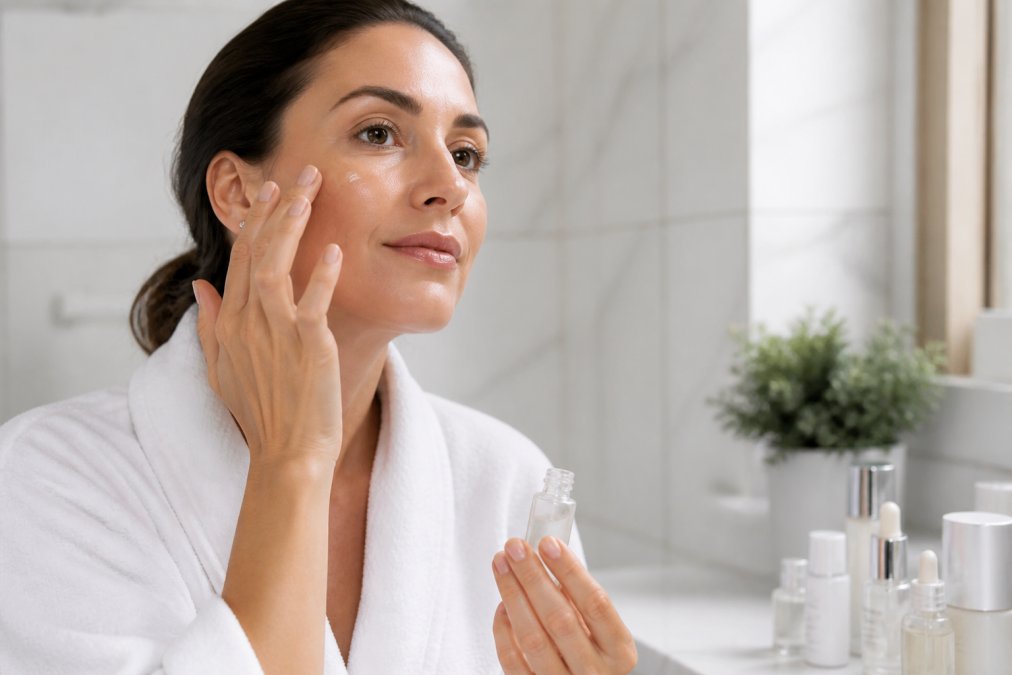
The best ingredients for fine lines are retinoids, peptides, vitamin C, and hyaluronic acid. Each targets a different part of the problem: cell turnover, collagen support, antioxidant defense, and hydration. Skip harsh scrubs, undiluted essential oils, and any product that stings on contact.
Retinoids and Vitamin A Derivatives
Retinoids are vitamin A derivatives that speed up cell turnover and support collagen production. They remain the most studied ingredient for fine lines and skin texture. Start with a low-strength option twice a week, then build up as your skin adjusts.
Peptides, Vitamin C, and Hyaluronic Acid
Peptides are short chains of amino acids that signal the skin to support collagen and elastin. Vitamin C is an antioxidant that helps defend against free radicals from sun and pollution. Hyaluronic acid draws water into the skin for immediate plumping.
Step 1: Build a Daily Routine That Protects Your Skin Barrier
A daily routine that protects the skin barrier is the foundation of any plan to reduce fine lines without surgery at home. The barrier is the outermost layer of skin, the stratum corneum, a brick-and-mortar arrangement of skin cells held together by lipids like ceramides, cholesterol, and fatty acids. When that lipid mortar breaks down, water escapes (a process called transepidermal water loss) and irritants get in.
Keep the order simple:
- Cleanse gently, morning and night
- Apply vitamin C serum in the morning
- Moisturize while skin is still slightly damp
- Finish with sunscreen every morning
- Use your retinoid at night, two to three times a week
Ingredient Layering Safety: What Not to Mix at Home
Most at-home routines fail not because the products are wrong, but because they are combined wrong. The general rule is thinnest to thickest: water-based serums first, then lotions, then creams, then occlusives. Wait about 60 seconds between layers so each one absorbs.
Some pairings, however, should never share a single sitting:
- Retinoid + benzoyl peroxide. Benzoyl peroxide can oxidize and deactivate many retinoids, so the two cancel each other out.
- Retinoid + alpha hydroxy acid (glycolic, lactic) or beta hydroxy acid (salicylic). Both accelerate cell turnover. Stacked, they routinely cause redness, peeling, and barrier damage. Alternate nights instead.
- Vitamin C (L-ascorbic acid) + retinoid. Different pH ranges, vitamin C works best around pH 3, retinoids near neutral, and together they irritate most skin. Use vitamin C in the morning, retinoid at night.
- Niacinamide + high-dose L-ascorbic acid. In some formulas this pairing can cause flushing. It is not dangerous, but if you flush, separate them.
- Multiple exfoliating acids in one routine. Glycolic plus salicylic plus lactic is a recipe for over-exfoliation, not faster results.
Sun Protection and UV Damage Prevention
Sun protection is the single most effective step for preventing fine lines. UV exposure breaks down collagen and elastin over time, a process called photoaging. Daily sunscreen with an SPF of 30 or higher blocks most of that damage. The American Academy of Dermatology recommends broad-spectrum, water-resistant sunscreen with SPF 30 or higher for daily use (the American Academy of Dermatology).
Hydration and Moisture Retention
Hydrated skin looks smoother because water plumps the outer layer. Drink water through the day, and use a moisturizer with ceramides or hyaluronic acid to hold moisture in. A humidifier at night helps in dry rooms.
Step 2: Add Exfoliation and Cell Turnover Boosters Safely
Exfoliation removes dead cells from the surface so newer skin can show through. Do it gently, once or twice a week. Chemical exfoliants like lactic or mandelic acid suit most skin types better than rough scrubs. Consistent renewal of the surface layer supports the deeper structural integrity required for improving skin elasticity through natural maintenance.
Step 3: Support Collagen and Elastin From the Inside Out
Collagen and elastin are the proteins that keep skin firm and springy. Collagen provides structural support; elastin lets skin snap back. Production drops with age, and no cream can fully reverse that. But daily habits can slow the decline.
Book your consultation today →
Focus on:
- Protein at each meal to supply amino acids
- Foods rich in vitamin C, like citrus and peppers
- Omega-3s from fish, walnuts, and flaxseed
- Seven to eight hours of sleep for cellular repair
- Not smoking, which speeds collagen breakdown
The Mechanical Side: Facial Muscle Training (Face Yoga)
Most at-home advice focuses on what you put on your skin. A less-discussed angle is what your facial muscles do all day. The face has dozens of small muscles that attach to skin rather than bone, and years of repeated expressions, squinting, frowning, smiling, create creases along the lines of pull. Over time, those creases can become etched even at rest.
- Forehead release. Place fingertips at the hairline and gently press upward while trying to frown. Hold five seconds, repeat five times.
- Eye-area lift. Place index fingers under the brow bone, look up, and gently resist the urge to squint. Hold five seconds, repeat five times.
- Cheek lift. Smile wide while pressing two fingers lightly against the cheekbone. Hold five seconds, repeat five times.
- Jaw and neck release. Tilt the head back slightly and press the tongue to the roof of the mouth. Hold five seconds, repeat five times.
Sleep Hygiene and Pillowcase Materials
Sleep position matters more than most people realize. Sleeping face-down or on one side presses skin into the pillow for hours, and the same creases form in the same place night after night. Over years, those can become "sleep lines" that persist after you wake up.
What helps:
- Back sleeping. It is the position least likely to press skin into a crease. If you cannot sleep on your back, alternate sides so no single area takes all the pressure.
- Pillowcase fabric. Cotton creates more friction than silk or satin. Silk and satin let skin glide rather than drag, which reduces mechanical stress on the surface.
- Pillowcase change frequency. Wash or swap pillowcases at least once a week. Oils, sweat, and residue from hair products accumulate and can irritate skin overnight.
- A silk or satin pillowcase is not a treatment. It is a friction-reduction tool. It will not erase existing lines, but it can reduce the daily wear that contributes to new ones.
Diet and Lifestyle: What Actually Moves the Needle
Diet and lifestyle support the topical routine; they do not replace it. The highest-leverage habits are the boring ones: enough protein, enough vitamin C, enough sleep, and no smoking. Smoking constricts blood vessels and degrades collagen and elastin, and it is one of the few lifestyle factors with a clear, well-documented link to earlier skin aging.
How Long Does It Take to See Results From Skincare?
Most people see early changes in skin texture within four to six weeks. Visible improvement in fine lines usually takes three to six months of consistent use. Retinoids work slowly because they change how skin cells behave over time.
| Timeframe | What You May Notice | Keep Doing |
|---|---|---|
| Weeks 1-2 | Mild dryness, slight flaking | Moisturize more, reduce retinoid frequency |
| Weeks 4-6 | Smoother skin texture | Hold the routine steady |
| Months 3-6 | Softer fine lines, more even tone | Continue daily sunscreen and actives |
| Beyond 6 months | Maintained results | Stay consistent, adjust as needed |
Non-Surgical Skin Rejuvenation Options Worth Knowing
Non-surgical skin rejuvenation includes in-office treatments that improve fine lines without surgery. Options range from laser resurfacing and microneedling to chemical peels and injectable treatments. These are performed by trained medical providers and typically need little to no downtime.
Common Mistakes to Avoid When Reducing Fine Lines at Home
The biggest mistake is doing too much at once. Adding three new actives in one week almost always backfires. Introduce one product at a time and give it two weeks before adding another.
Other common errors:
- Skipping sunscreen on cloudy days
- Using retinoids and acids on the same night
- Scrubbing skin hard to "smooth" it
- Expecting results in a week
- Ignoring sleep and diet
Frequently Asked Questions
What naturally reduces fine lines?
Research points to a few ingredients that support collagen production and skin barrier function. Retinoids (vitamin A derivatives), vitamin C, peptides, and hyaluronic acid are among the best ingredients for fine lines. Sun protection prevents further UV damage. Lifestyle habits like adequate sleep, not smoking, and staying hydrated also support skin elasticity. No single home remedy erases deep wrinkles, but consistent use of these ingredients can soften fine lines over time.
How long does it take to see results from skincare for fine lines?
Most dermatologists suggest giving a new routine 8 to 12 weeks before judging results. Retinoids may show early smoothing in 4 to 6 weeks, but collagen remodeling in the dermal layers takes longer. Hydrating ingredients like hyaluronic acid can plump skin within days, though that effect is temporary. Consistency matters more than any single product. If you see no change after three months of daily use, it may be time to consult a professional about non-surgical skin rejuvenation options.
Does anything really work for deep wrinkles at home?
At-home skincare can improve fine lines and skin texture, but deep wrinkles formed by years of photoaging and collagen loss are harder to reverse with topical products alone. Prescription-strength retinoids, professional chemical peels, microneedling, and laser treatments performed in a medical setting can address deeper lines. A board-certified physician can assess your skin and recommend whether a non-surgical option would give you better results than continuing with over-the-counter products.
How can I improve skin elasticity at home?
Skin elasticity depends on collagen and elastin, which decline with age and UV exposure. To support them at home: use sunscreen daily, apply a retinoid at night, eat a nutrient-rich diet with antioxidants, avoid smoking, and keep skin hydrated with moisturizers containing ceramides or hyaluronic acid. Facial exercises (face yoga) may help tone underlying muscles, though evidence is limited. For significant skin laxity, a medical evaluation can identify whether non-surgical skin rejuvenation options like radiofrequency or ultrasound therapy would help.
Fine lines respond to steady care, not quick fixes. Building a simple routine, protecting skin from the sun, and staying patient for a few months will do more than any single product. For deeper lines or skin laxity that at-home care can't reach, Ideal Weight Loss & Cosmetic Center offers non-surgical rejuvenation options, personalized treatment plans, and care led by board-certified physician Dr. Gina Nichols. Book your consultation today and get a plan built for your skin.