 listicle
Aesthetic Solutions for Aging Skin: 7 Proven Treatments
Table of Contents
- Understanding Aging Skin and Your Treatment Options
- Injectable Treatments: Botox and Dermal Fillers
- Non-Surgical Skin Rejuvenation with Advanced Technology
- Laser Skin Resurfacing Recovery Time and Results
- Professional Skincare and At-Home Treatments
- Cost of Aesthetic Skin Treatments and What to Expect
- Setting Realistic Expectations and Choosing Your Path
- Frequently Asked Questions
Last Updated: August 13, 2026
Understanding Aging Skin and Your Treatment Options
Aging skin involves complex biological changes: collagen production slows, elastin breaks down, and cell turnover decreases, resulting in visible wrinkles, fine lines, volume loss, and changes in skin texture and elasticity. Skin tone, genetics, sun exposure, and lifestyle all influence how quickly these changes appear and which aesthetic solutions work best for each person.
Modern aesthetic solutions have moved far beyond simple creams. Today's options range from minimally invasive injectables to advanced laser resurfacing, radiofrequency microneedling, and professional-grade skincare. Understanding which approach fits your skin type, goals, and lifestyle is the first step toward real results.
At Ideal Weight Loss & Cosmetic Center, led by board-certified physician Dr. Gina Nichols with over two decades of clinical experience, patients discover personalized aesthetic solutions tailored to their unique skin concerns. The center combines medical expertise with modern technology to address everything from dynamic wrinkles to structural volume loss, with minimal downtime and lasting confidence.
This guide covers the seven most effective aesthetic solutions for aging skin, from injectables to at-home devices, including what to expect, realistic timelines, and how to choose the right path forward.
Injectable Treatments: Botox and Dermal Fillers
Injectable treatments remain the fastest way to address dynamic wrinkles and volume loss through two distinct mechanisms: Botox relaxes the muscles that cause wrinkles, while dermal fillers restore lost volume and smooth deeper lines.
Botox Cosmetic targets muscle contractions that create frown lines, crow's feet, and forehead wrinkles by blocking nerve signals to facial muscles, preventing repetitive movements that deepen lines over time. Results appear gradually over 3-7 days and peak at two weeks, lasting 3-4 months. The procedure takes 10-15 minutes with no downtime. Mild bruising or swelling may occur but typically resolves within hours. Botox works best for dynamic wrinkles, lines that appear when you move your face.
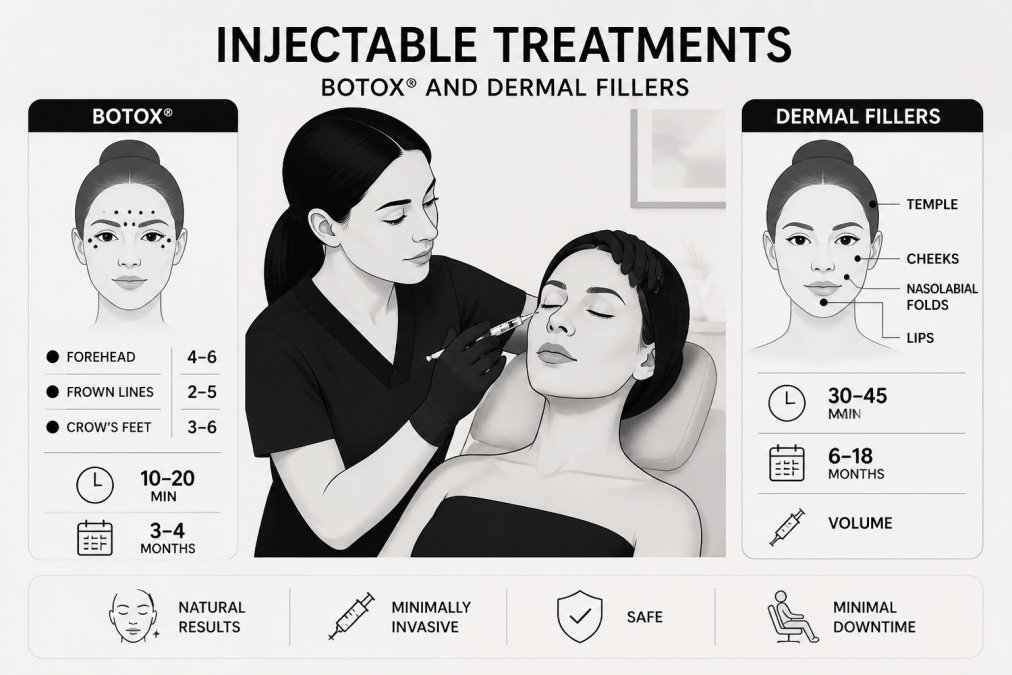
Dermal fillers using hyaluronic acid add volume directly to areas where collagen has depleted: cheeks, temples, lips, and nasolabial folds. Hyaluronic acid binds water molecules, plumping the skin from within and smoothing both static wrinkles and volume loss. Results are immediate, though slight swelling may mask the full effect for 24-48 hours. Most hyaluronic acid fillers last 6-12 months, with thicker formulations lasting longer than lighter products.
Combining both treatments addresses multiple aging mechanisms simultaneously: Botox prevents new wrinkles from forming while fillers restore volume that Botox alone cannot address. Common side effects include temporary bruising, swelling, or mild tenderness at injection sites. Serious complications are rare when administered by a qualified physician.
| Treatment | Targets | Duration | Best For | Downtime |
|---|---|---|---|---|
| Botox | Dynamic wrinkles, muscle movement | 3-4 months | Forehead, crow's feet, frown lines | Minimal |
| Dermal Fillers | Volume loss, static wrinkles | 6-12 months | Cheeks, lips, nasolabial folds | 24-48 hours |
Non-Surgical Skin Rejuvenation with Advanced Technology
For deeper structural changes, skin laxity, significant wrinkles, and loss of elasticity, non-surgical technologies stimulate collagen production and remodel skin from within. Two leading options dominate this category: radiofrequency microneedling and ultrasound lifting.
Morpheus8: Radiofrequency Microneedling for Deep Remodeling
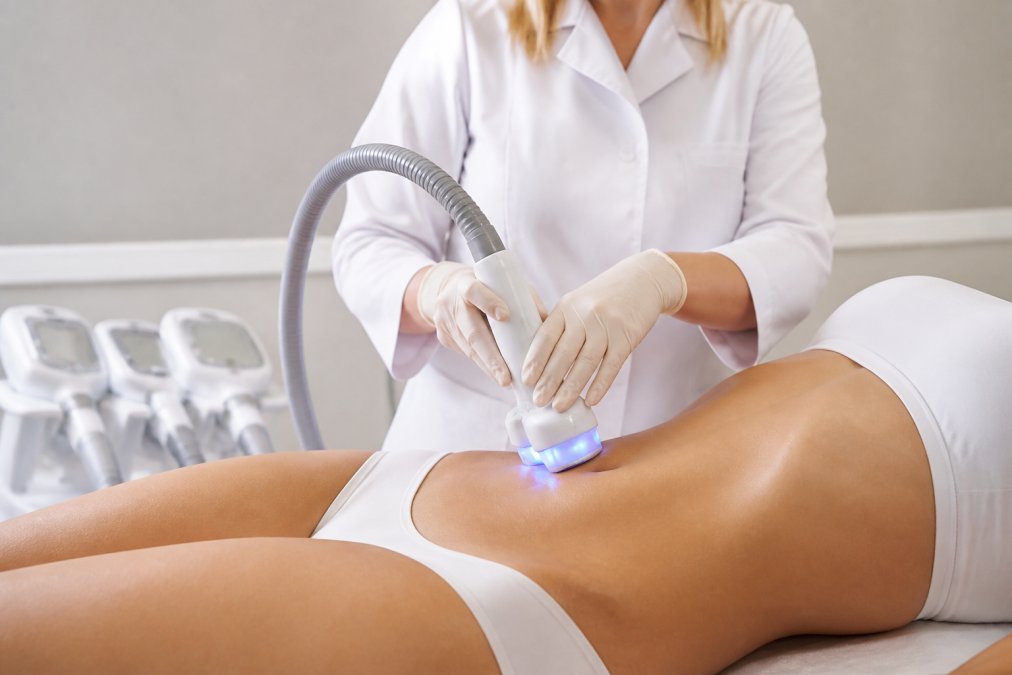
Morpheus8 combines microneedling with radiofrequency energy: microneedling creates controlled micro-injuries that trigger collagen induction, while radiofrequency heats deeper dermal and subdermal layers to stimulate collagen remodeling and tighten skin. This dual approach addresses wrinkles, skin texture, skin laxity, and mild subdermal fat simultaneously.
The device uses fractional radiofrequency, treating only a portion of skin in each pass while leaving surrounding tissue intact for faster healing. Treatment depth is adjustable for different areas and skin types. The face, neck, décolletage, and body can all be treated.
Most patients need 3-4 sessions spaced 4-6 weeks apart for optimal results. Expect 3-5 days of redness and mild swelling, with full healing in 1-2 weeks. Results improve over 2-3 months as collagen continues to remodel. Morpheus8 works particularly well for patients with mild to moderate skin laxity who want significant improvement without surgery.
Ultherapy: Ultrasound Lifting Without Surgery
Ultherapy uses microfocused ultrasound to stimulate collagen production at precise depths in the dermis and subdermal layer, targeting the foundational layers that determine skin tightness and lift. The ultrasound energy creates controlled thermal injury at specific depths, triggering the body's natural healing response and collagen synthesis.
Results aren't immediate; collagen remodeling takes time. Most patients see gradual improvement over 2-3 months, with continued improvement for up to six months. Ultherapy requires only one treatment for many patients, though some benefit from a second session after 12 months. The procedure is uncomfortable for some patients, the ultrasound sensation can feel like brief, intense heat, but there's no downtime.
Laser Skin Resurfacing Recovery Time and Results
Laser skin resurfacing uses concentrated light energy to remove damaged skin layers and stimulate collagen production. The technology divides into ablative lasers that remove skin tissue and non-ablative lasers that heat skin without removing it.
Ablative laser resurfacing produces dramatic results for wrinkles, age spots, and skin texture by vaporizing the epidermis and upper dermis, triggering intense collagen remodeling. Recovery is substantial: expect 7-14 days of oozing, crusting, and peeling, with full healing taking 3-4 weeks and redness persisting for months in some cases. Strict sun protection is mandatory during healing.
Non-ablative laser resurfacing heats the dermis without removing skin, creating less dramatic but still meaningful improvement with minimal recovery, mild redness for a few hours to days. Multiple sessions (4-6) are typically needed, with results developing gradually over weeks and months.
Fractional lasers split the beam into thousands of tiny columns, treating only a fraction of skin in each pass. This approach balances effectiveness with recovery time. The tradeoff is predictable: more downtime equals faster, more dramatic results. Darker skin tones require careful laser selection and technique, as some lasers increase hyperpigmentation risk in melanin-rich skin.
Professional Skincare and At-Home Treatments
Professional-grade skincare and at-home devices maintain and extend results between treatments through different mechanisms: chemical exfoliation accelerates cellular turnover, retinoids stimulate collagen production, vitamin C provides antioxidant protection, and microcurrent devices tone facial muscles.
Book your consultation today →
Professional treatments like chemical peels and HydraFacial provide deeper exfoliation than at-home products. Chemical peels use alpha hydroxy acids, beta hydroxy acids, or stronger agents like TCA to dissolve damaged skin layers, addressing fine lines, hyperpigmentation, and uneven skin texture. HydraFacial combines cleansing, exfoliation, extraction, and hydration in a single 30-minute session with immediate results and no downtime.
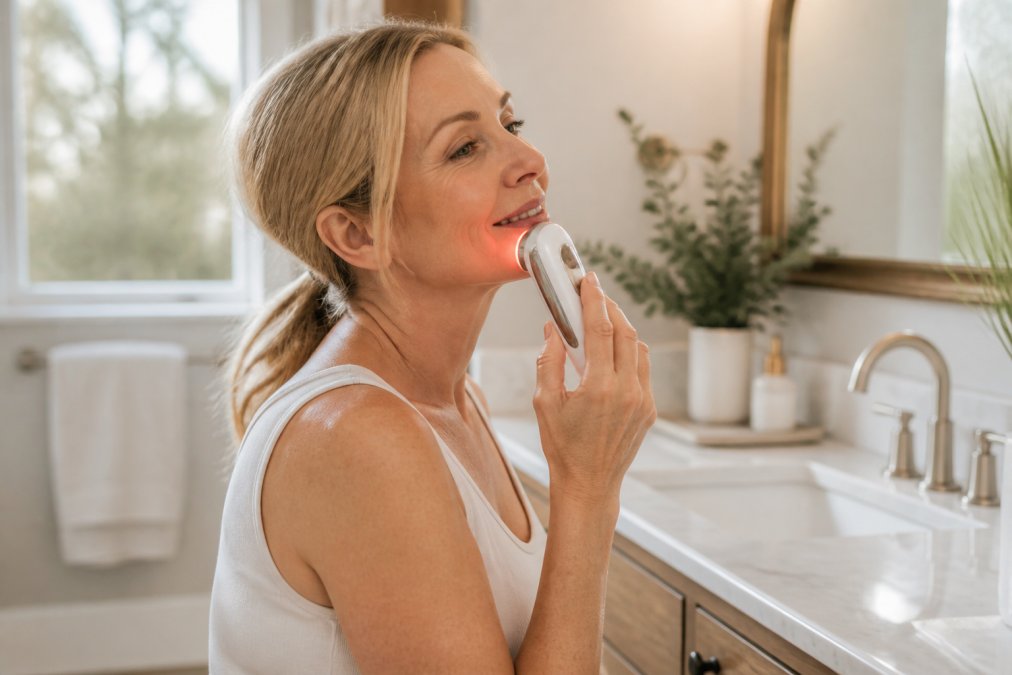
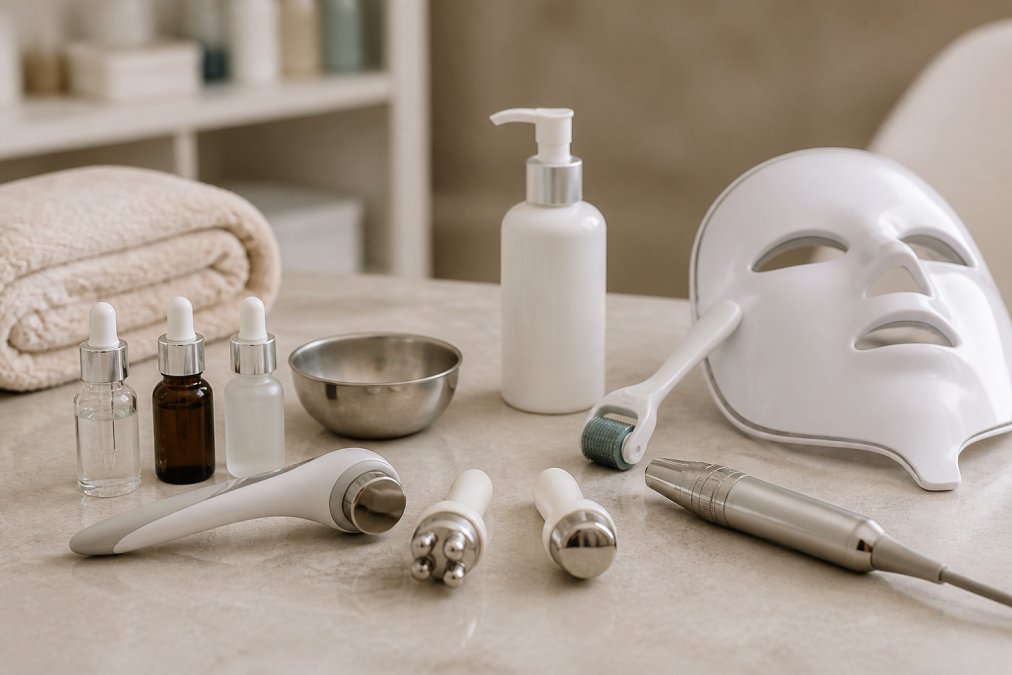
At-home devices like NuFACE Trinity+ and FOREO BEAR use low-level electrical current to stimulate facial muscles, improving tone and contour. Consistent daily use shows results over 4-8 weeks. These devices work best as maintenance tools, not primary treatments for significant aging concerns.
Topical skincare forms the foundation of any anti-aging regimen. Retinoids increase cellular turnover and stimulate collagen production. Vitamin C serums provide antioxidant protection and improve skin brightness. Hyaluronic acid hydrates and plumps skin. Alpha hydroxy acids gently exfoliate. Results take 6-12 weeks of regular use. The Obagi Nu-Derm System represents physician-dispensed skincare designed for comprehensive skin transformation, addressing hyperpigmentation, melasma, and aging signs through a multi-step protocol with prescription-strength ingredients.
Professional skincare and at-home treatments are most effective when layered with injectables or advanced technologies, addressing surface concerns while deeper treatments work on structural aging.
Cost of Aesthetic Skin Treatments and What to Expect
Aesthetic solutions for aging skin vary dramatically in cost, reflecting differences in technology, practitioner expertise, and treatment complexity. Injectable treatments generally represent the most accessible entry point, with a single Botox session costing less than most advanced technologies. Dermal fillers cost more per session but address concerns Botox cannot.
Advanced technologies like Morpheus8 and Ultherapy require larger upfront investment but deliver longer-lasting results. Morpheus8 typically requires 3-4 sessions for optimal outcomes, while Ultherapy may require only one. Laser skin resurfacing costs vary based on laser type, treatment area, and depth. Professional skincare treatments like chemical peels and HydraFacial cost significantly less than injectables or advanced technologies, making them accessible for regular maintenance.
Ideal Weight Loss & Cosmetic Center offers personalized treatment plans that combine multiple modalities for comprehensive results, focusing on what actually addresses your specific concerns rather than recommending the most expensive option. Pricing depends on the specific treatments chosen and the personalized plan developed during your consultation. We encourage you to book a consultation to discuss your individual needs and receive a tailored estimate.
Setting Realistic Expectations and Choosing Your Path
The most important step before any aesthetic treatment is honest expectation-setting. Aesthetic solutions can dramatically improve appearance but cannot stop aging or create outcomes that defy your natural features. The goal is enhancement, not transformation into someone else.
Realistic expectations depend on your starting point, skin type and tone, treatment choice, and commitment to maintenance. Someone with mild fine lines will see more dramatic percentage improvement from Botox than someone with deep wrinkles. Darker skin tones need treatments and techniques specifically suited to their skin's characteristics. Your skin type matters profoundly: dry skin responds differently to chemical exfoliation than oily skin, and sensitive skin may react poorly to certain ingredients or technologies.
The psychological component is real. The best outcomes come from patients who understand what a specific treatment can and cannot do, who have realistic timelines for results, and who commit to maintenance. Starting with consultation is essential. A board-certified physician can assess your concerns, explain which treatments address them, discuss realistic outcomes, and create a prioritized plan.
The timeline for results varies dramatically: Botox shows improvement within days but peaks at two weeks; dermal fillers show immediate results; Morpheus8 and laser resurfacing show gradual improvement over 2-3 months; Ultherapy takes even longer; at-home devices require 4-8 weeks of consistent use; topical skincare takes 6-12 weeks. Maintenance is the reality of aesthetic medicine: Botox and fillers require repeat treatments, advanced technologies may need annual touch-ups, and laser resurfacing results fade over time.
Aesthetic solutions for aging skin have evolved into a sophisticated medical practice combining technology, artistry, and personalized medicine. The right choice depends on your specific concerns, skin type, timeline, and commitment to maintenance. Rather than chasing the most aggressive or expensive option, the most successful patients work with a board-certified physician to create a strategic plan addressing their actual needs.
At Ideal Weight Loss & Cosmetic Center, Dr. Gina Nichols and her team assess each patient's unique aging patterns and recommend a customized combination of aesthetic solutions, whether that's injectables, advanced technologies like Morpheus8 or Ultherapy, professional skincare treatments, or a layered approach combining multiple modalities. The center's philosophy prioritizes realistic expectations, minimal downtime, and lasting confidence through medically supervised, personalized care.
Book your consultation today to discover which aesthetic solutions for aging skin align with your goals and lifestyle.
Frequently Asked Questions
What is the best aesthetic solution for aging skin?
The best aesthetic solution depends on your specific concerns and skin type. Injectable treatments like Botox work well for dynamic wrinkles caused by muscle movement, while dermal fillers restore lost volume. For skin laxity and texture issues, non-surgical skin rejuvenation options like Morpheus8 or Ultherapy provide more comprehensive results. A board-certified physician can assess your skin during a consultation and recommend the most effective approach for your goals.
How long does laser skin resurfacing recovery time typically last?
Recovery time varies by laser type and intensity. Non-ablative fractional laser treatments usually require 3-7 days of mild redness and peeling, allowing you to return to normal activities quickly. More intensive ablative procedures may involve 1-2 weeks of significant downtime with peeling and sensitivity. Your provider will discuss specific recovery expectations based on the treatment depth and your skin condition before scheduling.
What is the cost of aesthetic skin treatments?
Cost varies widely depending on the treatment type and area being addressed. Injectable treatments typically range from several hundred to over a thousand dollars per session, while advanced non-surgical procedures like Morpheus8 or Ultherapy may cost more per treatment but can deliver longer-lasting results. Professional skincare systems and at-home devices offer more affordable entry points. Contact a qualified provider for a personalized quote based on your specific needs.
Are non-surgical skin rejuvenation treatments permanent?
Most non-surgical skin rejuvenation treatments provide long-lasting but not permanent results. Treatments like Morpheus8 and Ultherapy stimulate collagen production, which continues improving skin for months after treatment. Results typically last 12-18 months or longer, depending on the procedure and your skin's natural aging process. Maintenance treatments and a consistent skincare routine help extend results and maintain improvements over time.
How do I know which aesthetic treatment is right for my skin type?
Different skin types respond differently to various treatments. Darker skin tones require careful consideration with certain laser treatments to minimize hyperpigmentation risk, while sensitive skin may benefit from gentler options like HydraFacial or topical vitamin C serums. A board-certified physician will evaluate your skin type, tone, texture, and specific concerns during a consultation to recommend treatments with the best safety profile and efficacy for your unique needs.