 how-to
How Do You Choose the Right Chemical Exfoliant?
Last Updated: October 29, 2026
Quick Summary
To choose the right chemical exfoliant, match the acid to your skin type and main skin concern: oily or acne-prone skin does best with a BHA like salicylic acid, while dry skin suits lactic acid, an AHA. Then start with one application per week and build up slowly.
- Dry skin usually tolerates gentler acids, while oily skin often handles stronger ones.
- Glycolic acid is the strongest and fastest-acting AHA; lactic acid is gentler for dry skin.
- A product at pH 5 or above is mostly a moisturizer with an acid name on the label.
- Start with one application per week, then build to two or three if skin stays calm.
- Do not mix an acid with a retinoid on the same night or layer two acids together.
Table of Contents
- Start With Your Skin Type and Skin Concern
- Chemical vs. Physical Exfoliation: What the Difference Means for Your Routine
- Types of Chemical Exfoliants: AHAs, BHAs, and Enzyme Exfoliants
- AHA vs BHA for Beginners: Which One Should You Start With?
- How Concentration, pH, and Product Format Change the Result
- How Often to Use Chemical Exfoliants (and How to Introduce Them Gradually)
- Signs of Over-Exfoliation and Sensitive-Skin Considerations
- Sun Protection, Ingredient Compatibility, and Post-Exfoliation Care
- Frequently Asked Questions
Start With Your Skin Type and Skin Concern
The fastest way to choose the right chemical exfoliant is to match it to your skin type and your main skin concern.
Chemical exfoliation is the use of an acid or enzyme ingredient to loosen the bonds between dead skin cells so they shed evenly. It differs from scrubbing because there is no grit involved.
Two questions decide almost everything:
- What is your skin type? Dry, oily, combination, or normal.
- What is your main skin concern? Acne, clogged pores, dark spots, or uneven tone.
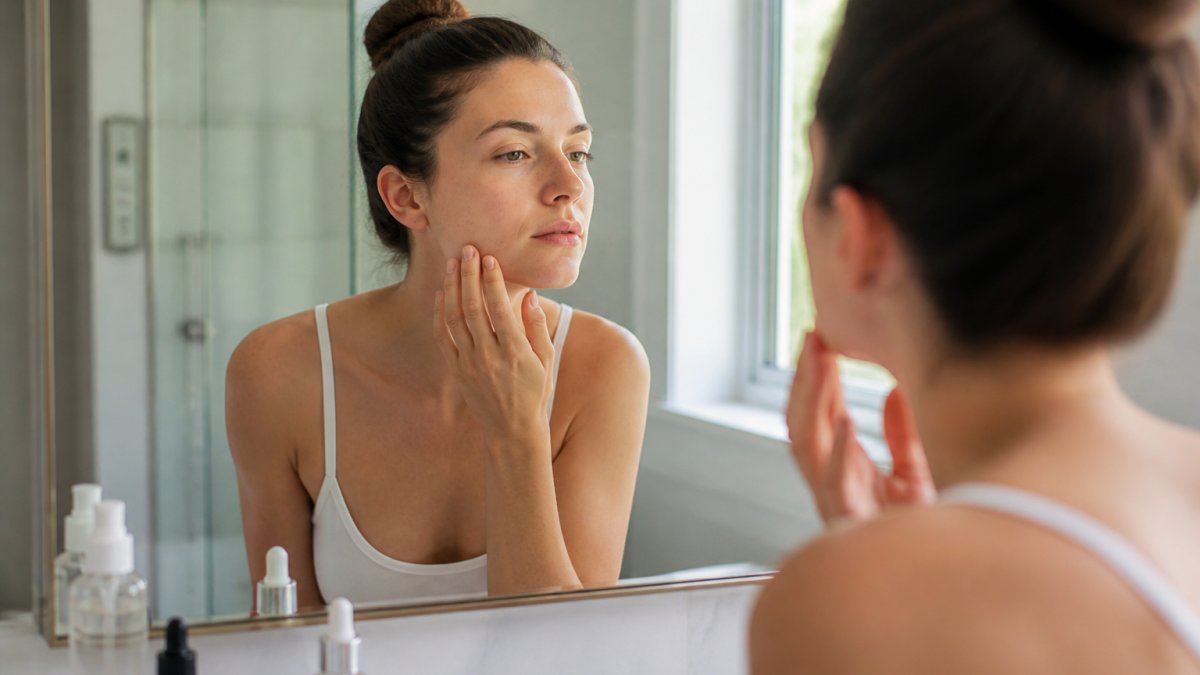
Reading Your Skin Type: Dry, Oily, Combination, and Normal
Skin type tells you how much exfoliation your barrier can handle. Dry skin usually tolerates gentler acids. Oily skin often handles stronger ones.
- Dry skin: tight, flaky, or rough patches. Start with lactic acid.
- Oily skin: shine by midday, visible pores. BHA is often a better fit.
- Combination skin: oily T-zone, dry cheeks. Use a mild formula and spot-apply.
A common mistake is treating combination skin as oily everywhere, which leads to over-exfoliating the cheeks.
Matching Skin Concerns: Acne, Clogged Pores, Dark Spots, and Uneven Tone
Skin concern narrows the choice further. Acne and clogged pores point toward oil-soluble acids. Dark spots and uneven tone point toward brighter, water-soluble options.
- Acne and clogged pores: salicylic acid, a BHA.
- Post-acne spots and dark spots: glycolic or lactic acid, both AHAs.
- Uneven skin tone and sun damage: lactic acid, which is gentler.
One product rarely solves every concern. Pick the concern that bothers you most and start there.
Chemical vs. Physical Exfoliation: What the Difference Means for Your Routine
Chemical exfoliation dissolves dead skin; physical exfoliation scrubs it away with grit or a tool.
Physical options include:
- Exfoliating scrubs with sugar, salt, or beads
- Cleansing brushes and sponges
- Polishing cloths
Chemical options include:
- Exfoliating cleansers you rinse off
- Leave-on toners and serums
- Peels applied in a clinic
Many people find a mix works best: a gentle chemical exfoliant two or three nights a week, with no scrubbing on the same day. Doubling up is where irritation starts.
The American Academy of Dermatology's guidance on face washing and exfoliation makes the same point: gentle beats aggressive for most skin.
Types of Chemical Exfoliants: AHAs, BHAs, and Enzyme Exfoliants
Chemical exfoliants fall into three families: alpha hydroxy acids, beta hydroxy acids, and enzymes. Readers who want a professional option can explore the clinic's chemical peel service. Each works differently, and each suits a different skin type.
Here is how they compare:
| Type | Examples | Best For | Watch Out For |
|---|---|---|---|
| AHA | Glycolic, lactic | Dry skin, dark spots, dullness | Stinging on sensitive skin |
| BHA | Salicylic acid | Oily skin, acne, clogged pores | Dryness if overused |
| Enzyme | Papaya, pumpkin, pineapple | Sensitive skin, first-timers | Weaker, slower results |
Alpha Hydroxy Acids (AHAs): Glycolic and Lactic Acid
AHAs are water-soluble acids that loosen dead cells on the surface. Glycolic acid is the strongest and fastest-acting. Lactic acid is larger and gentler, so it suits dry or sensitive skin better.
- Glycolic acid: best for normal and oily skin, uneven tone, and sun damage.
- Lactic acid: best for dry skin and first-time users.
The trade-off is real. Glycolic gives faster results and more irritation. Lactic gives slower results with less risk.
Beta Hydroxy Acids (BHAs) and Fruit Enzymes
BHAs are oil-soluble, so they get inside pores and clear out oil and debris. Salicylic acid is the standard BHA. It suits oily and acne-prone skin well.
Fruit enzymes, including papaya and pumpkin, digest dead skin without acid. They are the gentlest option and a reasonable starting point for sensitive skin. The catch: results take longer.
AHA vs BHA for Beginners: Which One Should You Start With?
Beginners should start with a BHA if they have oily or acne-prone skin, and with lactic acid, an AHA, if their skin is dry.
Book your consultation today →
- Oily, breakout-prone skin: start with BHA.
- Dry, dull skin: start with lactic acid.
- Sensitive skin: start with an enzyme exfoliant.
A common mistake is starting with the strongest glycolic product on the shelf. Start low and build up; a damaged barrier cannot wait.
For a deeper look at pairing exfoliants with other actives, see Do Retinol's Benefits for Fine Lines Justify the Hype?.
How Concentration, pH, and Product Format Change the Result
Concentration and pH decide how strong a chemical exfoliant actually is, and most shoppers ignore pH entirely. If you only read the percentage on the front of the box, you are comparing half the story.
- Concentration: the percentage of active acid in the formula.
- pH: how acidic the product is. Lower pH means more free acid and more exfoliating power. A product at pH 5 or above is mostly a moisturizer with an acid name on the label.
Product format matters as much as the numbers because contact time drives results:
- Rinse-off cleansers: mildest. Short contact time means even a 2% salicylic cleanser is gentler than a 2% leave-on serum.
- Toners and pads: moderate. Often lower percentages, but the pad format encourages daily use, which compounds over time.
- Leave-on serums and liquids: strongest per application. A leave-on product with the same acid percentage will feel stronger than a cleanser because contact time is longer.
Match the format to your tolerance, not just the ingredient. A first-time user is usually better served by a 5% lactic leave-on used twice a week than a 10% glycolic serum used nightly.
How Often to Use Chemical Exfoliants (and How to Introduce Them Gradually)
Start with one application per week, then build to two or three if your skin stays calm. More is not better. Most irritation comes from frequency, not from the product itself, a 5% lactic acid used nightly will irritate more skin than a 10% glycolic used twice a week.
Patch test before your first full application
Watch for burning, redness, or swelling. A brief tingle that fades within a minute or two is normal for AHAs; stinging that persists, or redness that is still visible the next morning, means the product is too strong for your skin right now. Repeat the patch test on a second spot before using it on your whole face.
A gradual schedule by product type
The right ramp depends on what you bought. Use this as a starting framework:
- Rinse-off exfoliating cleanser: start every other night. If skin stays calm for two weeks, move to nightly. Because contact time is short, most people tolerate this step fastest.
- Leave-on AHA or BHA serum, 5% or less: apply once a week for two weeks. If there is no persistent stinging or redness, add a second night in week three, then a third night in week five. Cap at three nights a week unless a clinician advises otherwise.
- Leave-on AHA above 5% or any 2% BHA: apply once a week for three to four weeks before adding a second night. These are the products most likely to cause a reaction in week two, when users feel confident and speed up.
- Enzyme exfoliants: gentlest of all. Most people can start twice a week and build to three or four if skin stays comfortable.
What "calm" actually looks like
Before you increase frequency, check for these signs that your skin is tolerating the product:
- No stinging when you apply water or a plain moisturizer the next morning.
- No redness that lasts past an hour after application.
- No new flaking, tightness, or breakouts in the days after use.
If any of those appear, drop back to the previous frequency for two weeks before trying again. If irritation returns at the lower frequency, the product is too strong, switch to a gentler acid or a rinse-off format rather than pushing through.
When to pause entirely
Stop the exfoliant for a week and use a plain moisturizer if you notice stinging with water, redness lasting more than a day, flaking without a peel, or sensitivity to products you normally tolerate. Resume at half your previous frequency once skin feels normal for a full week. People using prescription retinoids, treating rosacea or eczema, or who are pregnant should check with a clinician before starting any acid, and should not use the ramp-up schedule above without that guidance.
Signs of Over-Exfoliation and Sensitive-Skin Considerations
Over-exfoliation shows up as stinging, redness, tightness, flaking, or breakouts that appear after a product that used to feel fine. Stop the exfoliant for a week and use a plain moisturizer.
- Stinging when you apply water or moisturizer
- Redness that lasts more than a day
- Flaking or peeling without a peel
Sensitive skin needs a gentler path. Enzyme exfoliants and lactic acid are better first choices than glycolic. Readers whose skin is too sensitive for at-home exfoliants can explore proven in-office treatments for aging skin.
Sun Protection, Ingredient Compatibility, and Post-Exfoliation Care
Exfoliated skin is more vulnerable to sun damage, so daily sunscreen is not optional. AHAs in particular can increase sun sensitivity (the FDA). Broad-spectrum SPF 30 or higher, every morning, is the baseline.
Ingredient compatibility matters too:
- Do not mix an acid with a retinoid on the same night.
- Do not layer two different acids in one routine.
- Do use a simple moisturizer after exfoliating.
People using prescription treatments, including tretinoin, should check with their clinician before adding an exfoliant. General guidance from the FDA's consumer information on cosmetic safety is a useful starting point, but a clinician's advice should come first.
Choosing the right chemical exfoliant comes down to matching one product to your skin type and your main concern, then starting slow.
Frequently Asked Questions
Which is the best chemical exfoliator for sensitive skin?
For sensitive skin, start with a gentle lactic acid or a low-strength mandelic acid product rather than a strong glycolic acid. These larger-molecule AHAs tend to feel less harsh. Use it once a week at first, patch test on your jawline for 24 hours, and stop if you notice stinging, redness, or flaking. A mild enzyme exfoliant in a cleanser is another low-risk option. If your skin reacts to several products, a consultation can help identify what your skin can tolerate.
What is the difference between AHA and BHA exfoliants?
AHAs, such as glycolic and lactic acid, work on the skin's surface and suit concerns like uneven skin tone and dark spots. BHAs, mainly salicylic acid, are oil-soluble and get into clogged pores, which makes them a better fit for oily and acne-prone skin. For beginners, the AHA vs BHA choice usually comes down to whether your main issue is texture and tone or breakouts and congestion. Some routines use both on different days.
How often should you use a chemical exfoliant?
Most people do well starting once or twice a week, then building to two or three times weekly if the skin stays calm. Daily use suits some well-formulated leave-on products, but only after your skin has adjusted. Watch for stinging, tightness, or flaking, which are signs of over-exfoliation. If those appear, cut back to once a week and pause other active ingredients until the skin settles. Frequency depends on concentration, pH, and your skin's sensitivity.
What should you never mix with glycolic acid?
Avoid layering glycolic acid with retinoids, benzoyl peroxide, or other strong acids in the same routine, because the combination raises the risk of irritation. If you use a prescription retinoid, alternate nights rather than applying both together. Skip physical scrubs on the same day, and keep the rest of the routine simple with a gentle cleanser and moisturizer. Always use broad-spectrum sunscreen, since exfoliated skin is more vulnerable to sun damage.