 how-to
Strength Training with Medical Weight Loss
Table of Contents
- Why Strength Training Matters for Medical Weight Loss
- Preserving Muscle During Weight Loss: Your Top Priority
- How Often Should You Strength Train? Setting Your Frequency
- A Beginner Strength Training Plan for Weight Loss
- Exercise While Taking GLP-1 Medication: Key Adjustments
- Nutrition and Protein Targets to Support Your Workouts
- Tracking Progress Beyond the Scale
- Frequently Asked Questions
Last Updated: October 13, 2026
Why Strength Training Matters for Medical Weight Loss
Combining strength training with medical weight loss protects the muscle that rapid weight loss tends to strip away. That single idea drives every recommendation in this guide from Ideal Weight Loss & Cosmetic Center. Muscle is your body's most metabolically active tissue, and losing it slows the very metabolism you're trying to speed up.
Weight-loss medication and supervised programs can drop pounds quickly. Some of that weight comes from fat. Some comes from muscle. Resistance training tips the ratio in your favor.
A common mistake is treating exercise as optional once the scale starts moving. In practice, the people who keep their results are the ones lifting while they lose.
Preserving Muscle During Weight Loss: Your Top Priority
Muscle preservation during weight loss means holding onto lean mass while fat comes off. That protects strength, physical function, and long-term results.
Rapid weight loss without resistance training can cost you lean mass along with fat. The fix is straightforward:
- Lift weights two to three times per week
- Eat enough protein daily
- Lose weight at a steady, supervised pace
- Track strength, not just pounds
Strength training and body composition move together. Fewer pounds of muscle means fewer calories burned at rest.
How Often Should You Strength Train? Setting Your Frequency
Strength training frequency for weight loss lands at two to three sessions per week for most beginners. That's enough to signal your body to keep muscle without overwhelming recovery.
Start at two sessions. Add a third once the first two feel routine. Space them out, with at least one rest day between.
- Beginners: 2 sessions per week, full body
- Intermediate: 3 sessions per week
- Advanced: 3 to 4 sessions, split by muscle group
Consistency beats intensity. Two steady sessions you never skip outperform five you dread.
A Beginner Strength Training Plan for Weight Loss
A beginner strength training plan for weight loss pairs simple full-body movements with gradual increases in load. The goal is habit first, then heavier weight over time. What follows is a concrete eight-week template you can hand to a clinician or trainer for sign-off before you start.
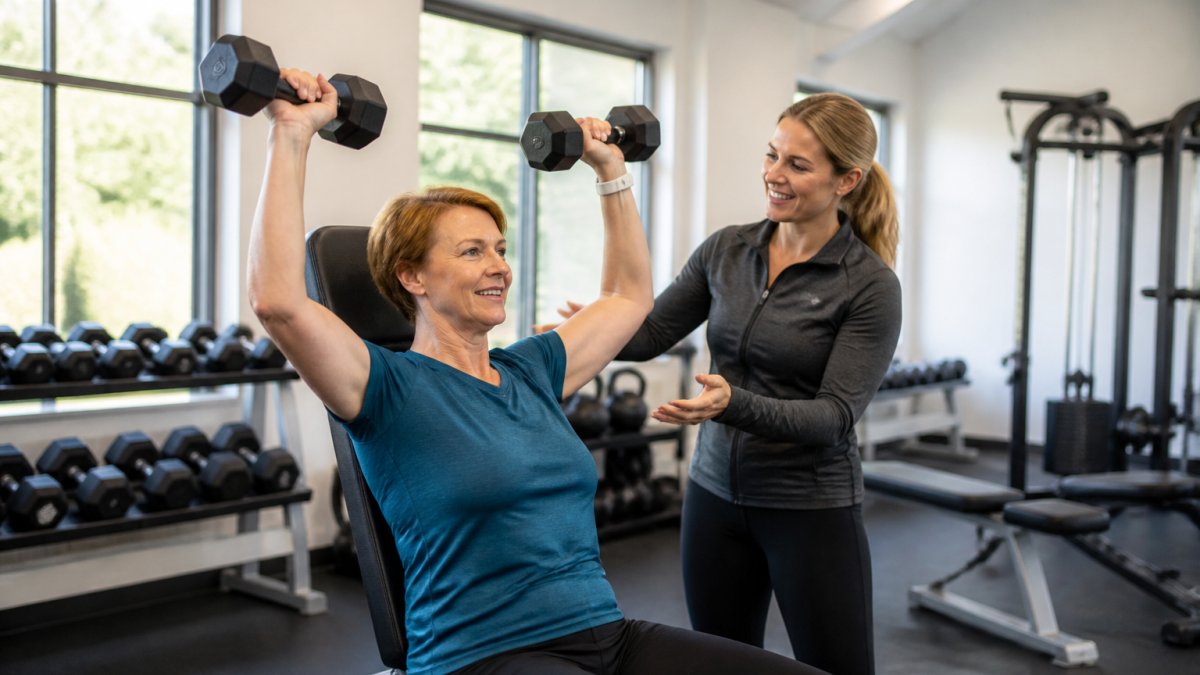
What You'll Need: A pair of light dumbbells (start around 5-10 lb each), a second heavier pair or adjustable set, resistance bands, a sturdy chair, comfortable shoes, and water. Total time per session: about 30 to 40 minutes, including a 5-minute warm-up and 5-minute cool-down.
The Five Movement Patterns
Every session covers one exercise from each pattern. Rotate variations every few weeks to keep progressing without changing the structure:
- Squat: chair sit-to-stand, goblet squat, or bodyweight squat
- Push: wall push-up, incline push-up, or dumbbell floor press
- Pull: band row, one-arm dumbbell row, or seated band pulldown
- Hinge: hip bridge, Romanian deadlift with light dumbbells, or band pull-through
- Carry: suitcase carry, farmer's carry, or a standing band hold
Weeks 1-2: Building the Habit
Two full-body sessions per week, spaced at least two days apart (for example, Monday and Thursday).
- Sets and reps: 2 sets of 8-12 reps per exercise
- Rest: 60-90 seconds between sets
- Load: light enough that you could do 3-4 more reps at the end of each set
- Tempo: 2 seconds down, 1 second up, controlled, never rushed
Expected Result: You finish each session feeling capable, not wrecked. Mild soreness for a day is normal; sharp pain is not.
Weeks 3-4: Adding Load
Once you can complete all reps with clean form and the last rep feels easy, add load rather than reps first.
- Sets and reps: 3 sets of 8-12 reps
- Rest: 60-90 seconds
- Load: add roughly 5%-10% to the dumbbell or move up one band resistance
- Rule of thumb: if you can't finish the last rep with good form, the weight is too heavy
Weeks 5-8: Progressive Overload
Now push a bit harder. Add weight, add a rep, or slow the movement down, but change only one variable at a time so you can tell what's working.
- Sets and reps: 3 sets of 8-12 reps, adding 1-2 reps per week until you hit 12, then increase load and drop back to 8
- Rest: 90 seconds on the heavier compound moves, 60 seconds on carries and isolation work
- Frequency: keep 3 sessions per week if recovery allows; otherwise stay at 2
- Deload: every 4th week, cut sets by one-third to let joints and connective tissue catch up
A Sample Week
- Monday: chair sit-to-stand, incline push-up, one-arm dumbbell row, hip bridge, suitcase carry
- Wednesday: rest or a 20-30 minute walk
- Thursday: goblet squat, dumbbell floor press, band row, Romanian deadlift, farmer's carry
- Saturday: rest or light mobility work
Adapting the Plan
- Older adults: start with 1 set of 8 reps and add a set only when the first feels easy; use a chair for support on squats and hinges
- Mobility limitations: swap standing moves for seated versions, seated band rows, seated presses, and chair-based sit-to-stands all count
- Very low appetite days: shorten the session to the five main lifts and skip the extra sets rather than skipping the workout entirely
Pairing With Cardio
Resistance training does the muscle-preserving work; cardiovascular exercise adds calorie expenditure and heart health. A practical split is 2-3 strength sessions plus 150 minutes of moderate cardio per week, per the Physical Activity Guidelines for Americans. Put cardio on separate days or after lifting so fatigue doesn't compromise your form.
Book your consultation today →
Exercise While Taking GLP-1 Medication: Key Adjustments
Exercise while taking GLP-1 medication needs a few adjustments. These drugs, semaglutide (Ozempic, Wegovy), tirzepatide (Mounjaro, Zepbound), and liraglutide (Saxenda), slow gastric emptying and blunt appetite, so some people eat too little to fuel a hard workout, and others feel nauseated for hours after eating. Neither is a reason to skip training, but both change how you should structure it.
Talk with your clinician before starting or changing a routine. A few practical points:
Timing Around Doses and Meals
- Dose day: many people feel the strongest appetite suppression and nausea in the 24-48 hours after an injection. Schedule lighter sessions or rest days there, and put your hardest workouts toward the end of the dosing week when side effects typically ease.
- Pre-workout fuel: eat a small, protein-rich snack 60-90 minutes before training if appetite is low, Greek yogurt, a hard-boiled egg, or a protein shake with about 15-20 grams of protein.
- Post-workout: aim for another 20-30 grams of protein within a couple of hours to support muscle repair, even if you don't feel hungry.
Hydration and Electrolytes
Appetite and thirst cues can both drop on these medications, and nausea can make drinking feel unappealing. Dehydration is a common cause of dizziness during exercise, so treat fluids as part of the plan:
- Sip 16-20 oz of water in the two hours before training
- Drink 4-8 oz every 15-20 minutes during the session
- Add an electrolyte drink on longer or sweatier days, especially if you are eating very little
Watch for These Warning Signs
Stop the session and contact your prescriber if you experience:
- Dizziness, lightheadedness, or blurred vision
- Unusual fatigue that doesn't resolve with rest
- Persistent nausea, vomiting, or abdominal pain
- Heart palpitations or shortness of breath beyond what the effort should cause
Adjusting Intensity as You Lose Weight
As body weight drops, the same workout becomes easier and your calorie needs fall. Two adjustments keep progress moving:
- Recheck your load every 4-6 weeks. If the last rep feels easy, add weight rather than adding cardio.
- Don't chase a calorie burn. The point of training on these medications is to signal your body to keep muscle, not to "earn" food you aren't eating.
Coordinating With Your Care Team
Bring three things to your next appointment: your training log, your typical daily protein intake, and any symptoms you noticed during exercise. Prescribers can adjust dose timing, refer you to a physical therapist for mobility work, or loop in a registered dietitian if protein intake is falling short. A supervised program can tailor the plan to your body and health history.
Nutrition and Protein Targets to Support Your Workouts
Protein and balanced nutrition decide whether your workouts build muscle or just burn energy. Aim to spread protein across the day rather than loading it all at dinner.
General guidance from sports and medical sources points to higher protein intake during weight loss than at maintenance. Build meals around:
- Lean meats, fish, eggs, or plant proteins
- Nutrient-dense foods like vegetables and whole grains
- Enough total calories to support training
The Dietary Guidelines for Americans offer a starting framework for balanced eating. A supervised program can tailor protein and calories to your body and health history.
Tracking Progress Beyond the Scale
Scale weight alone hides what's really happening. Body composition changes when fat drops and muscle holds, even if the number barely moves.
Track these instead:
- How much you can lift, week to week
- Waist and hip measurements
- How clothes fit and how you feel
- Energy and physical function during daily tasks
The CDC's guidance on healthy weight notes that steady, sustainable loss beats rapid drops. The National Institutes of Health also stresses preserving lean mass during weight loss.
Frequently Asked Questions
Can I build muscle while on Zepbound or another GLP-1?
Yes, you can build muscle while taking GLP-1 medications like Zepbound, but it requires a deliberate plan. These medications often reduce appetite, which can lead to eating too little protein and calories. To support muscle building, aim for 1.2 to 1.6 grams of protein per kilogram of body weight daily and include resistance training two to three times per week. Because energy levels may fluctuate, start with lighter weights and focus on consistent form. Always coordinate with your prescribing clinician before starting a new exercise routine.
How often should I strength train while losing weight?
For most people combining strength training with medical weight loss, two to three full-body sessions per week is enough to preserve muscle and support metabolism. Beginners can start with two sessions and add a third after a few weeks. Each session should include compound movements like squats, presses, and rows. If you also do cardiovascular exercise, space it out or do it on separate days to avoid excessive fatigue. Listen to your body and adjust based on recovery.
What exercises are best for beginners during medical weight loss?
Beginners should focus on compound exercises that work multiple muscle groups: goblet squats, wall push-ups, seated rows, and glute bridges. These movements build functional strength without overwhelming the joints. Start with bodyweight or light dumbbells and aim for 8 to 12 repetitions per set. As you get stronger, gradually increase weight or resistance. A certified trainer or physical therapist can help you modify exercises if you have mobility limitations.
Should I talk to my medical provider before starting strength training?
Yes, always talk to your medical provider before starting any new exercise program, especially if you are on weight-loss medication or have conditions like hypertension or diabetes. Your provider can review your medications, check for any restrictions, and help you set safe intensity levels. They may also coordinate with a physical therapist or trainer. At a medically supervised weight loss center, your care team can integrate exercise recommendations with your overall treatment plan.
Losing weight while keeping your strength is the hard part, and it's the part that decides whether results last. Ideal Weight Loss & Cosmetic Center, led by board-certified physician Dr. Gina Nichols, builds personalized, medically supervised plans that pair GLP-1 medications and customized diet and metabolic plans with the muscle-preserving habits above. Get started with Ideal Weight Loss & Cosmetic Center and protect the muscle that keeps your results.