 how-to
How to Stay Consistent With Weight Loss During Meetings
Table of Contents
- Why Meetings Derail Weight Loss Consistency
- Healthy Snacks for Work Meetings That Keep You on Track
- Meal Planning for Busy Workdays: A Meeting-Proof Approach
- Walking Meetings for Weight Loss: Movement That Fits Your Schedule
- How to Stay Accountable for Weight Loss When Meetings Fill Your Day
- Navigating Catered and Virtual Meetings Without Overeating
- A Sample Meeting-Day Plan for Consistent Weight Loss
- Conclusion
- Frequently Asked Questions
Last Updated: October 18, 2026
Why Meetings Derail Weight Loss Consistency
Knowing how to stay consistent with weight loss during meetings starts with one fact: meetings hijack the two things every plan depends on, predictable meals and predictable movement.
The result is a day that feels busy but leaves your plan in pieces. You skip the walk. You grab whatever is in the break room. By evening, the day has run your plan instead of the other way around.
The Real Cost of Back-to-Back Meetings
A single stacked morning can undo an entire week of good habits. Here is what typically happens:
- Lunch gets skipped or delayed, so you arrive at dinner overly hungry.
- Sitting stretches to 3-4 hours, which crowds out movement.
- Snacking becomes reactive, driven by what is on the table, not what you planned.
- Energy dips, which makes the vending machine look reasonable.
None of these are character failures. They are scheduling problems, and scheduling problems have fixes.
Healthy Snacks for Work Meetings That Keep You on Track
The best snacks for work meetings are portioned, protein-forward, and quiet enough to eat without distracting anyone. Think Greek yogurt, hard-boiled eggs, almonds in a small container, or apple slices with peanut butter.
The goal is simple: arrive at each meeting not hungry. A small planned snack takes the edge off, so the catered tray loses its grip on you.
Keep a drawer or fridge shelf stocked with:
- Single-serve nuts or seeds
- Protein bars with short ingredient lists
- String cheese or cottage cheese cups
- Cut vegetables with hummus
- Fresh fruit that travels well
Meal Planning for Busy Workdays: A Meeting-Proof Approach
Meal planning for busy workdays works when it accounts for the calendar, not just the menu. Build the week around your known meeting blocks, then plan meals that survive disruption.
Start with three questions each Sunday:
- Which days have meetings over lunch?
- Which meals need to be portable?
- Where is the highest risk of unplanned eating?
Then plan accordingly. Meeting-heavy days get grab-and-go lunches. Lighter days get cooked meals.
The Night-Before Prep Routine
Ten minutes the night before saves an hour of bad decisions the next day. A workable routine:
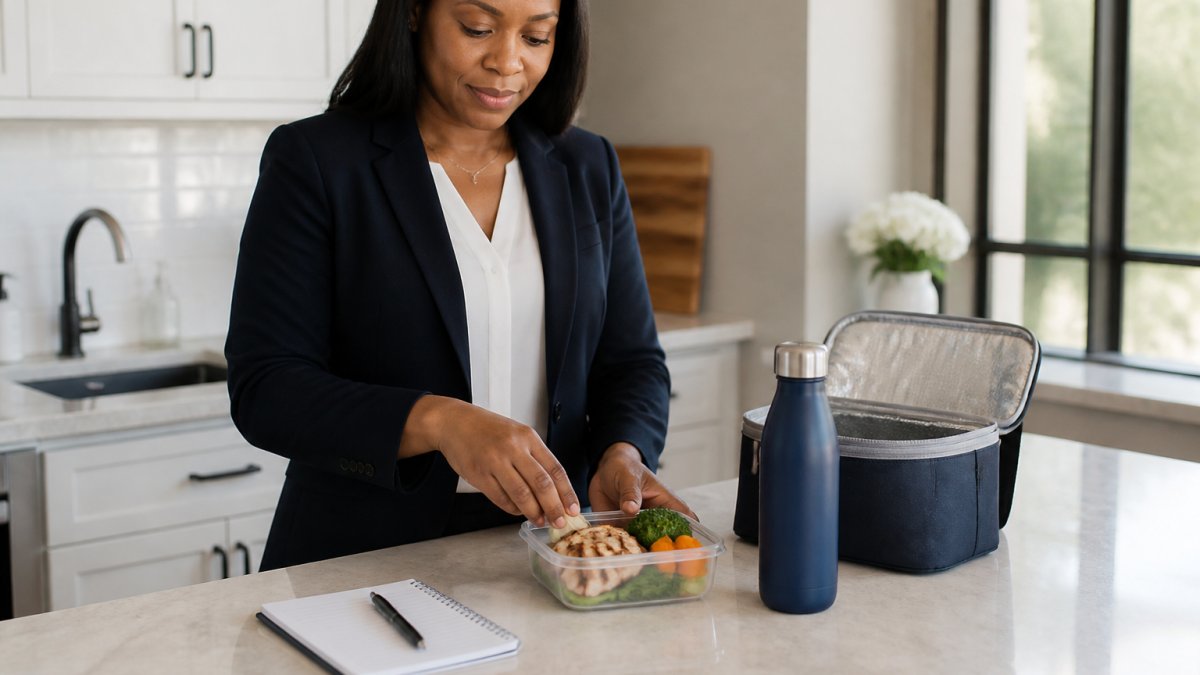
- Pack lunch and two snacks
- Fill a water bottle and set it by the door
- Check tomorrow's calendar for lunch conflicts
- Lay out walking shoes if a movement break is possible
- Log tomorrow's meals in your food log
The CDC's guidance on healthy eating for a healthy weight supports planning meals and snacks ahead as a practical way to manage calorie intake.
Walking Meetings for Weight Loss: Movement That Fits Your Schedule
Walking meetings turn dead calendar time into physical activity, but they only stick when they are matched to the meeting type. A 15-minute walk-and-talk covers real ground and breaks up long stretches of sitting; a screen-heavy review does not belong on a treadmill. The practical skill is sorting meetings into "walkable" and "desk-bound" before the week starts.
Which meetings convert well
- One-on-one check-ins and phone calls are the easiest conversions, suggest a walking call instead of a conference room.
- Brainstorming and informal syncs work when notes can be captured by voice or after the walk.
- Screen-heavy reviews, interviews, and presentations stay at the desk; forcing them into a walk usually backfires.
- Remote and hybrid calls are the biggest untapped slot: pace during audio-only portions, stand for the camera-on portions, and take the call on foot when video is off.
Movement breaks that fit between back-to-back sessions
Back-to-back meetings crowd out the long walk, so the realistic unit is the short break:
- The 5-minute rule: between sessions, stand, refill water, and walk for five minutes before the next call starts.
- Stairs on every trip: take the stairs on bathroom and coffee runs; it adds up across a meeting-heavy day without requiring a block of time.
- Park farther out: a five-minute walk from the lot is a built-in buffer before and after the workday.
- Timer every hour: a standing or walking cue each hour interrupts the longest sitting stretches.
- Pre-meeting walk: a 10-minute walk before a known stressful meeting doubles as movement and a mental reset.
Remote and hybrid sitting traps
Prolonged sitting at home is easy to underestimate because there is no commute to break it up. A common pattern is to anchor movement to the meeting itself: stand during audio-only segments, take the call on foot when video is off, and use the two minutes between calls to move rather than scroll. The American Heart Association's physical activity recommendations note that adults benefit from regular movement throughout the day, not just one workout.
Book your consultation today →
How to Stay Accountable for Weight Loss When Meetings Fill Your Day
Accountability survives a full calendar when it is built into the day rather than bolted on at night. The meeting-specific problem is not motivation, it is that back-to-back blocks erase the small checkpoints (lunch, a walk, a log entry) that keep a plan honest. The fix is to attach accountability to events you already attend. Integrating these micro-habits into a broader fitness consistency plan ensures that your health goals remain a priority even when the workday demands your full attention.
Anchor accountability to your calendar, not your willpower
- Name the risk blocks. Each Sunday, mark the two or three meeting blocks most likely to derail eating or movement, typically lunch meetings, all-day workshops, and late-afternoon calls that push dinner back.
- Attach one checkpoint to each block. A pre-meeting snack, a post-meeting walk, or a two-minute log entry after the call ends. One checkpoint per risk block is enough.
- Use calendar reminders, not memory. A 10-minute reminder before a catered lunch and a 5-minute reminder after a long call do more than a vague intention to "do better."
- Protect one non-negotiable. Choose a single daily behavior, a protein breakfast, a water bottle refill, or a 10-minute walk, that happens regardless of how the calendar shifts.
Track behaviors you control, not just the scale
Daily weight fluctuates with sodium, hydration, sleep, and menstrual cycle, so a single reading is a poor scorecard for a meeting-heavy week. A common pattern among practitioners is to pair one outcome measure with two or three behavior measures:
- Outcome: weekly average weight (same time, same conditions) rather than any single morning.
- Behavior: number of planned snacks eaten before meetings, walking breaks completed, days the food log was closed.
- Process: nights with 7 or more hours of sleep, since short sleep is associated with higher hunger and poorer food choices.
A week where the scale is flat but you hit four of five planned movement breaks is still a consistent week. Consistency means repeatable behaviors, not perfect adherence.
Make the check-in social and short
- A five-minute weekly review with a partner, friend, or care team beats a solo monthly reckoning. Bring the calendar and the log, not just the number.
- Progress photos on a set schedule (for example, the first of each month) capture changes the scale misses during high-stress meeting cycles.
- A single accountability text after a known risk meeting, "walk done, lunch packed", closes the loop without requiring a full journaling habit.
If a meeting runs long and the checkpoint is missed, log it and move to the next one. The goal is a high hit rate across the week, not a perfect streak.
At Ideal Weight Loss & Cosmetic Center, board-certified physician Dr. Gina Nichols builds personalized, medically supervised plans for patients in Columbus, Reynoldsburg, and Pickerington. That kind of structured support gives you a real accountability partner instead of a solo effort.
Navigating Catered and Virtual Meetings Without Overeating
Catered and virtual meetings are where portion control quietly disappears. The fix is a plan for each setting before you walk in or log on.
In-Person Catered Meetings
- Eat a small snack before you go
- Scan the whole spread before filling your plate
- Fill half the plate with vegetables or fruit first
- Choose water or unsweetened drinks
- Sit away from the food table
- Stop when satisfied, not when the plate is empty
Virtual Meetings and Snacking Blind Spots
- Keep only planned snacks within reach
- Use a smaller bowl or plate, never the package
- Mute yourself and drink water instead of grazing
- Turn the camera on if it helps you stay mindful
A Sample Meeting-Day Plan for Consistent Weight Loss
A meeting-day plan shows how to stay consistent with weight loss during meetings by removing decisions when your calendar is full. Here is a sample day built around back-to-back meetings.
| Time | Action | Why It Helps |
|---|---|---|
| 7:00 a.m. | Protein breakfast at home | Steadies hunger before meetings |
| 9:30 a.m. | 5-minute walk between calls | Breaks up sitting |
| 11:45 a.m. | Planned snack before lunch meeting | Prevents overeating |
| 12:00 p.m. | Lunch: half vegetables, lean protein | Portion control at catered meals |
| 2:00 p.m. | Walking 1:1 call | Adds movement without extra time |
| 3:30 p.m. | Water refill and stretch break | Resets energy |
| 6:00 p.m. | Home dinner and food log entry | Closes the day with awareness |
This plan is flexible. Swap meals and times to fit your schedule, but keep the structure.
Conclusion
Staying consistent with weight loss during meetings comes down to planning, not perfection. A stocked snack drawer, a night-before routine, and short movement breaks protect your progress on even the fullest days.
If meetings keep derailing your plan, structured support can help. Ideal Weight Loss & Cosmetic Center offers personalized, medically supervised weight loss, customized diet and metabolic plans, and hormone optimization, all led by board-certified physician Dr.
Frequently Asked Questions
How can I stay consistent with weight loss when I have back-to-back meetings?
Plan your food and movement around your calendar, not your mood. The night before, pack a protein-rich lunch and two snacks so you are not relying on vending machines or catered trays. Block 10 minutes between meetings for a walk or stretch. Keep a water bottle at your desk and sip throughout the day. Consistency comes from removing decisions when you are busy, so prep becomes automatic. If your schedule is truly relentless, a medically supervised program can help you build a plan that fits your workday.
What are healthy snacks to bring to a long meeting?
Choose snacks that combine protein and fiber to keep you full without a sugar crash. Good options include Greek yogurt with berries, a handful of almonds and an apple, hummus with carrot sticks, or a hard-boiled egg with whole-grain crackers. Avoid muffins, cookies, and sugary granola bars that are common at catered meetings. Pack them in a small cooler or fridge-safe bag so they are ready when hunger hits. Having a plan for healthy snacks for work meetings makes it easier to skip the pastry tray.
How do I fit movement into a meeting-heavy workday?
Use walking meetings for weight loss when possible: suggest a phone call or one-on-one meeting on foot. For video calls, stand up or do gentle stretches while listening. Take the stairs instead of the elevator, park farther away, and use the last five minutes of your lunch break for a short walk. Even two-minute movement breaks between meetings add up. The goal is to reduce sedentary behavior, not to replace your exercise routine. Small, frequent movement helps you stay consistent with weight loss during meetings.
How can I stay accountable for weight loss at work?
Accountability starts with tracking. Keep a simple food log or use an app to record meals and snacks, especially during meeting days. Share your goals with a coworker or join a workplace wellness group. Schedule a weekly check-in with yourself to review progress photos or measurements. If you are working with a medical weight loss program, use your appointments to discuss challenges like meetings and get personalized strategies. Accountability is easier when you have a system and support, not just willpower.