 blog
Best Resistance Training Exercises for Metabolism
Table of Contents
- How Resistance Training and Metabolism Work Together
- Top Metabolic Resistance Training Exercises
- Building a Full-Body Resistance Training Workout
- How Often to Strength Train for Weight Loss
- Exercise Modifications for Different Fitness Levels and Equipment
- Recovery, Nutrition, and Daily Activity Matter
- Getting Started With Your Resistance Training Program
- Frequently Asked Questions
Last Updated: October 17, 2026
How Resistance Training and Metabolism Work Together
Resistance training affects metabolism through two pathways, and conflating them drives most exaggerated 'metabolism-boosting' claims. Short-term, a single session raises energy expenditure during and after the workout. Long-term, gaining or maintaining lean muscle can influence resting metabolic rate over months and years. Both matter, but neither guarantees fat loss alone.
The short-term effect: post-exercise energy expenditure
When you lift against resistance, muscles demand ATP and the body burns calories to supply it. Afterward, oxygen consumption stays elevated while the body restores energy stores, repairs muscle proteins, and clears byproducts, excess post-exercise oxygen consumption, or EPOC. The effect is real but modest: the afterburn from a typical strength session is a small fraction of the calories burned during the workout and is easily offset by a single snack. EPOC is a bonus, not the primary reason to train.
The long-term effect: muscle as metabolically active tissue
Skeletal muscle is metabolically active at rest, and because muscle burns more calories at rest than fat per pound, adding lean mass can nudge resting metabolic rate upward. That effect is often overstated online: resting metabolic rate is driven mostly by body size, organ mass, and genetics, so a few pounds of new muscle changes it less than social media suggests. More accurately, resistance training preserves and builds muscle, and muscle supports a higher resting energy expenditure than the same weight carried as fat, a meaningful advantage during weight loss, when muscle loss can otherwise slow metabolism.
What the research actually supports
Reviews consistently find that resistance training increases muscle strength and mass, and that combining it with an energy deficit helps preserve lean mass during weight loss. Evidence for large, lasting increases in resting metabolic rate from strength training alone is weaker and more variable. Treat the metabolic benefit of lifting as a supporting factor, not a standalone fat-loss strategy, it works alongside energy balance, protein intake, sleep, and daily movement.
Why this matters for exercise selection
Because the long-term effect depends on building and keeping muscle, the exercises that matter most are the ones you can progressively overload and recover from: compound movements like squats, deadlifts, presses, rows, and their variations. Isolation exercises have a role but do not drive the same systemic adaptation.
Top Metabolic Resistance Training Exercises
The best resistance training exercises for metabolism are compound movements. They work multiple muscle groups at once, demanding more energy and creating greater metabolic demand than isolation exercises.
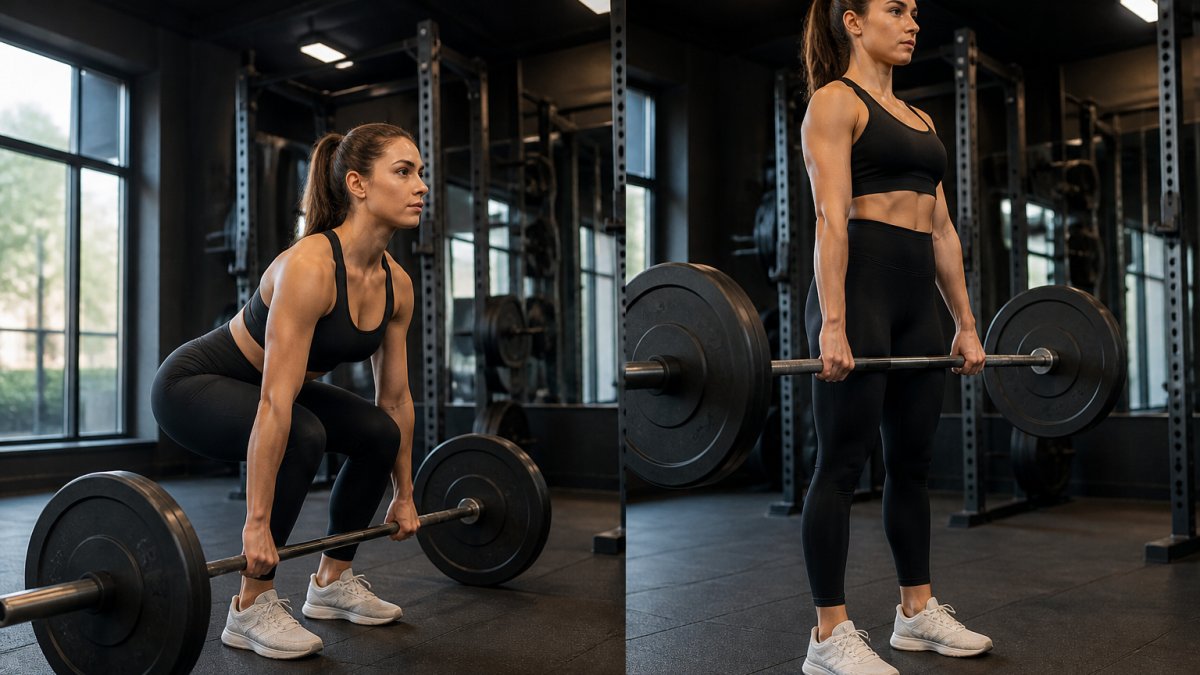
Compound Movements That Maximize Calorie Expenditure
Compound movements should form the foundation of any metabolic resistance training program.
Squats work the largest muscles in the body, quadriceps, glutes, and hamstrings, with the core engaged for stability.
Deadlifts engage nearly every muscle from neck to ankles, mimicking real-world lifting off the ground.
Push-ups use body weight to work the chest, shoulders, triceps, and core.
Rows (barbell, dumbbell, or machine) strengthen the back and biceps.
Pull-ups and lat pulldowns work the back and biceps and are essential for balanced strength.
Lunges work one leg at a time, building single-leg strength and balance. Lunges engage the quadriceps, glutes, and core.
Building a Full-Body Resistance Training Workout
A full-body resistance training workout targets all major muscle groups in one session. It suits beginners and intermediate lifters because it distributes volume evenly and allows adequate recovery between sessions.
A basic full-body structure includes:
- One lower-body push movement (squat or leg press)
- One lower-body pull movement (deadlift or leg curl)
- One upper-body push movement (chest press or overhead press)
- One upper-body pull movement (row or pull-up)
- One core exercise (plank or pallof press)
Perform 3-4 sets of 6-12 repetitions for each exercise. Rest 60-90 seconds between sets. This rep range builds both strength and muscle mass, which drives metabolic improvement.
A sample full-body session might look like this:
- Barbell back squat: 4 sets of 8 repetitions
- Barbell deadlift: 3 sets of 5 repetitions
- Dumbbell bench press: 3 sets of 10 repetitions
- Barbell bent-over row: 3 sets of 8 repetitions
- Plank hold: 3 sets of 45-60 seconds
This workout hits all major muscle groups in 45-60 minutes. Heavy compound movements plus moderate volume create metabolic demand and build lean muscle efficiently.
How Often to Strength Train for Weight Loss
Frequency is only one variable. What matters more is structuring weekly training so volume, intensity, and recovery line up with your goal. Most people do well with 3-4 resistance sessions per week, but the split and progression rules matter more than the raw number.
Weekly frequency by experience level
- Beginner (0-6 months): 2-3 full-body sessions per week, with at least one rest day between sessions. Full-body training lets you practice each movement pattern frequently without excessive soreness.
- Intermediate (6-24 months): 3-4 sessions per week. A common structure is two full-body days plus one upper/lower day, or a 3-day full-body rotation with a 4th optional accessory day.
- Advanced (2+ years): 4-5 sessions per week using an upper/lower or push-pull-legs split, with planned deload weeks every 4-8 weeks.
Sets, reps, and rest by goal
| Goal | Sets per exercise | Reps | Rest between sets |
|---|---|---|---|
| General strength and muscle | 3-4 | 6-12 | 60-90 seconds |
| Maximal strength | 4-5 | 3-6 | 2-3 minutes |
| Muscular endurance / metabolic circuits | 2-3 | 12-20 | 30-45 seconds |
For metabolism-focused training, the 6-12 rep range with 60-90 seconds rest is a practical default because it builds strength and muscle while keeping sessions time-efficient. Circuits with shorter rest raise heart rate but should not replace heavier work entirely.
Progression rules that actually work
Progress one variable at a time, and only when you can complete the prescribed sets and reps with good form:
Book your consultation today →
- Add reps first. If you can do 3 sets of 8, work toward 3 sets of 10-12 at the same weight.
- Then add weight. Once you hit the top of the rep range on all sets, increase the load by the smallest available increment (often 2.5-5 lb for upper body and 5-10 lb for lower body).
- Then add a set. If weight jumps are not possible, add one set to a key compound movement.
- Deload when needed. If performance stalls for two weeks or joint aches persist, cut volume by about 40% for one week before resuming.
Sample 3-day full-body plan
- Day 1 (Monday): Back squat 3x8, dumbbell bench press 3x10, barbell row 3x10, plank 3x45 seconds.
- Day 2 (Wednesday): Deadlift 3x5, overhead press 3x8, lat pulldown 3x10, walking lunge 2x12 per leg.
- Day 3 (Friday): Leg press 3x12, push-up 3xAMRAP (as many reps as possible with good form), seated cable row 3x12, kettlebell swing 3x15.
Sample 4-day upper/lower plan
- Monday (upper): Bench press 4x6-8, row 4x8-10, overhead press 3x8-10, pull-up or lat pulldown 3x8-12.
- Tuesday (lower): Squat 4x6-8, Romanian deadlift 3x8-10, leg curl 3x10-12, calf raise 3x12-15.
- Thursday (upper): Incline dumbbell press 3x8-10, chest-supported row 3x10-12, lateral raise 3x12-15, biceps and triceps superset 2x12-15.
- Friday (lower): Deadlift 3x5, split squat 3x10 per leg, leg extension 3x12-15, plank 3x45-60 seconds.
Recovery between sessions
Muscle protein synthesis stays elevated for roughly 24-48 hours after a session, so most people need not train the same muscle group on consecutive days. Sleep, protein intake, and stress load determine recovery. If you are consistently sore, sleeping poorly, or losing strength, reduce volume before adding more.
Exercise Modifications for Different Fitness Levels and Equipment
Beginners, injured lifters, and home exercisers all need different variations and equipment than advanced gym lifters.
For beginners:
- Replace barbell exercises with dumbbells (easier to control)
- Use machine versions of compound movements (guided range of motion)
- Reduce sets and repetitions initially (3 sets of 10-12 reps)
- Focus on movement quality over weight lifted
- Add 1-2 weeks of practice before increasing difficulty
For people with joint pain or injury:
- Replace high-impact movements with lower-impact versions
- Use partial range of motion if full range causes pain
- Reduce weight and increase repetitions
- Consider machine-based exercises (more stable than free weights)
- Consult a physical therapist or physician before starting
For home workouts without equipment:
- Use body-weight variations: push-ups, squats, lunges, pull-ups on a door frame
- Use resistance bands for added challenge
- Increase repetitions and time under tension
- Perform circuits to maintain cardiovascular demand
- Use household items: water jugs as weights, stairs for step-ups
For advanced lifters:
- Increase weight and decrease repetitions (5-8 reps per set)
- Add advanced variations: deficit deadlifts, pause squats, plyometric push-ups
- Use periodization to vary intensity and volume
- Incorporate drop sets and supersets
- Track progress and adjust programming every 4-8 weeks
Recovery, Nutrition, and Daily Activity Matter
Resistance training builds the stimulus for change; recovery and nutrition determine whether it creates results.
Muscle protein synthesis peaks 24-48 hours after training, and adequate protein supports it.
Sleep is when most muscle growth and recovery happens. Aim for 7-9 hours per night. Poor sleep impairs recovery and increases hunger hormones, making weight loss harder.
Daily movement outside structured training matters too.
Stress management supports recovery. High stress elevates cortisol, which can interfere with fat loss and muscle building. Meditation, time outdoors, social connection, and adequate sleep all reduce stress.
American College of Sports Medicine guidelines on resistance training recommend strength training for all adults, emphasizing that resistance exercise builds metabolic capacity and supports long-term weight management.
Getting Started With Your Resistance Training Program
Start with a clear plan: decide whether to train at home or in a gym, choose 3-4 days per week, and pick compound movements that match your fitness level and available equipment.
Track your workouts, exercises, weights, sets, and reps, for accountability and visible progress. Progress isn't always heavier weight; it can mean one more rep, better form, or faster recovery between sets.
Expect results to take time. Noticeable strength improvements appear within 2-4 weeks. Visible muscle growth takes 6-8 weeks. Significant metabolic changes and body composition shifts take 12+ weeks of consistent training and nutrition.
Common mistakes to avoid:
- Starting too heavy and sacrificing form
- Skipping rest days (recovery is when progress happens)
- Ignoring nutrition (training without proper fuel limits results)
- Doing only isolation exercises (compound movements drive metabolism)
- Changing programs too frequently (consistency beats perfection)
Building metabolic strength through resistance training is one of the most effective approaches to sustainable weight loss.
Frequently Asked Questions
Does resistance training help metabolism?
Yes. Resistance training builds muscle tissue, which has a higher metabolic rate than fat tissue. Muscle burns more calories at rest, meaning your body expends more energy throughout the day. Additionally, resistance exercise creates an afterburn effect (EPOC) where your metabolism stays elevated for hours after your workout ends, contributing to greater overall calorie expenditure and supporting weight loss efforts.
What are the best metabolic resistance training exercises?
Compound movements that engage multiple muscle groups are most effective for metabolism: squats, deadlifts, push-ups, rows, lunges, overhead presses, and kettlebell swings. These exercises demand significant energy and stimulate muscle growth. Circuit training that combines these movements with minimal rest periods amplifies the metabolic effect. Beginners can start with bodyweight versions; as strength improves, add dumbbells, barbells, or kettlebells to increase intensity.
How often should you do resistance training for weight loss?
Most evidence supports 3-4 resistance training sessions per week for weight loss, with at least one rest day between sessions targeting the same muscle groups. This frequency allows sufficient recovery while maintaining consistent metabolic stimulus. Each session should last 30-45 minutes. Consistency matters more than intensity; adherence to a regular schedule produces better results than sporadic intense workouts. Pair resistance training with adequate nutrition and daily activity for optimal outcomes.
Can I do resistance training at home without equipment?
Absolutely. Bodyweight exercises like squats, lunges, push-ups, burpees, and pull-ups (using a doorway bar) are highly effective for building strength and boosting metabolism. You can also use household items like water bottles or backpacks as resistance. Bodyweight circuits performed with minimal rest between exercises deliver significant metabolic benefits. As you progress, invest in adjustable dumbbells or kettlebells to increase resistance and continue challenging your muscles.