 ultimate-guide
Why Hormone Levels Fluctuate With Age: A 2026 Guide
Table of Contents
- The Biology Behind Why Hormone Levels Fluctuate With Age
- Signs of Hormonal Imbalance in Women at Every Stage
- Hormone Optimization vs Hormone Replacement Therapy: What's the Difference?
- The Impact of GLP-1 on Metabolic Regulation and Hormonal Balance
- Non-Reproductive Hormone Changes: Cortisol, Thyroid, and Cellular Aging
- When to See a Doctor About Age-Related Hormonal Decline
- Conclusion: Taking Control of Your Hormonal Health
- Frequently Asked Questions
Last Updated: September 27, 2026
The Biology Behind Why Hormone Levels Fluctuate With Age
Hormone levels fluctuate with age because the endocrine system gradually changes how much of each hormone it makes and how efficiently the body uses it. This guide from Ideal Weight Loss & Cosmetic Center explains those shifts and what they mean for energy, metabolism, and overall health.

The endocrine system is the body's chemical messaging network, including the ovaries, testes, adrenal glands, thyroid, and pancreas. As people age, these glands respond differently to signals from the brain, producing a slow, uneven decline in some hormones and a rise in others.
That unevenness is the key point.
How the Endocrine System Changes Over Time
The endocrine system changes over time through declining hormone production and reduced receptor sensitivity, so the same signal produces a smaller response than it did a decade earlier.
Three changes drive most of this:
- Glandular output drops, so less hormone enters the bloodstream
- Receptor sensitivity falls, so cells respond less strongly to the same amount
- The feedback loop between the brain and glands becomes less coordinated
Ovarian Reserve, AMH, and Reproductive Aging
Ovarian reserve is the number of viable eggs remaining in the ovaries, and it declines steadily from birth. Antimüllerian hormone (AMH), produced by small ovarian follicles, is one of the most reliable markers of that reserve.
Signs of Hormonal Imbalance in Women at Every Stage
Signs of hormonal imbalance in women vary by life stage, but the most common include hot flashes, irregular periods, fatigue, mood changes, and unexplained weight gain. They reflect shifts in estrogen, progesterone, testosterone, and thyroid hormones rather than a single cause.
Perimenopause, Menopause, and the Transition Years
Perimenopause is the transitional phase before menopause when estrogen and progesterone begin fluctuating unpredictably. It typically starts in the mid-40s and can last several years.
Hormone Optimization vs Hormone Replacement Therapy: What's the Difference?
Hormone optimization and hormone replacement therapy are not the same, though the terms are often used interchangeably. Hormone replacement therapy (HRT) replaces deficient hormones, typically estrogen and progesterone, to relieve symptoms. Hormone optimization is broader, targeting optimal ranges rather than simply correcting a deficiency.
The Impact of GLP-1 on Metabolic Regulation and Hormonal Balance
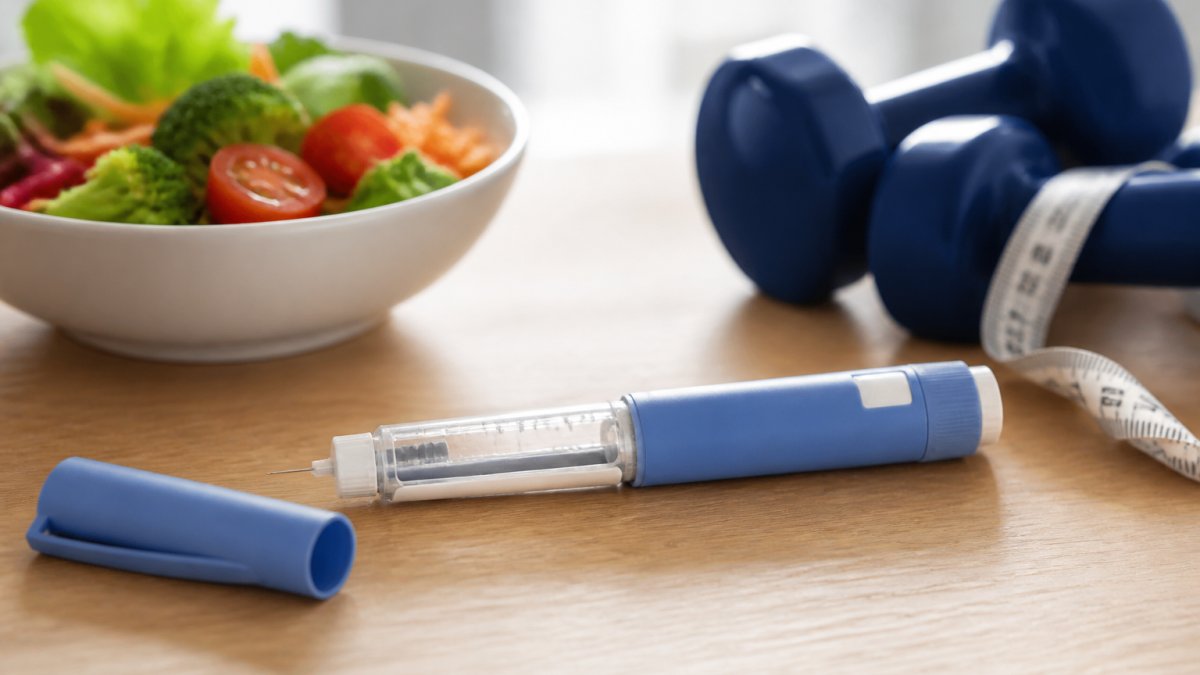
GLP-1 is not a reproductive hormone, but it sits at the center of the metabolic-hormonal crosswalk that widens with age. Understanding how it works explains why weight, blood sugar, and sex hormones drift together in the same decade, and why treating one in isolation rarely holds.
What GLP-1 Actually Does
Glucagon-like peptide-1 (GLP-1) is an incretin hormone released by L-cells in the small intestine after a meal. It does four things relevant to hormonal aging:
- Signals satiety to the hypothalamus, reducing appetite
- Triggers insulin release from the pancreas in a glucose-dependent way (so it does not cause hypoglycemia on its own)
- Slows gastric emptying, which flattens post-meal glucose spikes
- Suppresses glucagon, the hormone that tells the liver to release stored sugar
Why This Intersects With Sex Hormones
The relationship runs in both directions:
- Estrogen improves insulin sensitivity. When estrogen falls during the menopause transition, insulin resistance often rises, independent of weight change.
- Insulin resistance pushes sex hormone-binding globulin (SHBG) down. Lower SHBG means more free testosterone circulating, which can drive acne, hair changes, and mood shifts in women.
- Cortisol raises blood glucose. A less stable cortisol rhythm (common with age) feeds the same insulin-resistance loop.
- Testosterone in men supports insulin sensitivity. As testosterone declines gradually, the metabolic picture can worsen in parallel.
This is why a 52-year-old woman with new midsection weight gain, disrupted sleep, and rising A1C is often dealing with three interlocking systems, ovarian, adrenal, and metabolic, not one.
Where GLP-1 Medications Fit
GLP-1 receptor agonists mimic the natural hormone. By restoring the satiety and insulin-signaling effects age has blunted, they indirectly reduce the metabolic strain that worsens hormonal imbalance. They are not hormone replacement therapy and do not raise estrogen, progesterone, or testosterone.
The Practical Implication
If you are over 40 and diet and exercise no longer produce the same result, the useful question is not "is this my hormones or my metabolism?" but "which system is driving the other right now?" A full panel, fasting glucose, A1C, lipids, thyroid function, and reproductive hormones, gives a clinician the data to answer that.
Book your consultation today →
Non-Reproductive Hormone Changes: Cortisol, Thyroid, and Cellular Aging
Most age-and-hormone content stops at estrogen and progesterone, leaving out three systems that shape how the reproductive transition feels: the adrenal axis, the thyroid, and the cellular aging process underneath both.
The HPA Axis and the Flattening of Cortisol
Cortisol is produced by the adrenal glands under the direction of the hypothalamic-pituitary-adrenal (HPA) axis. In younger adults, cortisol follows a steep curve, highest about 30 minutes after waking, lowest around midnight. With age, that curve flattens: the morning peak is lower, the evening trough higher, and total daily output often rises slightly.
Three consequences follow:
- Sleep architecture degrades. Elevated evening cortisol suppresses melatonin release and fragments deep sleep.
- Blood sugar drifts upward. Cortisol is a gluconeogenic hormone, it tells the liver to make glucose. A higher evening floor means more overnight glucose production.
- Sex hormones get pulled down. The adrenal glands are a secondary source of DHEA, which the body converts to testosterone and estrogen. Declining DHEA output narrows that backup supply at exactly the point when ovarian output is falling.
Thyroid Function: Slower, Not Necessarily Abnormal
Thyroid output does not collapse with age, but several things shift:
- The thyroid gland becomes more prone to autoimmune attack (Hashimoto's thyroiditis is more common in women over 40).
- Conversion of T4 to the active form T3 becomes less efficient, partly due to selenium and zinc status.
- Thyroid-stimulating hormone (TSH) reference ranges are age-agnostic in most labs, so a "normal" TSH in a 60-year-old may not reflect optimal function.
Cellular Senescence: The Mechanism Underneath
Cellular senescence is the process by which cells stop dividing but do not die. They remain in tissue and secrete inflammatory cytokines, growth factors, and proteases, collectively called the senescence-associated secretory phenotype (SASP).
SASP does three things that directly affect hormones:
- It inflames hormone receptor tissue. Chronic low-grade inflammation blunts receptor sensitivity in the hypothalamus and pituitary, which is the same feedback loop that governs ovarian and thyroid signaling.
- It accumulates in the ovary. Senescent cells in ovarian tissue are one proposed driver of the accelerated hormonal decline in the years just before menopause.
- It accelerates in adipose tissue. More senescent fat cells means more inflammatory output, which is one reason weight gain and hormonal symptoms tend to reinforce each other.
Environmental Endocrine Disruptors
Endocrine-disrupting chemicals (EDCs), including certain phthalates, bisphenols, and per- and polyfluoroalkyl substances (PFAS), can bind hormone receptors or interfere with hormone synthesis. Exposure is cumulative, so total EDC burden rises with age even if annual exposure stays flat, which is one reason two people the same age with the same genetics can have very different hormonal trajectories.
Putting the Systems Together
| System | What Changes With Age | Downstream Effect |
|---|---|---|
| HPA axis (cortisol) | Flatter daily curve, higher evening floor | Poor sleep, higher fasting glucose, lower DHEA |
| Thyroid | Slower T4-to-T3 conversion, more autoimmunity | Fatigue, weight gain, cold intolerance |
| Cellular senescence | More senescent cells, more SASP | Receptor resistance, chronic inflammation |
| EDC burden | Cumulative exposure | Receptor interference, variable response |
A clinician who only looks at estrogen will miss the adrenal and thyroid contributions entirely, often the levers that respond fastest to lifestyle and medication changes.
When to See a Doctor About Age-Related Hormonal Decline
See a doctor about age-related hormonal decline when symptoms interfere with daily life, sleep, mood, or weight, or appear suddenly. A clinical diagnosis requires blood work, a symptom history, and a review of medications and family history.
Conclusion: Taking Control of Your Hormonal Health
Hormonal shifts with age are inevitable, but their impact on energy, weight, and mood is not fixed. Understanding why hormone levels fluctuate with age gives you the context to act instead of guess.
Frequently Asked Questions
Does a 70-year-old woman still have hormones?
Yes, women produce hormones throughout life, but levels drop significantly after menopause. The ovaries stop releasing eggs and estrogen falls, yet the adrenal glands and fat tissue still make small amounts of estrogen and testosterone. This is why some women notice ongoing symptoms like low energy or vaginal dryness. A doctor can check serum levels to see where you stand and discuss options.
What are the 5 common signs of hormonal imbalance?
Five frequent signs include unexplained weight gain, persistent fatigue, mood swings, hot flashes or night sweats, and irregular periods. Other clues are thinning hair, dry skin, and low libido. Because these overlap with many conditions, lab testing is the only way to confirm an imbalance. If you notice several, talk to a physician about a full hormone panel.
How do GLP-1 medications interact with age-related hormonal changes?
GLP-1 medications mimic a gut hormone that helps regulate appetite and blood sugar. As we age, natural GLP-1 production can decline, and insulin sensitivity often drops. These medications can support metabolic regulation when combined with lifestyle changes. They do not directly replace estrogen or testosterone, so a comprehensive plan may include both hormone optimization and GLP-1 therapy under medical supervision.
At what age are hormone levels typically at their highest?
For most women, estrogen and progesterone peak in the late teens to mid-20s, then gradually decline. Men see testosterone peak in the late teens and early 20s, with a slow decline after 30. These are general patterns; individual timing varies. Lifestyle, stress, and medical conditions can shift the curve. Testing gives a personal snapshot rather than relying on averages.