 ultimate-guide
Long-Term Side Effects of Body Contouring: What to Know
Table of Contents
- How Body Contouring Works and Why Side Effects Happen
- The Most Common Long-Term Side Effects of Body Contouring
- How Long Does Body Contouring Last?
- Non-Surgical Body Contouring Recovery Time
- FDA-Cleared Body Contouring Devices: What the Clearance Means for Safety
- The Long-Term Costs and Psychological Effects of Body Contouring
- Who Is a Good Candidate and Who Should Avoid Body Contouring
- Frequently Asked Questions
Last Updated: September 26, 2026
How Body Contouring Works and Why Side Effects Happen
Body contouring is a group of medical and aesthetic procedures that reshape specific areas of the body by removing or reducing subcutaneous fat and, in some cases, tightening lax skin, and understanding body contouring side effects starts with how each method interacts with tissue. Understanding what are the long term side effects of body contouring starts with understanding how each method interacts with tissue. At Ideal Weight Loss & Cosmetic Center, patients frequently ask whether results last and what risks persist after the initial recovery period. The honest answer depends heavily on which type of procedure was performed.
Non-invasive devices typically use controlled cooling, radiofrequency energy, or ultrasound to damage fat cells, which the body then clears over several weeks. Surgical approaches remove tissue directly. Both disrupt normal anatomy, and both can produce lasting changes.
Surgical vs. Non-Surgical: Different Risks, Different Timelines
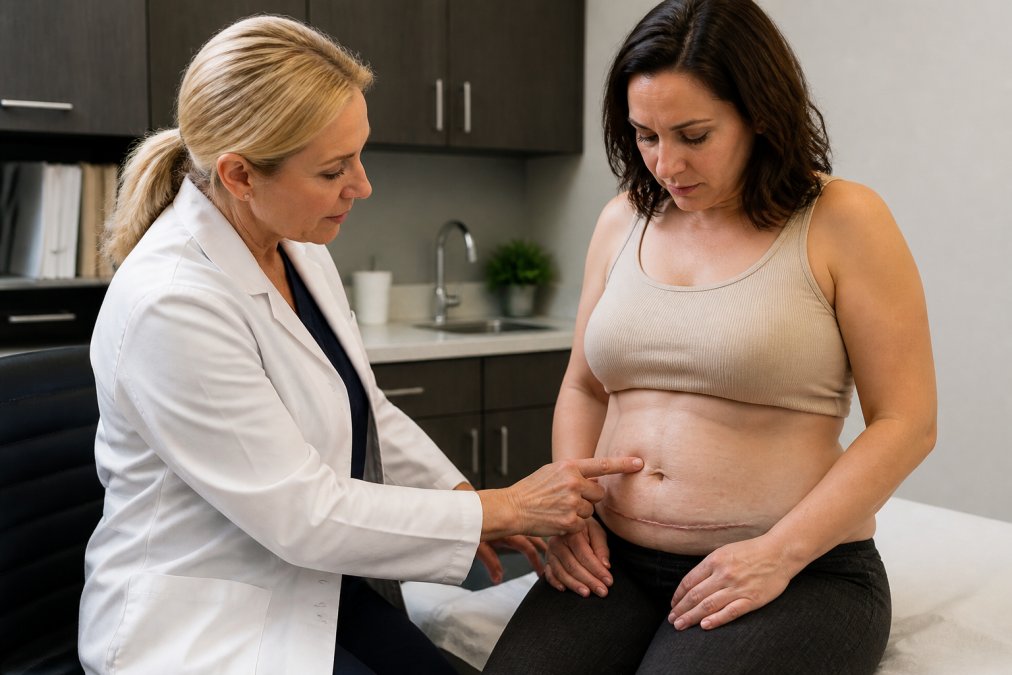
Surgical body contouring carries a higher upfront risk profile: anesthesia complications, infection, seroma, hematoma, and wound healing problems are all documented concerns. Recovery takes weeks, and scarring is permanent.
Non-surgical options avoid incisions and general anesthesia, so the clinical risks are lower. That does not make them risk-free. Numbness, bruising, swelling, and asymmetry can still occur, and results build gradually rather than appearing immediately.
The Most Common Long-Term Side Effects of Body Contouring
Among body contouring side effects, the most frequently reported persistent issues are skin numbness, changes in skin elasticity, contour irregularity, and fluid accumulation. Many of these improve within months, but some linger.

According to the [U.S.
Skin Changes: Numbness, Lax Skin, and Asymmetry
Paresthesia, or altered skin sensation, is one of the most common complaints after both surgical and energy-based procedures. Numbness often fades as nerves recover, but a subset of patients report reduced sensation lasting a year or longer.
Fluid and Tissue Complications: Seroma, Hematoma, and Scarring
Seroma, a collection of fluid under the skin, and hematoma, a pooled collection of blood, are well-recognized complications. Both can require drainage or additional intervention. Infection risk rises when fluid accumulates and is not managed.
How Long Does Body Contouring Last?
Results can last years, but "permanent" is the wrong word for almost every procedure. The distinction matters because it determines what long-term side effects you should actually plan for.
What Is Actually Permanent
Surgical excision, tummy tuck, bra-line back lift, arm lift, thigh lift, physically removes fat cells and skin. Those specific cells do not grow back. Cryolipolysis (fat freezing), laser lipolysis, and radiofrequency-based devices damage fat cells so the body clears them through the lymphatic system over roughly 8 to 12 weeks; the treated cells are gone, but the fat cells that remain in the area are not.
Why Results Drift Even When the Procedure "Worked"
A common pattern practitioners see: a patient is thrilled at the three-month mark, then returns 18 months later with a partially returned contour. Nothing went wrong with the device or the surgery. What changed was the environment around the remaining fat cells.
- Weight gain. A gain of roughly 5 to 10 percent of body weight is often enough to visibly blunt a contouring result, because the untreated fat cells expand and the treated zone no longer matches the surrounding area.
- Hormonal shifts. Menopause, thyroid changes, and andropause redistribute fat toward the abdomen and flanks regardless of how stable your weight is.
- Aging. Skin loses collagen and elastin, so even an unchanged fat layer can look looser and less defined over a 5- to 10-year window.
- Pregnancy. Abdominal contouring results are frequently undone by a subsequent pregnancy, and many surgeons advise waiting until childbearing is complete.
The Maintenance Requirements Nobody Puts on the Consent Form
Longevity is not a property of the procedure, it is a property of what you do afterward. The patients who hold their results for a decade tend to share a few habits:
- Weight stability within a narrow band. Not weight loss, stability. Yo-yo dieting is harder on a contour than a steady, slightly higher weight.
- Resistance training. Muscle preserves the underlying shape that makes a contour read as a contour rather than just "less fat."
- Protein-forward eating. Adequate protein supports skin and connective tissue, which is what keeps a result looking tight rather than deflated.
- Sun protection on scars. Scar tissue that is repeatedly sun-damaged stays red, raised, and more visible for years longer than protected scars.
What This Means for "Long-Term Side Effects"
The honest framing: the most common long-term outcome is not a complication, it is a partial reversal. That is not a medical side effect in the clinical sense, but it is the outcome patients most often describe as one when they feel they were not warned.
Non-Surgical Body Contouring Recovery Time
Non-surgical body contouring recovery time is typically short. Most patients return to normal activity within a day or two, with tenderness, swelling, and redness resolving over one to two weeks.
FDA-Cleared Body Contouring Devices: What the Clearance Means for Safety
FDA clearance means a device has been reviewed for its intended use and meets the agency's safety and effectiveness standards for that use. It does not mean the device is risk-free or appropriate for every patient.
The Long-Term Costs and Psychological Effects of Body Contouring
Almost every ranking article on this topic stops at the physical risk list. Two consequences get far less attention, and both unfold over years rather than weeks: what the procedure costs you after the initial invoice, and how it changes the way you see yourself.
The Financial Tail of a "One-Time" Procedure
Body contouring is usually marketed as a single purchase. In practice, many patients face recurring or one-time costs long after the original procedure:
- Revision surgery. Asymmetry, contour irregularity, or a result that never fully settled can lead to a second procedure. Revision is typically priced at or above the original, because scar tissue makes the second operation harder.
- Touch-up sessions. Non-invasive treatments are often sold in packages, and a maintenance session every 6 to 12 months is a common recommendation to hold a result.
- Scar revision. Steroid injections, silicone sheeting, laser treatment, or surgical scar revision are separate line items.
- Compression garments and aftercare. Surgical patients may need multiple garments as swelling changes, plus lymphatic massage sessions that are frequently not bundled into the quoted price.
- Weight regain management. If the contour softens, some patients pursue a second round of treatment rather than accept the change.
The Psychological Long-Term Effects
This is the part of the conversation that clinical summaries almost never include, and it is often the most durable effect of all.
How to Reduce the Psychological Risk Before You Commit
- Ask to see results on people whose starting point resembles yours, not just the practice's best work.
- Get the expected outcome in writing, including what the procedure will not do.
- Give yourself a defined adjustment window, most practitioners suggest waiting several months before judging the result.
- If you have a history of obsessive checking, compulsive mirror use, or a prior eating disorder, raise it with your provider and consider speaking with a mental health professional first.
Who Is a Good Candidate and Who Should Avoid Body Contouring
Good candidates are generally adults near a stable weight with reasonable skin elasticity and realistic expectations. Patients with active infections, uncontrolled metabolic conditions, or bleeding disorders may not be suitable.
| Procedure Type | Typical Recovery | Key Risks | Results Longevity |
|---|---|---|---|
| Surgical excision | Weeks | Seroma, hematoma, scarring, infection | Years, fat cells removed |
| Non-invasive (cooling, RF, ultrasound) | Days | Numbness, bruising, asymmetry | Years if weight stable |
| Post-bariatric contouring | Weeks | Wound healing, fluid accumulation | Long-term with maintenance |
Frequently Asked Questions
What are the potential downsides of body contouring?
Downsides range from temporary swelling and bruising to longer-lasting issues like skin numbness, asymmetry, or lax skin. Surgical procedures carry risks of seroma, hematoma, infection, and scarring. Non-surgical options are generally milder but may cause tenderness, redness, or temporary contour irregularities. Some people need revision surgery to correct unsatisfactory results. Discuss all risks with a board-certified physician before treatment.
How many times can you do body sculpting?
The number of sessions depends on the procedure and the area treated. Non-surgical body sculpting often requires multiple sessions spaced weeks apart, and some patients repeat treatments after six to twelve months to maintain results. Surgical body contouring is typically a one-time procedure, though revision surgery may be needed. Your physician will recommend a plan based on your goals and skin elasticity.
Is body sculpting really worth it?
For many people, body sculpting improves confidence and targets stubborn fat that resists diet and exercise. Results depend on your skin elasticity, overall health, and willingness to maintain a stable weight. Non-surgical options have less downtime but subtler results; surgical options offer more dramatic changes with higher risks. A consultation with a board-certified physician can help you weigh benefits against potential side effects.
Can body contouring cause permanent skin damage?
Permanent skin damage is uncommon but possible, especially with surgical procedures. Risks include scarring, numbness that may not fully resolve, and skin necrosis in severe cases. Non-surgical devices cleared by the FDA have a lower risk profile but can still cause burns or pigmentation changes if used improperly. Choosing a qualified provider and following post-operative care instructions reduces these risks.
Body contouring can deliver meaningful changes, but lasting results depend on medical oversight, realistic expectations, and ongoing weight stability. Ideal Weight Loss & Cosmetic Center combines board-certified physician expertise, personalized treatment plans, and non-surgical body contouring with metabolic care under one roof. Book your consultation today to discuss candidacy, risks, and a plan tailored to your goals.