 comparison
Is Telehealth Weight Loss Right for Me? A 2026 Comparison
Table of Contents
- Is Telehealth Weight Loss Right for Me? Start With a Self-Assessment
- How Telehealth Weight Loss Care Actually Works
- Telehealth vs. In-Person Weight Loss: Where Each One Wins
- Inside an Online Medical Weight Loss Program: Medications, Coaching, and Monitoring
- Telehealth Weight Loss Medication: What Can Be Prescribed and What to Expect
- Safety Screening and When In-Person Evaluation Is the Better Call
- How to Choose a Weight Loss Program: Cost, Privacy, and Credentials
- Frequently Asked Questions
Last Updated: October 19, 2026
Is Telehealth Weight Loss Right for Me? Start With a Self-Assessment
Telehealth weight loss is medical weight management delivered through virtual visits, secure messaging, and remote monitoring instead of a traditional office visit. This guide is built around one question: does that model fit your body, your history, and your life right now?
Here is the uncomfortable truth most sign-up pages avoid: virtual care is a delivery channel, not a treatment. The channel does not decide your outcome. The quality of the clinical assessment behind it does.
A Practical Decision Framework, Not a Gut Check
Most people decide by vibe, a friend had a good experience, an ad looked reassuring, the price seemed fair.
| Factor | Points toward telehealth | Points toward in-person first |
|---|---|---|
| Health complexity | Stable conditions, no recent medication changes, no unexplained symptoms | Multiple chronic conditions, complex medication regimen, recent hospital visit, or symptoms that need a physical exam |
| Monitoring willingness | You will weigh in, log blood pressure or glucose, and report side effects between visits | You prefer hands-on measurement and same-room clinical judgment |
| Access barriers | Time off work, travel distance, or scheduling has blocked care | You have reliable local access and prefer a familiar clinic |
| Support needs | You want coaching, messaging, and frequent check-ins between visits | You need multidisciplinary care (dietitian, behavioral health, specialist) coordinated in one place |
If most of your answers land in the left column, virtual care is a reasonable first stop. If several land in the right column, start with an in-person evaluation and ask whether a hybrid model, virtual follow-ups after an in-person workup, fits better.
Five Questions to Answer Before You Sign Up
Run through this list honestly before you enter a credit card.
- Do you have a clear medical history to share? A diagnosis of diabetes, high blood pressure, sleep apnea, or a prior bariatric procedure changes what a clinician can safely recommend.
- Are you comfortable with remote monitoring? Programs that track weight, blood pressure, or glucose depend on you reporting or syncing data consistently.
- Is your schedule the real barrier? If time off work is what has blocked you, virtual visits solve a genuine problem.
- Do you need hands-on evaluation? Unexplained swelling, new cardiac symptoms, or a complicated medication list point toward in-person care first.
- What does ongoing support look like? Coaching, nutrition counseling, and follow-up cadence matter more than the first visit.
Who Telehealth Tends to Suit, and Who It Tends Not To
A common pattern among clinicians is that virtual weight management works best for adults with a stable health history who want physician oversight without losing hours to appointments. It tends to be a poorer fit for people with active or changing symptoms, a history of eating disorders that needs specialized care, pregnancy or plans to become pregnant, or a medication list complex enough that interactions need in-person review.
How Telehealth Weight Loss Care Actually Works
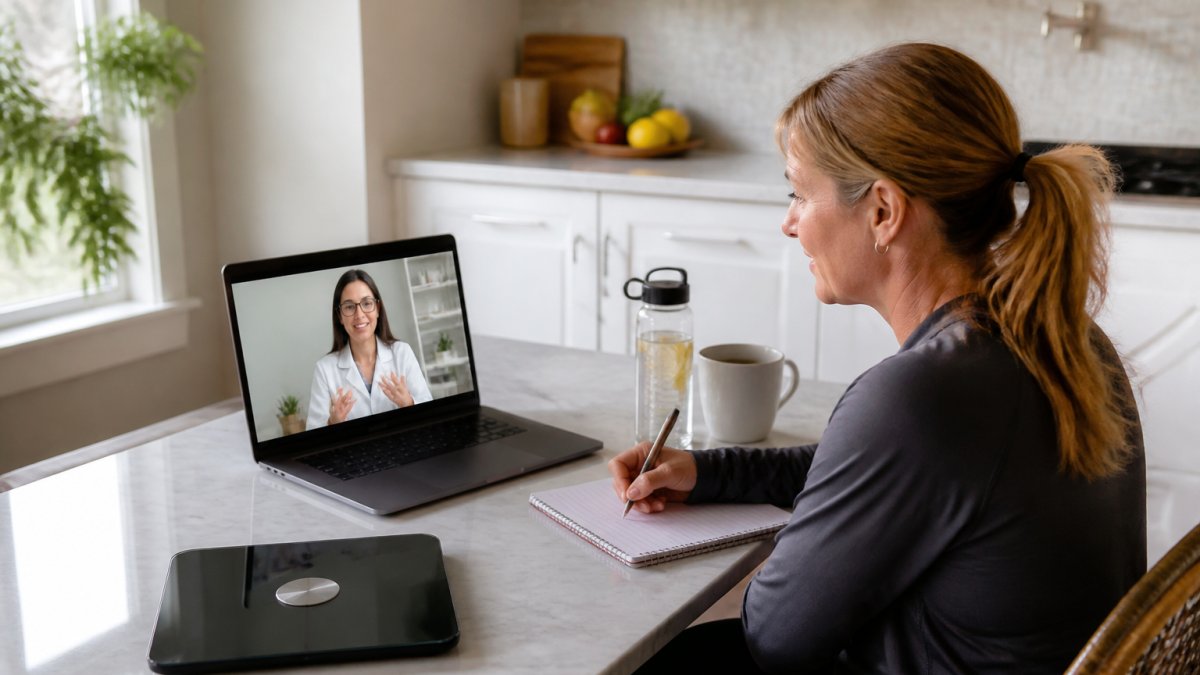
A typical online medical weight loss program runs on three layers: a clinical assessment, a personalized plan, and scheduled follow-ups. The clinical assessment usually starts with an intake form covering medical history, current medications, prior weight-loss attempts, and goals.
Your First Appointment and Follow-Up Visits
The first appointment is mostly history and safety screening. Expect questions about weight history, eating patterns, physical activity, sleep, and family history. The clinician may order labs before recommending prescription medication.
Follow-up visits usually focus on tolerating medication, side effects, weight trend, and adjustments to the treatment plan. Remote monitoring tools, including a smart scale or connected blood pressure cuff, feed data into that conversation. Many programs pair visits with a health coach for behavioral support and accountability between appointments.
Telehealth vs. In-Person Weight Loss: Where Each One Wins
Virtual care wins on access and convenience. In-person care wins on physical examination and same-room clinical judgment. Neither wins outright.
| Factor | Telehealth | In-Person Care |
|---|---|---|
| Access to care | Broad, including rural areas | Limited by location and openings |
| Convenience | Visits from home, flexible scheduling | Travel and waiting room time |
| Physical exam | Not possible | Full hands-on assessment |
| Monitoring | Smart scale, self-reported data | Measured in clinic |
| Cost structure | Often per-visit or subscription | Visit fees plus facility costs |
| Best for | Stable history, busy schedules | Complex or changing symptoms |
The strongest programs blend both. A virtual visit can handle routine medication management well. A new symptom that needs a physical exam should not be handled over video.
Inside an Online Medical Weight Loss Program: Medications, Coaching, and Monitoring
Most reputable programs combine four elements: clinical oversight, a personalized treatment plan, nutrition and physical activity guidance, and ongoing support. Weight-loss medication may be part of that plan, but it is one component, not the whole program. Integrating high-intensity movement like boxing into your routine can provide a dynamic form of exercise for weight loss that complements the structured support of a clinical program.
- Clinical oversight: a licensed provider managing prescriptions and labs
- Personalized plan: goals and targets matched to your health profile
- Behavioral support: nutrition counseling and coaching for habits that hold up after treatment ends
- Remote monitoring: weight tracking and, where relevant, blood pressure or glucose data
Telehealth Weight Loss Medication: What Can Be Prescribed and What to Expect
Telehealth weight loss medication is prescribed by a licensed provider after a clinical assessment, and only when the medication is appropriate for that patient.
Expect a real process, not an instant refill. That means a history review, possibly labs, a discussion of side effects and risks, and a plan for titration and monitoring.
What happens when medication stops matters as much as what happens when it starts.
Safety Screening and When In-Person Evaluation Is the Better Call
Safety screening is the part of virtual care that deserves the most scrutiny. A thorough program does not treat the intake form as paperwork, it treats it as the first clinical decision point. Understanding what a good screen looks like helps you tell comprehensive care from a prescription mill.
Book your consultation today →
What a Real Safety Screen Covers
A credible clinician walks through four areas before recommending any treatment:
- Medical history: cardiovascular disease, kidney or liver function, thyroid history, diabetes, sleep apnea, prior bariatric surgery, and any history of eating disorders.
- Medication and supplement review: every prescription, over-the-counter drug, and supplement, because interactions and contraindications are common with anti-obesity medications.
- Reproductive status: pregnancy, plans to become pregnant, and breastfeeding, since several weight-loss medications are not appropriate during pregnancy.
- Mental health and eating behavior: screening for binge eating, restrictive patterns, and untreated depression or anxiety that would change the treatment approach.
Labs are often part of that screen. A clinician may order blood work, such as a metabolic panel, thyroid function, or hemoglobin A1c, before recommending prescription medication, and may ask for blood pressure readings taken at home. A program that skips labs and history review entirely is not screening you; it is selling to you.
Red Flags That Call for In-Person Evaluation
Some situations call for an in-person evaluation before or instead of virtual care:
- New or unexplained chest pain, shortness of breath, or swelling
- Rapid, unexplained weight change
- A complex medication regimen or multiple chronic conditions
- Symptoms that require a physical exam to assess
- A history of eating disorders requiring specialized care
- Pregnancy or active plans to become pregnant
- Recent hospitalization or surgery
A useful rule of thumb: if the clinician would need to touch, listen, or look at something to make the call, the visit belongs in person. Virtual care can handle routine medication management and monitoring well; it should not be used to evaluate a new physical symptom.
How Hybrid Care Closes the Gap
The strongest programs blend both models. An in-person workup can establish baseline labs, blood pressure, and a physical exam, and virtual follow-ups can handle titration, side-effect checks, and monitoring from there. Ask any program whether it offers that hybrid path, it is a good signal that the clinical team is thinking about safety rather than throughput.
How to Choose a Weight Loss Program: Cost, Privacy, and Credentials
Choosing a weight loss program comes down to three checks: who is treating you, what it costs in total, and how your data is handled.
Start with credentials. Confirm the treating clinician is licensed and, for medically supervised programs, that a physician is involved in oversight. Ideal Weight Loss & Cosmetic Center, for example, is led by board-certified physician Dr.
Then ask for an itemized cost breakdown before you commit:
- Consultation and initial visit fee
- Follow-up visit fees and how often they are required
- Medication cost, and whether it is included or billed separately
- Lab work and monitoring device costs
- Cancellation and refund terms
- Whether insurance is accepted, and for which services
On privacy, ask how the program stores health data, who can access it, and whether it complies with HIPAA privacy rules. Guidance from the Federal Trade Commission on health privacy is worth reading before you hand over medical records to any app-based service.
That cost question is the one prospects ask most, and it is fair.
Weighing virtual care against a clinic visit is really a question about how much clinical attention your situation needs. Ideal Weight Loss & Cosmetic Center combines board-certified medical expertise, personalized treatment plans, and customized diet and metabolic plans, with hormone optimization available for patients whose symptoms point there.
Frequently Asked Questions
Will telehealth prescribe weight loss drugs?
Licensed clinicians can prescribe weight-loss medication through telehealth when it is medically appropriate, including GLP-1 options, after reviewing your medical history and screening for contraindications. Not every platform prescribes medication, and some focus only on coaching. Ask upfront whether the provider can prescribe, which medications it manages, and how it monitors side effects. A telehealth weight loss medication plan should always include follow-up visits and lab work where needed, not just a one-time prescription.
How does an online medical weight loss program compare with in-person care?
An online medical weight loss program typically offers video visits, messaging, coaching, and remote monitoring through a smart scale, which makes frequent check-ins easier and often more affordable. In-person care adds hands-on exams, in-office measurements, and same-day lab work, which matters if you have complex conditions or need physical evaluation. Many people do well with virtual care and step into a clinic when symptoms, medication side effects, or new health concerns need a closer look.
Who may benefit from in-person weight loss care instead of telehealth?
In-person evaluation is the safer choice if you have uncontrolled diabetes, heart disease, kidney or liver conditions, a history of eating disorders, or take multiple medications that need close review. It also fits anyone who needs a physical exam, in-office body composition testing, or hands-on support with injectable medications. If you are unsure, a consultation with a board-certified physician can clarify whether telehealth weight loss care is appropriate or whether you should be seen in a clinic.
How do I choose a weight loss program I can trust?
Check who provides the care, whether the clinician is licensed and board-certified, and how the program handles lab work, follow-up visits, and medication management. Ask for a clear breakdown of what is included and what costs extra, since pricing depends on the plan and medications chosen. Confirm how your health data is stored and shared, and whether the program coordinates with your primary care doctor. A short consultation is the fastest way to compare options without guessing.