 How-to
What to Expect From Medical Weight Loss Blood Work
Quick Summary
Medical weight loss blood work is a baseline set of lab tests taken before treatment starts, usually including blood glucose and A1C, a lipid panel, and thyroid and metabolic tests. Your provider uses these results to plan treatment safely and to measure progress later.
- Baseline panels often include blood glucose, A1C, a lipid panel, and a thyroid test.
- Many clinics request an overnight fast of about eight to twelve hours before glucose and lipid testing.
- Tell staff about any history of fainting during blood draws so they can have you lie down.
- A single out-of-range result is often repeated before any treatment decision is made.
- Do not stop prescribed medications on your own; ask your provider whether any should be paused.
Table of Contents
- Why Blood Work Is Part of Medical Weight Loss
- Weight Loss Lab Tests Your Provider May Order at Baseline
- Preparing for Your Blood Draw: Fasting and Medications
- Step by Step: The Blood Draw Appointment
- Metabolic Blood Test for Weight Loss: Reading Your Results
- GLP-1 Lab Monitoring and Whether Semaglutide Shows Up in Routine Blood Work
- Booking Your Baseline Labs at Ideal Weight Loss & Cosmetic Center
- Frequently Asked Questions
Why Blood Work Is Part of Medical Weight Loss
Last Updated: November 8, 2026
Medical weight loss blood work gives your provider a clear starting point before any treatment begins. Baseline labs help the care team understand your current metabolic health, so your plan can fit your body rather than a generic template. Blood tests show things a scale never can, including blood sugar patterns, cholesterol levels, and thyroid function.
A baseline panel is a snapshot taken before changes start, and in medical weight loss blood work it anchors every later comparison. Without it, it is hard to tell later whether a medication, diet change, or activity plan is helping or whether something else is shifting. Repeat testing during treatment then shows how your numbers respond over time.
Here is what a baseline panel helps your provider do:
- Spot conditions that affect weight, such as insulin resistance or low thyroid function
- Judge cardiovascular risk before choosing a medication
- Set realistic targets for blood pressure, blood sugar, and cholesterol
- Compare future results against where you started
Watch out: Skipping baseline labs because you feel healthy can hide problems that change which treatment is safe for you.
Weight Loss Lab Tests Your Provider May Order at Baseline
Your provider chooses tests based on your health history, medications, and goals. The following groups are common in medical weight management. Your results and plan are individual, so review them with your clinician.
Blood Glucose and A1C
Blood glucose measures sugar in your blood at a single moment. A1C reflects your average blood sugar over roughly the past two to three months (the CDC). Together, they help screen for prediabetes and diabetes, which are closely tied to excess weight.
Cholesterol and Lipid Panel
A lipid panel measures total cholesterol, LDL ("lower-density" or "bad" cholesterol), HDL ("higher-density" or "good" cholesterol), and triglycerides (Blood Cholesterol - Diagnosis). These numbers help estimate heart disease risk and guide whether lifestyle changes or medication may be needed.
Thyroid Function and Metabolic Panel
A thyroid test, usually TSH, checks whether your thyroid is working at a healthy pace. A comprehensive metabolic panel adds kidney function, liver enzymes, electrolytes, and calcium. Your provider uses these to confirm that organs can safely handle treatment.
Preparing for Your Blood Draw: Fasting and Medications
Preparation affects some results, so ask your provider exactly what to do before your appointment. Many clinics request an overnight fast of about eight to twelve hours for glucose and lipid testing, though instructions vary (Fasting for a Blood Test: MedlinePlus Medical Test).
Drink water unless told otherwise. Avoid coffee with sugar, juice, or other calorie-containing drinks while fasting. Bring a list of all medications and supplements, including doses, since some can change lab values.
Do not stop prescribed medications on your own. Ask your provider whether any should be paused before the draw.
Step by Step: The Blood Draw Appointment
Knowing the sequence of a lab draw in advance can make the appointment feel more predictable. Here is what a typical visit commonly looks like.
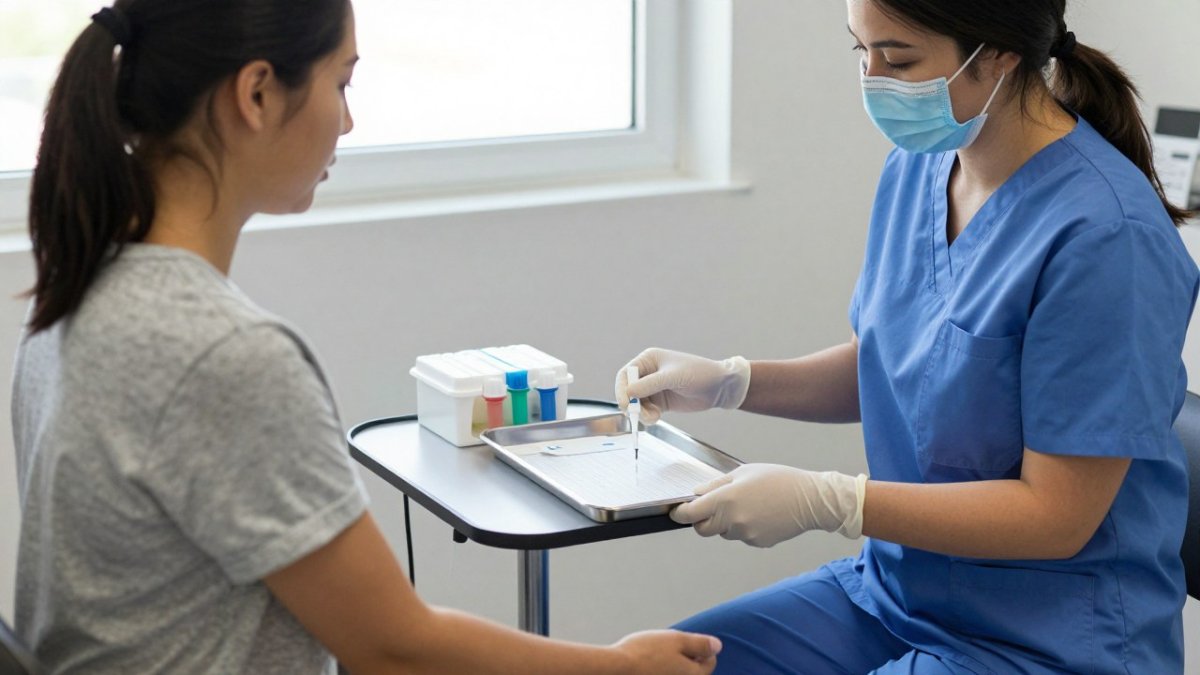
- Check-in and identity confirmation. Check-in typically involves verifying your identity and insurance or payment information, then confirming which tests your provider ordered. If you were told to fast, mention it at check-in. Bring a photo ID and your insurance card if you have coverage.
- Order review and history questions. A clinician or technician may ask about medications, supplements, recent illness, and whether you have fainted during a prior draw. This is the moment to mention needle anxiety, a history of difficult draws, or veins that tend to roll, staff can adjust technique, use a smaller needle, or bring in a more experienced phlebotomist.
- Site selection and preparation. The technician cleans the skin, usually on the inner elbow (antecubital fossa), and applies a tourniquet. If one arm has a port, IV line, or recent injury, tell staff so the other arm is used.
- The draw itself. A small needle collects several tubes of blood, typically over one to two minutes. The number of tubes depends on how many tests are ordered, a baseline panel may fill three to six tubes, while a single thyroid test may need only one. You may feel a brief pinch and a pulling sensation; most people describe it as uncomfortable rather than painful.
- Recovery and aftercare. The needle is removed, pressure is applied, and a bandage goes on. You can usually drive and return to normal activities right away. Leave the bandage on for a few hours, avoid heavy lifting with that arm for the rest of the day, and expect mild bruising that fades within a few days to a week.
Watch out: If you have a history of fainting with blood draws, tell staff before the needle goes in and ask to lie down during the draw, sitting upright is the most common reason people feel lightheaded.
Managing Discomfort, Anxiety, and Accessibility
Needle anxiety is common and worth mentioning. Practical accommodations include lying down during the draw, using a topical numbing cream (ask the lab in advance whether they allow it), looking away or using a distraction, and having a support person in the room if the lab permits. If you have a bleeding disorder, take a blood thinner, or have veins that are hard to access, tell the scheduler when you book so extra time can be set aside.
Where the Draw Happens
Some clinics draw labs in-house during your visit; others send you to an outside lab such as a hospital outpatient center or a standalone draw site. Ask which applies to you before your appointment, because fasting instructions, hours, and result turnaround can differ by location. If your provider orders tests through an external lab, confirm whether your insurance requires a specific lab network.
The blood draw follows a predictable sequence, summarised below.
| Step | What happens | Time or note |
|---|---|---|
| Check-in | Verify identity, insurance and tests ordered | Bring photo ID and insurance card |
| History questions | Discuss medications, supplements and fainting history | Mention needle anxiety or difficult draws |
| Site preparation | Clean skin, usually inner elbow, apply tourniquet | Use the other arm if one has a port or IV |
| The draw | Small needle collects several tubes | About one to two minutes |
| Recovery | Remove needle, apply pressure and bandage | Leave bandage on for a few hours |
Metabolic Blood Test for Weight Loss: Reading Your Results
Lab reports list your numbers next to a reference range, but the range is a guide, not a verdict. A result slightly outside it does not automatically mean something is wrong, and a result inside it does not guarantee everything is optimal. Your provider interprets each value against your history, medications, symptoms, and prior results.
When Results Arrive
Turnaround depends on the test and the lab, and your provider can tell you what to expect for your specific tests. Results ordered through an external lab may be released to a patient portal before a provider has reviewed them, which can be confusing, a flagged value on a portal is not the same as a diagnosis. Ask your provider how and when results will be shared with you.
How Your Provider Reads the Numbers
Clinicians rarely act on a single value in isolation. They look at patterns: a fasting glucose of 102 mg/dL sits just above the typical 99 mg/dL cutoff, but it means something different in someone with a strong family history of diabetes than in someone without one. The same logic applies to a mildly elevated TSH or a borderline LDL. In many cases the response is to repeat the test in a few weeks or months to see whether the finding is a trend or a one-time fluctuation.
What Borderline or Abnormal Results Usually Change
- Repeat testing. A single out-of-range value is often rechecked before any treatment decision, especially for glucose, thyroid, and liver enzymes.
- Lifestyle adjustments. Small shifts in nutrition, activity, or sleep may be recommended before medication changes.
- Medication review. Some results prompt a closer look at current prescriptions or dosing, including whether a weight-loss medication is appropriate and safe.
- Referral. A finding that needs specialized care, such as a thyroid nodule or significant liver enzyme elevation, may lead to a referral.
Watch out: Do not assume a flagged result on a patient portal means you are ineligible for treatment or that your plan will change, wait for your provider to review the full picture and explain what it means for you.
What Results Do Not Decide
A single lab value rarely determines eligibility for medical weight loss or dictates a specific medication. Providers weigh labs alongside your medical history, physical exam, goals, and preferences. If a result is abnormal, the next step is usually a conversation about context and options, not an automatic change to your plan.
GLP-1 Lab Monitoring and Whether Semaglutide Shows Up in Routine Blood Work
Semaglutide is a GLP-1 medication used in medical weight management. Standard blood tests do not usually detect the drug itself. Monitoring instead focuses on how your body responds, such as changes in blood sugar, kidney function, and cholesterol.
Your provider may repeat certain labs during treatment to track progress and safety. Tell your care team about any new symptoms, since some side effects warrant prompt attention.
Booking Your Baseline Labs at Ideal Weight Loss & Cosmetic Center
Baseline labs are the first step toward a plan built around your health. Our team can review your results alongside your history to shape a personalized approach. Ask about current pricing and scheduling by contacting the clinic directly, since costs depend on which tests are ordered.
To get started, schedule a consultation, share your medical history and medications, and review your fasting instructions before your draw. Your results will guide every decision that follows.
Frequently Asked Questions
Do you need to fast before weight loss blood work?
Many providers ask for an overnight fast of roughly 8 to 12 hours before a fasting lipid panel and glucose test, usually meaning no food or caloric drinks, while water and routine medications are often allowed. Requirements vary by lab and by which tests are ordered, so your clinic will give you specific instructions when the labs are scheduled. Some tests, such as A1C and thyroid panels, do not require fasting. Ask before your appointment whether you should keep taking any medications that morning.
What blood tests are done before starting a medical weight loss plan?
A typical baseline panel includes a comprehensive metabolic panel for kidney and liver function and electrolytes, a complete blood count, blood glucose and A1C, a lipid panel for cholesterol, and thyroid testing such as TSH. Your provider may add tests based on your medical history, medications, or symptoms such as fatigue or hormonal concerns. The results help establish a starting point so later changes can be compared against it.
Does GLP-1 show up in routine blood work?
Routine blood panels such as a metabolic panel or complete blood count do not measure semaglutide or other GLP-1 medications, so these drugs are not normally detected on standard tests. Specialized drug-level testing exists but is not part of typical monitoring. What routine labs can show are changes in blood sugar, A1C, lipids, and kidney or liver markers, which your provider uses to track how your body is responding during treatment.
How often do you need lab monitoring while taking GLP-1 medication?
Monitoring frequency depends on your starting health, the medication, and your provider's protocol. Many patients have labs repeated at intervals of several months to check glucose, A1C, kidney function, and lipids, with more frequent checks if you have diabetes or kidney concerns. Ask your provider for the schedule that applies to your plan, and keep the follow-up appointments so results can be reviewed together.