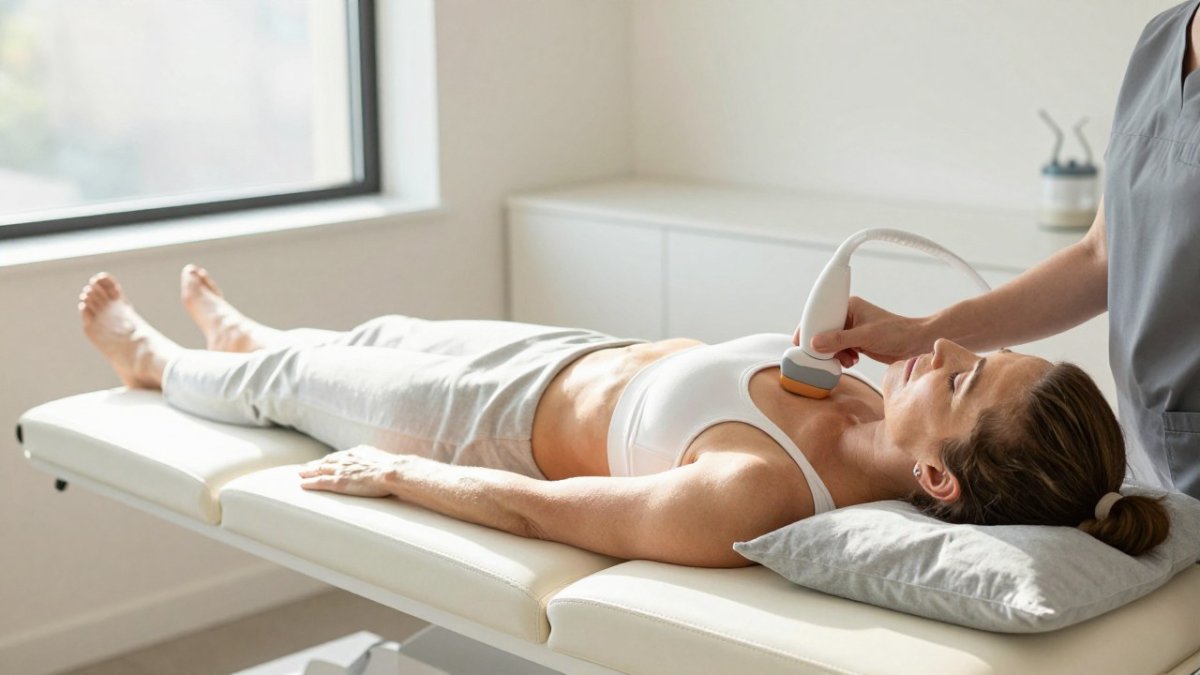
 How-to
What to Expect at Your First Body Contouring Session
Last Updated: November 10, 2026
Quick Summary
Your first body contouring session usually starts with a consultation, where a provider reviews your medical history, medications, and goals, then measures and examines the treatment area. The treatment itself depends on the method: noninvasive device sessions are the shortest, while surgical options take place in a procedural setting with anesthesia.
- Bring a list of your medications, supplements, and medical history to the visit.
- Expect the provider to take your weight and measure the treatment areas.
- Noninvasive device sessions often involve warmth or pulsing, with normal activities resumed quickly.
- Confirm which category your plan falls under before booking time off work.
- Ask for an itemized quote showing what each session and area includes.
Table of Contents
- What Body Contouring Treats and Who It Suits
- How to Prepare for Body Contouring Before Your Visit
- Your Initial Consultation and Medical History Review
- What Happens During Your First Treatment Session
- Body Contouring Treatment Duration and Number of Sessions
- What to Expect After Body Contouring and When Results Appear
- Body Contouring Questions to Ask Before Booking Your Next Visit
- Frequently Asked Questions
What Body Contouring Treats and Who It Suits
Body contouring is a group of treatments that aim to reduce stubborn fat and improve the shape of targeted areas, such as the abdomen, flanks, and thighs, and many people book their first body contouring session after diet and exercise have not changed these areas much. You can explore the body contouring services and options available to see which treatments might fit your goals. Many people use it when diet and exercise have not changed these areas much.
Body contouring is not the same as weight loss (the FDA). It works on localized areas of fat and can also address skin tone and cellulite, depending on the method. Some treatments are noninvasive, while surgical body contouring, such as liposuction, is a separate category with its own risks and recovery time (the FDA).
Good candidates often share a few traits:
- A stable weight that is close to their goal
- Realistic expectations about what the treatment can change
- Good general health, with no conditions that make treatment unsafe
- Willingness to follow aftercare and attend follow-up visits
Some people should not start treatment until they speak with a clinician. This includes people who are pregnant or breastfeeding, and those with certain heart, kidney, or circulation conditions. Anyone with a medical history should share it openly.
How to Prepare for Body Contouring Before Your Visit
Preparation helps your first session go smoothly. Start by writing down your goals, your medical history, and every medication and supplement you take.
Before your visit, take these steps:
- List your goals. Note the areas you want to change and how you want them to look.
- Gather your health records. Bring recent lab results and a list of prior surgeries.
- Check your medications. Some blood thinners and supplements can affect treatment, so ask about any changes first.
- Plan your clothing. Wear loose, comfortable clothes that are easy to remove.
- Take baseline photos. Front, side, and back photos help you track changes over time.
- Write down your questions. Bring a list so you do not forget anything during the visit.
Avoid starting a new skin product or tanning right before your appointment. Ask your provider which pre-visit steps apply to you.
Your Initial Consultation and Medical History Review
Your first body contouring session usually begins with a consultation. The provider reviews your medical history, current medications, and past treatments. They will also ask about your goals and any concerns you have.
Expect the provider to:
- Take your weight and measure the treatment areas
- Examine your skin and the shape of the target area
- Explain which treatment options may fit your body
- Discuss possible risks, side effects, and limitations
A good provider will tell you when a treatment is not a good fit. They may suggest waiting, trying a different approach, or seeing another type of specialist.
Results vary, and no provider can promise a specific outcome. A clear, honest discussion helps you make a decision you feel comfortable with.
What Happens During Your First Treatment Session
What a first session looks like depends on which category of treatment you are booked for. Noninvasive device-based sessions, muscle-stimulation sessions, and surgical procedures differ in length, preparation, sensation, and recovery, so it helps to know which one applies before you arrive.
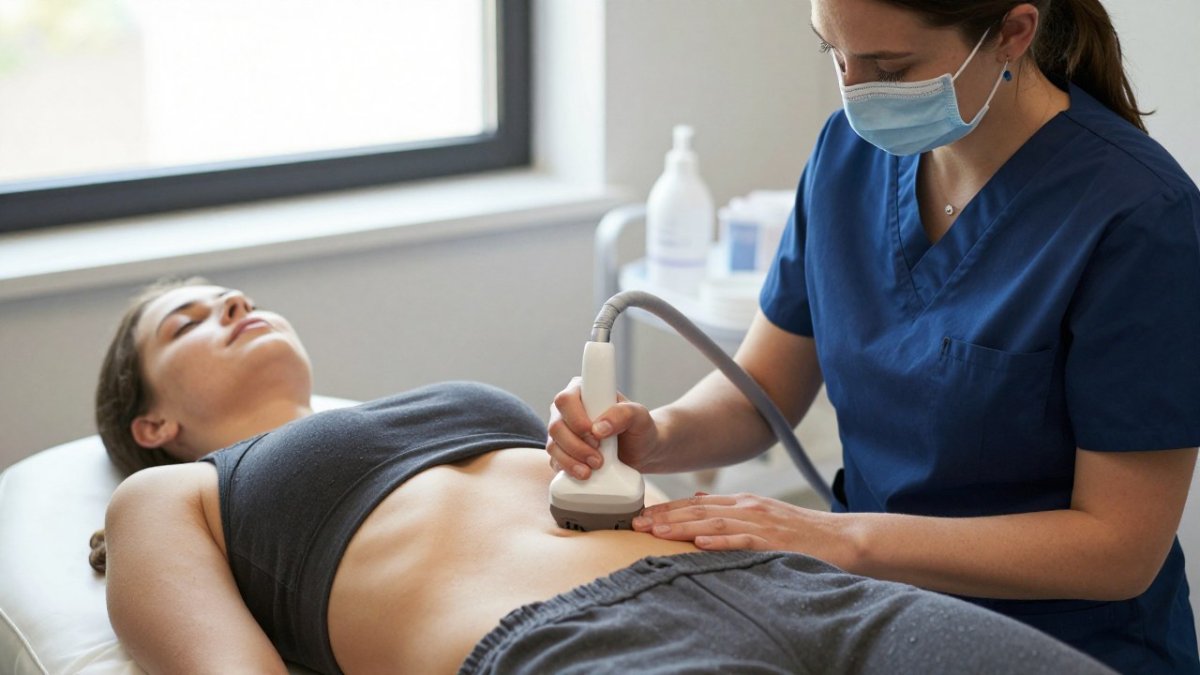
Noninvasive device sessions are usually the shortest. Length depends on how many areas are treated. Expect a brief check-in, a few minutes of positioning on a padded table, and then the provider moves an applicator across each treatment area in turn. Most people describe warmth, pulsing, or a deep massage-like sensation. Clothing is typically removed only from the treated area, and you can usually return to normal activities straight away.
Muscle-stimulation sessions use electrical or magnetic pulses to produce repeated muscle contractions. You may feel a strong rhythmic tightening that some find intense at first, so it is normal to ask for a lower setting during the session. Sessions often run longer than device-only treatments because the provider works through several areas in a set order.
Surgical body contouring, such as liposuction, is a different experience entirely. It takes place in a procedural setting with anesthesia or sedation, requires a pre-operative medical evaluation, and involves a recovery period measured in days to weeks rather than minutes. A first 'session' in this category is usually the surgery itself, preceded by consultation and pre-operative testing.
Whichever path applies, the sequence tends to follow the same general pattern: a staff member confirms your identity and treatment area, you are positioned for the chosen device or procedure, the provider adjusts settings based on your skin and goals, and you are told what to watch for afterward. Tell the provider immediately if anything feels painful, numb, or burning. For noninvasive sessions, that usually means pausing or stopping the device. Mild redness, tenderness, or temporary swelling can follow, and these normally settle within a short time.
Watch out: Do not assume a noninvasive session carries the same downtime as surgery. Confirm with your provider which category your plan falls under before you book time off work.
The table below summarises what to expect during a first session, depending on the type of treatment you are booked for.
| Session type | What it involves | Recovery or sensation |
|---|---|---|
| Noninvasive device | Applicator moved across each treatment area | Warmth, pulsing; usually return to normal activities straight away |
| Muscle stimulation | Electrical or magnetic pulses cause repeated muscle contractions | Strong rhythmic tightening; ask for a lower setting if needed |
| Surgical (e.g., liposuction) | Procedure with anesthesia or sedation after pre-operative evaluation | Recovery measured in days to weeks |
Body Contouring Treatment Duration and Number of Sessions
Most body contouring plans involve more than one visit, but the number of sessions and the timing between them depend on the treatment type, the areas being treated, and your goals. If cost is a concern, our affordable body contouring guide walks through budget-friendly options before you commit. A realistic plan is one your provider can explain in specific terms, not a vague promise of results after a fixed number of visits.
In general, noninvasive device plans are built as a series of sessions spaced days or weeks apart, with the full course often running several weeks or months. For a deeper look at how many body contouring sessions are needed, read our dedicated article on session counts. Muscle-stimulation plans may follow a similar cadence. Surgical body contouring does not work this way: it is typically a single procedure, with any touch-up work handled as a separate, later decision.
When you review a proposed plan, look for the following:
- The number of sessions recommended, and the reason for that number
- The spacing between sessions and how it may change based on your response
- Which areas are treated in each session and in what order
- Whether touch-up sessions are included or billed separately
- What criteria will be used to decide whether additional sessions are needed
A well-run plan is adjusted over time. If a provider cannot explain why they recommend a particular number of sessions, or claims every client needs the same course, treat that as a reason to ask more questions or seek a second opinion.
Cost depends on factors such as the treatment type, the number of areas treated, the number of sessions, and whether touch-up visits are included. Ask for an itemized quote during your consultation that shows what each session and each area includes, so you can compare plans on equal terms. Request a personalized quote from the clinic that spells out these components.
Watch out: A low headline price can exclude sessions, consultations, or aftercare visits. Confirm the total number of sessions included before you commit.
What to Expect After Body Contouring and When Results Appear
Results from body contouring usually develop gradually, and timelines vary between people. Our guide on how to maintain results after body contouring covers practical steps for keeping them lasting.
After treatment, a common recovery plan includes:
- Drinking plenty of water to support your body during the process
- Keeping a normal activity level unless your provider says otherwise
- Following aftercare instructions for the treated area
- Attending follow-up visits to track progress
Results depend on several factors, including your starting point, your habits, and how your body responds. Steady routines, such as balanced eating and regular movement, can help support the results you see.
Keep your baseline photos and take new ones at regular intervals. Comparing photos taken in the same lighting and position gives a clearer picture of change than memory alone.
Body Contouring Questions to Ask Before Booking Your Next Visit
Before you book a follow-up or start a plan, ask questions that help you feel informed and confident. Good questions include:
- What treatment do you recommend for my goals, and why?
- How many sessions will I likely need?
- What side effects are common, and which ones need a call to the office?
- How soon might I see results, and what will they look like?
- Who will supervise my treatment, and what are their credentials?
- What should I avoid after each session?
- What will the total cost include, and how is payment handled?
Ask your provider to explain anything you do not understand. You can also learn how to find a board certified physician before you book, so you know how to verify credentials. A clear answer should leave you feeling informed, not rushed.
If you are ready to learn more, book a consultation with Ideal Weight Loss & Cosmetic Center. Our team can review your goals, answer your questions, and explain whether body contouring may suit you.
Frequently Asked Questions
What happens during a body contouring session?
A typical first session begins with a check of your medical history, marking of treatment areas, and a short review of the plan. The provider then applies a treatment device to the targeted areas, such as the abdomen, flanks, or thighs, and adjusts settings for comfort. Most patients describe sensations such as warmth, pulsing, or muscle contractions. Sessions are usually followed by a brief check before you leave. Ask the provider to explain each step before treatment begins so you know what to expect.
How should I prepare for my first body contouring appointment?
Preparation usually includes sharing a full medical history, listing current medications and supplements, and disclosing any pregnancy, implanted devices, or recent procedures. Wear loose, comfortable clothing that is easy to remove from the treatment area. Stay well hydrated and follow any instructions your provider gives about eating, lotions, or activity before your visit. Bring questions about the plan, cost, and follow-up schedule so the consultation stays productive.
How long does a body contouring treatment session take?
Session length depends on the number and size of treatment areas and the device used. Many sessions take between 30 minutes and an hour, though multi-area plans can run longer. The number of sessions in a treatment cycle is set during your consultation and based on your goals and response. Your provider should give you an estimated schedule and explain how many visits are typically needed for the areas you want treated.
Will I feel pain during non-surgical body contouring?
Non-surgical body contouring is generally described as uncomfortable rather than painful, with sensations that can include heat, tingling, pulsing, or muscle contractions. Comfort varies by person and by treatment area. Tell your provider if the sensation becomes too intense, since settings can usually be adjusted. Some patients experience temporary redness or tenderness afterward, which typically fades on its own. Discuss pain management options during your consultation if you are concerned.