 ultimate-guide
Medically Supervised Weight Loss Columbus Ohio
Table of Contents
- What Medically Supervised Weight Loss Actually Involves
- GLP-1 Weight Loss Clinics Columbus: Medications, Benefits, and What to Expect
- Metabolic Testing, Body Composition Analysis, and Personalized Treatment Plans
- Behavioral Counseling, Nutritional Counseling, and Lifestyle Coaching
- Best Weight Loss Doctors Columbus Ohio: What Board Certification Really Means
- Medical Weight Loss Cost Columbus OH: What Shapes Your Investment
- Insurance Coverage for Weight Loss Programs Ohio: What Patients Need to Know
- Post-Program Maintenance: Keeping the Weight Off Long-Term
- Frequently Asked Questions
Last Updated: August 10, 2026
What Medically Supervised Weight Loss Actually Involves
Medically supervised weight loss is a structured, physician-led approach to weight management that goes far beyond calorie counting or commercial diet plans. At Ideal Weight Loss & Cosmetic Center, patients work directly with board-certified physician Dr. Gina Nichols, who designs individualized protocols based on clinical assessment, metabolic health data, and personal health history.
The core distinction is clinical accountability. A medically supervised program begins with a comprehensive health assessment: blood panels, metabolic screening, body composition analysis, and a review of comorbidities like hypertension, type 2 diabetes, or metabolic syndrome. From that data, a physician builds a personalized treatment plan rather than handing you a printed meal schedule. The program typically integrates pharmacotherapy when appropriate, nutritional counseling, behavioral modification support, and ongoing monitoring. Progress is tracked against objective clinical markers, not just the number on a scale.

How It Differs From Commercial Diet Programs
Most commercial diet programs are built around generalized rules: eat this, avoid that, track your macros. A physician-supervised program addresses root causes. If your resting metabolic rate is suppressed from years of yo-yo dieting, a standard calorie deficit will not produce sustainable results. If hormonal imbalance is driving fatigue and fat storage, no amount of willpower fixes that without clinical intervention. Medical weight loss can prescribe medication, order labs, and adjust a plan based on clinical response, commercial programs cannot.
Who Is a Candidate for a Medical Weight Loss Program
Most adults with a body mass index of 30 or higher, or a BMI of 27 or higher with a related health condition, are candidates for physician-supervised programs. According to the National Institute of Diabetes and Digestive and Kidney Diseases, obesity affects more than 40% of American adults and significantly raises the risk of heart disease, stroke, and type 2 diabetes. Candidacy also extends to people who have tried and failed with conventional approaches and patients whose weight is directly complicating another condition.
GLP-1 Weight Loss Clinics Columbus: Medications, Benefits, and What to Expect
GLP-1 receptor agonists have changed the clinical weight loss landscape significantly. These medications mimic a hormone that regulates appetite and glucose metabolism, producing meaningful reductions in body weight for many patients. GLP-1 medications work by slowing gastric emptying, reducing appetite signals, and improving insulin sensitivity. Patients typically experience reduced hunger between meals and lower overall caloric intake without forced restriction. The FDA prescribing information for GLP-1 medications requires that these drugs be used as part of a comprehensive weight management program that includes dietary guidance and physical activity counseling.
The medication is a tool, not the entire program. Patients who use GLP-1 medications without behavioral counseling and nutritional support tend to regain weight when they stop. The clinical work around the medication determines long-term outcomes.
GLP-1 vs. Traditional Metabolic Programs: A Direct Comparison
| Factor | GLP-1-Based Program | Traditional Metabolic Program |
|---|---|---|
| Mechanism | Appetite suppression, metabolic regulation via medication | Dietary adherence, exercise, behavioral change |
| Speed of initial results | Generally faster initial weight loss | More gradual; depends on metabolic baseline |
| Best suited for | BMI 30+, insulin resistance, metabolic syndrome | Motivated patients with moderate weight goals |
| Requires ongoing medication | Yes, until discontinued with physician guidance | No pharmacotherapy required |
| Risk of weight regain | Higher if stopped without lifestyle foundation | Lower if behavioral changes are maintained |
| Monitoring required | Regular clinical check-ins, lab work | Periodic assessments |
| Comorbidity management | Strong benefit for type 2 diabetes, hypertension | Indirect benefit through weight reduction |
Many patients benefit most from a hybrid: GLP-1 medication to reduce physiological barriers to weight loss, combined with the behavioral and nutritional framework that makes results stick. A board-certified physician evaluates which approach fits your specific metabolic profile.
Metabolic Testing, Body Composition Analysis, and Personalized Treatment Plans
Most weight loss failures trace back to a single problem: the plan was built on assumptions rather than data. Metabolic testing eliminates the guesswork.
Resting metabolic rate testing measures how many calories your body burns at complete rest, which is the foundation of any accurate caloric target. Many patients discover their resting metabolic rate is significantly lower than standard formulas predict. Body composition analysis goes beyond weight, distinguishing fat mass from lean muscle mass and tracking changes over time.
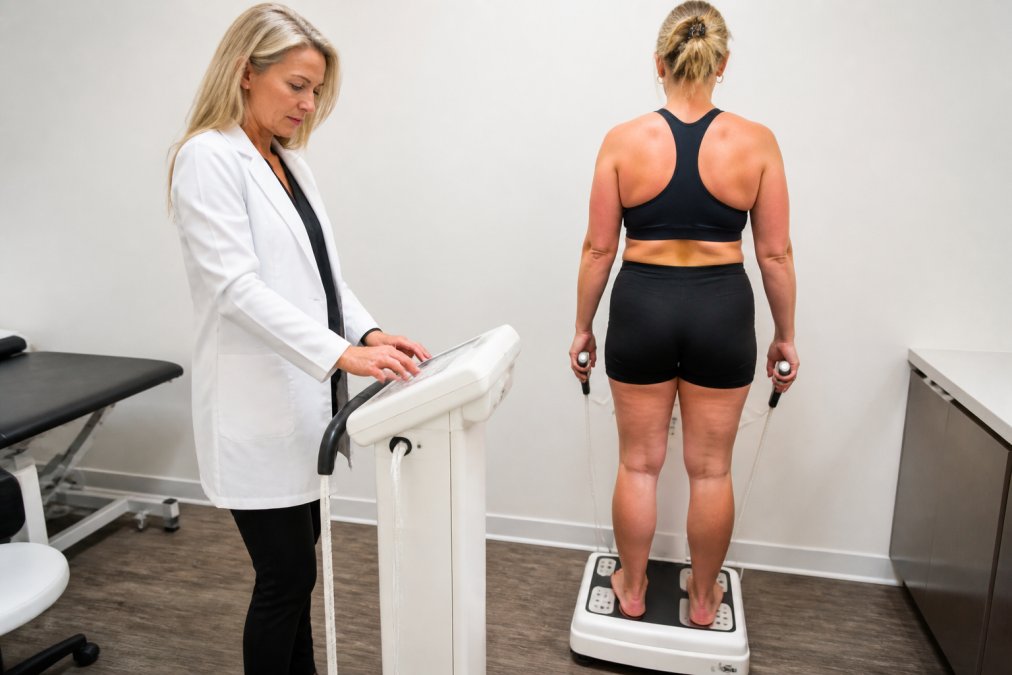
A comprehensive health assessment at the start of a physician-supervised program typically includes:
- Resting metabolic rate measurement
- Body composition analysis
- Full metabolic blood panel, including thyroid, glucose, and lipid markers
- Blood pressure and cardiovascular screening
- Assessment of hormonal balance and dietary patterns
From this data, the physician builds a personalized treatment plan that specifies caloric targets, macronutrient distribution, any indicated pharmacotherapy, and a timeline for reassessment. The plan is adjusted as the patient progresses.
Behavioral Counseling, Nutritional Counseling, and Lifestyle Coaching
Behavioral modification addresses the patterns, triggers, and habits that drive eating behavior independent of hunger. Stress eating, reward-based eating, and disrupted sleep patterns all have measurable effects on weight. Behavioral counseling identifies these patterns and builds practical strategies to interrupt them.
Nutritional counseling in a clinical program is specific, not a generic handout. It involves working with a qualified professional to design a dietary approach that fits your metabolic needs, food preferences, and daily schedule. Lifestyle intervention encompasses sleep hygiene, physical activity guidance calibrated to current capacity, and stress management. These factors directly affect hormonal balance, particularly cortisol and insulin, which influence fat storage.
According to the American Board of Obesity Medicine's clinical practice guidelines, long-term weight management outcomes improve substantially when behavioral counseling is integrated with medical treatment.
Best Weight Loss Doctors Columbus Ohio: What Board Certification Really Means
Board certification is not a marketing phrase. The American Board of Obesity Medicine certifies physicians who have completed dedicated training in obesity medicine, passed a comprehensive examination, and demonstrated clinical competency in managing obesity as a chronic disease. This is distinct from a general practitioner who offers weight loss services as an ancillary part of their practice.
Dr. Gina Nichols, founder of Ideal Weight Loss & Cosmetic Center, brings over two decades of clinical experience to patient care in Columbus, Reynoldsburg, and Pickerington. Board-certified expertise means your treatment plan is built on evidence-based weight loss principles. When evaluating any weight loss physician, ask directly: What board certification do you hold? Are you certified in obesity medicine specifically? The answer tells you whether the person designing your program has specialized training in metabolic health.
Book your consultation today →
A common mistake patients make is equating a physician's willingness to prescribe GLP-1 medications with expertise in weight management. Prescribing authority and clinical specialization are different things. Comprehensive, physician-supervised programs require both.
Medical Weight Loss Cost Columbus OH: What Shapes Your Investment
Medical weight loss cost in Columbus, OH varies considerably based on program structure, duration, and the specific interventions involved. The primary cost variables include:
- Initial comprehensive assessment: Labs, metabolic testing, and body composition analysis involve equipment, physician time, and interpretation.
- Pharmacotherapy: GLP-1 medications carry their own cost structure, depending on dosing, duration, and insurance coverage.
- Ongoing monitoring visits: Physician-supervised programs require regular check-ins to track progress and adjust protocols.
- Behavioral and nutritional counseling: Depending on the program, this may be bundled or billed separately.
- Supplementary interventions: Hormone optimization or other adjunct treatments add to total investment if included.
Ideal Weight Loss & Cosmetic Center offers customized plans, which means pricing reflects the specific combination of services each patient needs. For current program pricing, book a consultation directly with the clinic. What patients consistently underestimate is the cost of not treating obesity. Unmanaged metabolic syndrome, hypertension, and type 2 diabetes carry substantial long-term healthcare costs.
Insurance Coverage for Weight Loss Programs Ohio: What Patients Need to Know
Insurance coverage for weight loss programs in Ohio varies by plan, employer, and the specific services involved. Under the Affordable Care Act, many insurance plans are required to cover obesity screening and counseling as a preventive service. However, coverage for comprehensive medical weight loss programs, including pharmacotherapy, varies widely. GLP-1 medications have inconsistent coverage: some commercial plans cover them for diabetes management but not for weight loss alone.
Ohio Medicaid coverage for weight loss services has expanded in recent years, but the scope depends on the specific plan and whether the treating physician meets credentialing requirements. Patients on Medicare should review Medicare's coverage policies for obesity screening and counseling.
Practical steps for Ohio patients:
- Contact your insurance carrier and ask whether your plan covers "obesity medicine" or "medically supervised weight loss."
- Ask whether GLP-1 medications are covered under your pharmacy benefit.
- Request a prior authorization checklist if your plan requires pre-approval.
- Ask the clinic whether they assist with insurance verification before your first appointment.
Post-Program Maintenance: Keeping the Weight Off Long-Term
Weight regain prevention deserves direct attention. When the body loses significant weight, it adapts by reducing resting metabolic rate and increasing hunger hormones. This is not a failure of willpower; it is a biological response. A post-program maintenance roadmap accounts for this adaptation explicitly.
Effective long-term maintenance after a physician-supervised program typically involves:
- Metabolic re-testing at program completion: Establishing your new resting metabolic rate baseline prevents reverting to pre-program caloric targets that are now too high.
- Structured transition off pharmacotherapy: Patients discontinuing GLP-1 medications should do so with a physician-guided plan. Behavioral strategies need to be firmly in place before the medication is withdrawn.
- Continued behavioral check-ins: Many patients benefit from periodic counseling sessions at 3- and 6-month intervals post-program.
- Hormonal balance monitoring: Hormonal shifts during and after significant weight loss can affect energy, mood, and metabolism.
- Sustainable dietary adherence strategy: The maintenance diet is not the weight loss diet. Caloric targets increase modestly, and the structure shifts from deficit to balance.
| Maintenance Phase | Key Action | Why It Matters |
|---|---|---|
| Program completion | Metabolic re-testing | Sets accurate caloric baseline for maintenance |
| Medication taper | Physician-guided reduction | Prevents rebound hunger and weight regain |
| 3-month post-program | Behavioral counseling check-in | Addresses early relapse patterns |
| 6-month post-program | Body composition re-assessment | Confirms lean mass preservation |
| Ongoing | Hormonal balance monitoring | Catches metabolic shifts early |
Long-term health outcomes from physician-supervised weight loss are substantially better when patients have a defined maintenance protocol. The goal is not just reaching a target weight; it is building the metabolic and behavioral infrastructure to stay there.
Obesity is a chronic medical condition, not a character flaw, and treating it effectively requires the same clinical rigor as managing any other complex health condition. Ideal Weight Loss & Cosmetic Center, led by board-certified physician Dr. Gina Nichols, offers the comprehensive, evidence-based framework that Columbus-area patients need: personalized treatment plans, GLP-1 medication management, metabolic testing, hormonal balance support, and a post-program maintenance roadmap built into the care model. Book your consultation today with Ideal Weight Loss & Cosmetic Center and take the first step toward lasting metabolic health.
Frequently Asked Questions
How much does medically supervised weight loss cost in Columbus, Ohio?
Program costs vary based on the services included, such as metabolic testing, prescription medications like GLP-1 receptor agonists, body composition analysis, and the frequency of follow-up visits. Because every plan is personalized, there is no single flat fee. The best way to get an accurate figure is to schedule a comprehensive health assessment with a physician-supervised clinic, where your specific treatment plan and associated costs can be outlined clearly before you commit.
Does insurance cover medical weight loss programs in Ohio?
Coverage varies significantly by insurer and plan. Some Ohio health plans cover obesity medicine consultations and certain prescription medications, including GLP-1 receptor agonists, when a physician documents a clinical need. However, many plans exclude nutritional counseling or behavioral modification sessions. Patients should contact their insurer directly to confirm benefits, request prior authorization documentation if required, and ask the clinic whether they assist with insurance verification before starting a program.
Are GLP-1 medications like Wegovy or Zepbound available at Columbus weight loss clinics?
Yes, board-certified physicians at medically supervised weight loss clinics in Columbus can prescribe GLP-1 receptor agonists when clinically appropriate. These medications work by regulating appetite and blood sugar and are typically combined with nutritional counseling and behavioral modification for the best long-term outcomes. Availability depends on your health history, body mass index, and any comorbidities. A physician will review your full medical screening before recommending any pharmacotherapy.
What should I look for when choosing a weight loss doctor in Columbus?
Prioritize a board-certified physician with documented training in obesity medicine or a related specialty. Ask whether the clinic offers comprehensive health assessments, metabolic testing, and personalized treatment plans rather than a one-size-fits-all protocol. A strong program should address behavioral modification and post-program maintenance, not just short-term weight reduction. Credentials, patient outcomes, and transparency around costs and realistic timelines are all signals of a legitimate, patient-centered care approach.
How long do medically supervised weight loss programs typically last?
Program length depends on individual goals, starting weight, and how the body responds to the chosen interventions. Many patients see meaningful progress within the first three to six months, particularly when combining a personalized nutrition plan with pharmacotherapy or metabolic support. Physician-supervised programs are generally designed as long-term lifestyle interventions rather than short-term fixes, with ongoing follow-up to prevent weight regain and support sustainable weight loss over time.
I've tried diets before and always regain the weight. How is this different?
Medically supervised programs address the biological and behavioral factors behind weight regain, not just calorie intake. A board-certified physician evaluates your resting metabolic rate, hormonal balance, and any comorbidities like metabolic syndrome that make weight loss harder. Treatment may include pharmacotherapy, body composition analysis, and behavioral counseling, all adjusted as your body changes. The post-program maintenance phase is built into the protocol specifically to reduce the cycle of losing and regaining weight.