 how-to
Do Non-Surgical Body Treatments Work? A 2026 Guide
Table of Contents
- What Are Non-Surgical Body Treatments and How Do They Work?
- Common Types of Non-Surgical Body Sculpting Technologies
- Non-Surgical vs. Surgical Body Contouring: What's the Real Difference?
- FDA-Cleared Body Contouring Devices: Safety and Efficacy
- Body Contouring Recovery Time and What to Expect
- Realistic Results: Timeline and Maintenance
- Who Is an Ideal Candidate for Non-Surgical Body Treatments?
- Frequently Asked Questions
Last Updated: August 28, 2026
What Are Non-Surgical Body Treatments and How Do They Work?
Non-surgical body treatments reduce fat, tighten skin, and contour the body without invasive surgery. These treatments target adipose tissue using energy-based technologies, thermal energy, radiofrequency waves, ultrasound, or extreme cold, to trigger fat cell apoptosis, the natural process by which fat cells die and are eliminated by the body's lymphatic system.
Unlike surgical liposuction, which physically extracts fat through incisions, non-invasive fat reduction works with your body's own metabolic processes. Results unfold gradually over weeks or months, eliminating the risks, recovery time, and downtime associated with surgery.
At Ideal Weight Loss & Cosmetic Center, board-certified physician Dr. Gina Nichols and her team combine these advanced technologies with medically supervised weight loss programs and hormone optimization to address both the cosmetic and metabolic aspects of body contouring. The clinic recognizes that stubborn fat deposits often persist despite diet and exercise because certain areas are genetically resistant to fat loss.

The science behind fat reduction technologies
Fat reduction technologies operate through distinct mechanisms. Cryolipolysis uses controlled cooling to crystallize fat cells without harming surrounding skin. Radiofrequency treatments emit electromagnetic waves that heat subcutaneous fat layers, triggering collagen production while destroying fat cells. Ultrasound-based systems use focused sound waves to create cavitation bubbles within fat tissue, mechanically disrupting cell membranes.
The FDA has cleared multiple devices in each category, meaning they've met rigorous safety and effectiveness standards. Efficacy varies by technology, treatment area, and individual factors like baseline body mass index and skin quality.
When fat cells die, the body's lymphatic system gradually processes and eliminates them over 8 to 12 weeks (peer-reviewed research). Results peak around the 12-week mark for most non-surgical body treatments, with some patients seeing improvements for up to six months after a single session.
Why diet and exercise alone may not address stubborn fat
Fat distribution is largely determined by genetics and hormonal patterns. Estrogen drives fat storage in the hips, thighs, and breasts in women, while anandrogens influence abdominal fat deposition in men. Targeted fat loss through diet and exercise is largely a myth, the body mobilizes fat from wherever it's genetically predisposed to burn it first.
Non-surgical body treatments fill a real gap by allowing direct targeting of localized fat deposits resistant to systemic weight loss efforts. They're body-sculpting tools for people who've already achieved a healthy weight or are close to it but struggle with isolated pockets of stubborn fat. Someone significantly overweight would benefit more from comprehensive metabolic intervention, including medically supervised weight management and hormone optimization, paired with non-surgical body contouring for final refinement.
Common Types of Non-Surgical Body Sculpting Technologies
Cryolipolysis and cooling-based fat reduction
Cryolipolysis was the first widely adopted non-invasive fat reduction technology. A specialized applicator is placed against the skin, and the device gradually reduces temperature to around 4°C, held for 35 to 60 minutes depending on the device and treatment area (the FDA). Fat cells crystallize and die while the skin above remains intact. The body gradually eliminates dead cells through normal metabolic processes, with noticeable results after 8 to 12 weeks and continued improvement through six months.

Cryolipolysis works best on moderate fat deposits, roughly one to two inches of pinchable fat, particularly on the flanks, abdomen, under the chin, and inner thighs. The procedure requires no downtime; patients can return to normal activities immediately.
Radiofrequency and ultrasound energy treatments
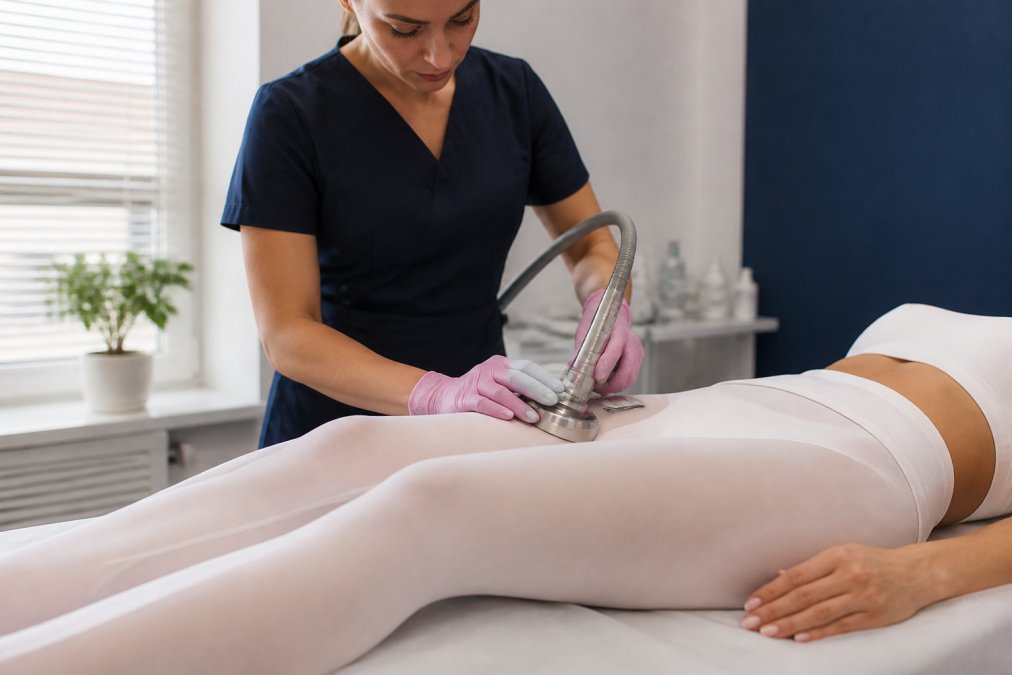
Radiofrequency treatments emit electromagnetic waves that heat subcutaneous fat layers, disrupting fat cells while stimulating collagen remodeling. This makes radiofrequency particularly useful when skin laxity is a concern alongside fat reduction.
Ultrasound-based systems use focused acoustic energy to create cavitation, mechanically disrupting fat cell membranes. This approach can treat deeper fat layers and larger treatment areas. Both radiofrequency and ultrasound systems typically involve minimal discomfort and no downtime, with results developing over several weeks.
Non-Surgical vs. Surgical Body Contouring: What's the Real Difference?
Surgical liposuction physically extracts fat through incisions, making it the more aggressive approach. A single session can remove substantially more fat than non-surgical treatments, with immediate and dramatic results. However, surgery carries inherent risks: infection, bleeding, contour irregularities, and prolonged recovery lasting weeks to months.
Non-surgical body treatments are gentler and work with your body's natural processes. Results are more subtle and develop gradually, but there's no surgical risk, no downtime, and no need for anesthesia. For someone with 10 to 20 pounds of localized fat, non-surgical treatments often suffice. For someone needing to remove 30+ pounds, surgery may be more efficient.
Cost differs substantially. A single liposuction procedure costs more upfront but is typically one-time. Non-surgical body treatments cost less per session but often require multiple treatments, making total investment comparable depending on the extent of contouring desired.
FDA-Cleared Body Contouring Devices: Safety and Efficacy
The FDA classifies body contouring devices as Class II or Class III medical devices, meaning they've undergone rigorous review to demonstrate safety and efficacy. FDA clearance means the device has been proven safe and effective in clinical studies when used as directed.
CoolSculpting (cryolipolysis) has the longest track record and most published clinical data. Radiofrequency systems like Thermage and Exilis, and ultrasound-based devices like UltraShape, also carry strong clinical support. Studies show fat reduction ranging from 20% to 25% per treatment area after a single session, with greater reduction possible with multiple treatments (peer-reviewed research).
Safety profiles are favorable when devices are used by trained practitioners. The most common side effects are temporary: redness, swelling, bruising, or mild discomfort. Serious complications are rare. Paradoxical adipose hyperplasia, where fat increases in the treated area, occurs in fewer than 1% of cryolipolysis patients.
Choosing a qualified provider matters significantly. Board-certified physicians and licensed aesthetic practitioners with extensive training deliver superior outcomes. Proper patient selection, correct treatment parameters, and realistic expectation-setting are equally important as the device itself. hormone therapy for weight loss.
Body Contouring Recovery Time and What to Expect
One of the primary advantages of non-surgical body treatments is minimal recovery. Most patients experience zero downtime and can return to work, exercise, and normal activities immediately after treatment.
Book your consultation today →
Mild redness and swelling are common and typically resolve within hours to a day. Some patients report temporary numbness or tingling, particularly after cryolipolysis, as sensation returns within days to weeks. Physical activity restrictions are minimal; patients can resume exercise the same day for most treatments.
Bruising is uncommon with non-surgical body treatments, though it can occur with ultrasound-based systems or in patients with bleeding disorders. Compression garments are sometimes recommended but not mandatory.
The gradual nature of fat elimination means patients don't see dramatic changes immediately. By the 8-week mark, most notice visible fat reduction. By 12 weeks, results typically plateau.
Realistic Results: Timeline and Maintenance
How long results actually last
Fat cells destroyed during treatment are genuinely gone; the body doesn't regenerate destroyed fat cells. However, remaining fat cells can expand if diet and lifestyle habits worsen. Non-surgical body treatments permanently reduce the number of fat cells in the treated area, but they don't prevent weight gain.
For patients who maintain their weight and healthy habits, results are essentially permanent. For patients who experience significant weight gain, the benefit erodes over time. Results typically last several years to indefinitely, provided weight remains stable. Some patients choose maintenance treatments every 1 to 2 years to address new fat accumulation or enhance results further.
Post-procedure lifestyle protocols for lasting outcomes
Diet is paramount. Patients who return to eating patterns that created original fat deposits will see diminished results. Exercise supports both fat loss and skin tightening. Cardiovascular exercise helps mobilize remaining fat, while resistance training builds muscle definition.
Hydration supports the lymphatic system's elimination of fat cell debris. Sleep and stress management significantly impact metabolism and weight maintenance. Poor sleep disrupts appetite-regulating hormones, while chronic stress elevates cortisol, promoting abdominal fat accumulation.
For patients with hormonal imbalances, hormone optimization may be necessary to prevent fat reaccumulation. At Ideal Weight Loss & Cosmetic Center, Dr. Gina Nichols integrates hormone assessment and optimization into the treatment plan, recognizing that hormonal balance is foundational to lasting results.
Who Is an Ideal Candidate for Non-Surgical Body Treatments?
Medical history and contraindications
Certain medical conditions contraindicate non-surgical body treatments. Patients with cryosensitivity conditions like cold urticaria or Raynaud's phenomenon should avoid cryolipolysis. Those with active skin infections, open wounds, or severe dermatological conditions should postpone treatment. Pregnancy is a contraindication for all non-surgical body contouring treatments.
Patients taking anticoagulants or with bleeding disorders may experience excessive bruising. Those with pacemakers or implanted electrical devices should avoid radiofrequency and ultrasound treatments unless cleared by their cardiologist.
A comprehensive medical history is essential before treatment. Treatment at a medical facility led by a board-certified physician ensures physicians can assess medical complexity, identify contraindications, and modify treatment safely.
Screening for body dysmorphia and realistic expectations
Patients with body dysmorphic disorder, characterized by obsessive focus on perceived appearance flaws, are not good candidates for cosmetic treatment. Realistic expectation-setting is foundational to patient satisfaction. Non-surgical body treatments produce subtle to moderate improvements, not dramatic transformation.
The ideal candidate is someone who:
- Has achieved or is close to a healthy weight
- Struggles with isolated pockets of diet-resistant or exercise-resistant fat
- Understands results develop gradually over 8 to 12 weeks
- Is committed to maintaining results through healthy lifestyle habits
- Has realistic expectations about improvement degree
- Is psychologically comfortable with their body and seeking enhancement
During consultation at Ideal Weight Loss & Cosmetic Center, Dr. Nichols assesses both medical suitability and psychological readiness, ensuring treatments are performed on individuals most likely to benefit and be satisfied.
Non-surgical body treatments deliver measurable fat reduction with minimal risk and downtime when performed by qualified practitioners on appropriately selected patients. They're not weight-loss solutions and require lifestyle maintenance for lasting results. They work best as part of a comprehensive approach to health and body composition including medically supervised nutrition, exercise, and when indicated, hormone optimization. At Ideal Weight Loss & Cosmetic Center, board-certified physician Dr. Gina Nichols integrates non-surgical body contouring with personalized weight management and metabolic optimization to help patients achieve lasting results and renewed confidence. Book your consultation today to explore whether non-surgical body treatments are right for your goals.
Frequently Asked Questions
Does non-surgical body sculpting actually work?
Non-surgical body treatments can produce measurable fat reduction and skin tightening, but results vary based on the technology, treatment area, and individual factors. Cryolipolysis and radiofrequency devices have clinical evidence supporting their effectiveness for targeting localized fat deposits that resist diet and exercise. Results typically appear gradually over 8-12 weeks as fat cells undergo apoptosis. Success depends on realistic expectations, proper patient selection, and adherence to post-procedure protocols. A board-certified physician can assess whether you're a suitable candidate and what outcomes you can reasonably expect.
How long do results from non-surgical body treatments last?
Results can be long-lasting when you maintain a stable weight and healthy lifestyle. Once fat cells are eliminated through non-surgical body contouring, they do not regenerate in that specific area. However, remaining fat cells can expand if you gain weight. Most patients see sustained results for 1-2 years or longer with proper maintenance. Some treatments may require periodic touch-up sessions to maintain optimal outcomes. Your physician will discuss a personalized maintenance plan during your consultation to help you achieve lasting results.
What is the difference between weight loss and body contouring?
Weight loss reduces overall body fat through diet, exercise, or medications like GLP-1 drugs, affecting your entire body. Body contouring targets specific, stubborn fat deposits that remain even after significant weight loss or consistent exercise. Non-surgical body treatments work best for diet-resistant and exercise-resistant fat in localized areas like the abdomen, flanks, thighs, or arms. Many patients benefit from combining medically supervised weight management with non-surgical body contouring to address both overall metabolic health and aesthetic concerns.
What are the safest non-surgical body sculpting procedures?
FDA-cleared body contouring devices have undergone rigorous testing for safety and efficacy. Technologies like cryolipolysis and radiofrequency have strong clinical track records when performed by trained professionals. Safety depends on proper patient selection, avoiding contraindications (such as certain medical conditions or medications), and following pre- and post-procedure protocols. A board-certified physician will screen your medical history and discuss any risks specific to your situation. Choosing a qualified, experienced provider is critical to minimizing complications and achieving safe, effective results.