 how-to
Body Contouring Recovery Time: What to Expect
Table of Contents
- What Is Body Contouring and How Recovery Differs by Type
- Non-Surgical Body Contouring Downtime: What the First Week Looks Like
- Body Contouring Aftercare Tips for Faster Healing
- How Long Does Body Contouring Last and When Will You See Results
- Signs of Complications to Watch for During Recovery
- Mental and Emotional Recovery After Body Contouring
- Building Your Recovery Kit and Planning Follow-Up Care
- Frequently Asked Questions
Last Updated: September 22, 2026
What Is Body Contouring and How Recovery Differs by Type
Body contouring is a group of treatments that reshape specific areas of the body by removing fat, tightening skin, or building muscle, and body contouring recovery depends on which type you choose. Recovery time for body contouring depends almost entirely on which type you choose. The question "what is the recovery time for body contouring" has no single answer, because a non-surgical session and a surgical procedure sit at opposite ends of the downtime scale.
Non-Surgical vs. Surgical Body Contouring
Non-surgical body contouring uses external energy, cooling, or radiofrequency to target fat cells or tighten skin without cuts. Surgical contouring, such as liposuction or a tummy tuck, removes tissue directly and needs real healing time.
Here's the practical split:
- Non-surgical: little to no downtime, mild soreness, no incisions
- Surgical: days to weeks of downtime, surgical incisions, compression garments, activity restrictions
Non-Surgical Body Contouring Downtime: What the First Week Looks Like
Non-surgical body contouring downtime is usually minimal. Many patients return to desk work the same day or the next. Mild swelling, redness, or soreness in the treated area is common and typically fades within a few days.
Day-by-Day Expectations After Treatment
A typical first week looks like this:
- Day 1: Treatment done; mild redness or swelling; most people go about their day
- Days 2-3: Soreness peaks; light activity is fine; skip intense workouts
- Days 4-7: Swelling eases; sensation returns; normal routine resumes
Results don't show up in week one. The body needs time to clear the treated fat cells, which is why patience matters more than any single session.
Body Contouring Aftercare Tips for Faster Healing
Aftercare is important for body contouring recovery. The first two weeks can influence how quickly swelling resolves, how well treated areas heal, and how soon results may be visible.

Nutrition and Hydration Protocols That Support Healing
What you eat and drink directly affects tissue repair, inflammation, and lymphatic drainage. Building recovery meals around certain priorities can support healing:
- Protein at every meal. Aim for a palm-sized portion of lean protein (eggs, chicken, fish, Greek yogurt, tofu) at breakfast, lunch, and dinner. Protein supplies the amino acids your body uses to rebuild tissue.
- Anti-inflammatory foods. Fatty fish, leafy greens, berries, nuts, and olive oil are often suggested to help manage post-treatment swelling. Some providers also suggest turmeric or ginger in cooking.
- Fiber and fluids. Water, herbal tea, and broth can support lymphatic drainage and help manage constipation that can follow anesthesia or reduced activity. A reasonable target is roughly half your body weight in ounces of water per day, unless your provider says otherwise.
Activity, Sleep, and Compression
Movement and rest work together during recovery:
- Walk early and often. Short, frequent walks, even five to ten minutes at a time, support circulation and help prevent blood clots after surgical procedures.
- Respect lifting limits. After certain surgical procedures, lifting restrictions are often recommended for the first two to four weeks. Straining too soon may raise the risk of fluid buildup and can affect healing tissue.
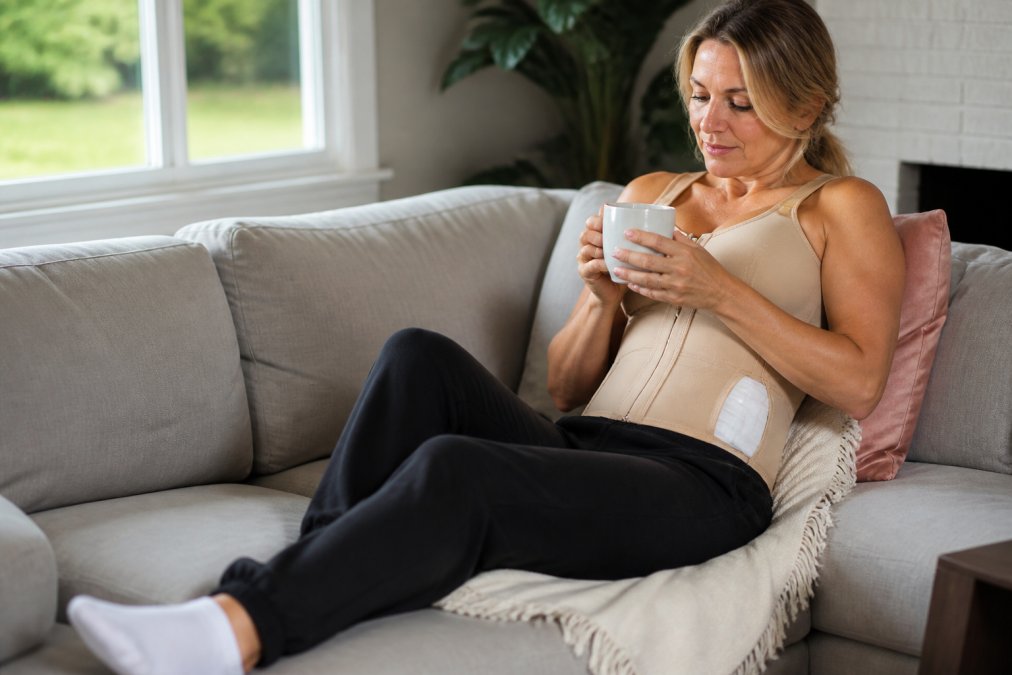
- Wear compression as directed. Compression garments reduce swelling, support the skin as it re-drapes, and are typically worn for several weeks after surgical contouring. Non-surgical treatments rarely require them.
- Prioritize sleep. Prioritizing sleep can support healing. Seven to nine hours a night, plus short naps in the first week, is a common recommendation.
Recovery Kit Essentials
A small, pre-packed kit removes daily friction in the first week. Consider having these on hand before treatment day:
- Loose, front-closing clothing that won't rub incisions
- A wedge pillow or extra pillows to keep your upper body elevated for sleep
- A large water bottle and a straw (straws are easier right after anesthesia)
- Protein-rich snacks: Greek yogurt, nuts, hard-boiled eggs, protein shakes
- Over-the-counter pain relief, if approved by your provider
- A compression garment, if your procedure requires one
- Scar care supplies (silicone strips or gel) for later weeks, if recommended
- Your provider's after-hours contact number posted somewhere visible
Follow-Up Care
Follow-up appointments track your healing and confirm results. Surgical patients typically have visits within the first week, again at two to four weeks, and then at three to six months. Non-surgical patients may have one or two check-ins. Don't skip them, even if you feel fine, providers often catch small issues like seromas or slow-healing incisions before they become bigger problems.
How Long Does Body Contouring Last and When Will You See Results
Results timelines and longevity vary widely by procedure. Here's a procedure-by-procedure breakdown.
When You'll See Results, by Procedure
- CoolSculpting (cryolipolysis): Fat cells are destroyed by controlled cooling, but the body clears them gradually. Most patients notice early changes around three to four weeks, with the most noticeable results at two to three months. A single area may need more than one session.
- Radiofrequency and ultrasound tightening (e.g., Thermage, Ultherapy-style devices): Collagen remodeling takes time. Some tightening appears within a few weeks, but peak results typically show at three to six months as new collagen forms.
- EM muscle-building treatments (e.g., Emsculpt-style devices): Muscle changes can appear in about four to six weeks, with fuller results at eight to twelve weeks after a completed series.
- Liposuction: Swelling masks early results. Most patients see a meaningful shape change at four to six weeks, with final results at three to six months once swelling fully resolves.
- Tummy tuck (abdominoplasty): The most dramatic change, but also the slowest reveal. Early results are visible at six to eight weeks; final contour typically shows at six months to a year as swelling resolves and scars mature.
- Arm lift, thigh lift, and body lift: Similar to a tummy tuck, early change at six to eight weeks, final results at six to twelve months.
How Long Results Last
Longevity depends on whether the procedure removes fat cells or simply shrinks them:
- Fat-destroying treatments (cryolipolysis, liposuction): Treated fat cells are permanently removed. However, the remaining fat cells can still expand with weight gain, which is why the shape can change if the number on the scale climbs.
- Skin-tightening and muscle-building treatments: Results are not permanent. Collagen and muscle gains fade over time without maintenance sessions, typically over six to twelve months.
- Surgical lifts: The skin removal is permanent, but aging, weight fluctuation, and sun exposure continue to affect the result. Many patients enjoy ten years or more of improvement with stable weight.
What Protects Your Results
The basics still apply, and they matter more than any single treatment:
- Keep your weight within a stable range, a swing of more than about 10 pounds can visibly change contour
- Stay active with a mix of strength training and cardio
- Drink water and prioritize protein to support skin and muscle
- Use sun protection on scars, which helps them fade and stay flat
- Return for maintenance sessions if your provider recommends them
Signs of Complications to Watch for During Recovery
Most recoveries are uneventful, but knowing the warning signs protects you. Contact your provider right away if you notice:
- Fever or chills
- Increasing pain instead of easing
- Redness, warmth, or drainage at a treatment site
- A hard, growing lump (possible seroma or hematoma)
- Shortness of breath
Mental and Emotional Recovery After Body Contouring
Emotional recovery deserves the same attention as physical healing. Many patients feel excited, then anxious when results take time to appear. That gap between treatment and visible change can be hard.
A few things help:
- Set realistic expectations before treatment
- Take progress photos to track slow changes
- Talk to your provider if mood dips
- Lean on support from friends or family
Building Your Recovery Kit and Planning Follow-Up Care
A small recovery kit makes the first week easier. Keep these on hand:
- Loose, comfortable clothing
- A large water bottle
- Protein-rich snacks
- Over-the-counter pain relief, if approved by your provider
- A compression garment, if your procedure requires one
- Your provider's after-hours contact number
| Recovery Factor | Non-Surgical | Surgical |
|---|---|---|
| Return to desk work | Same day to next day | Days to weeks |
| Compression garment | Rarely needed | Often required |
| Exercise | Resume in days | Weeks, per provider |
| Follow-up visits | Limited | Regular |
Frequently Asked Questions
How long until I see results after body contouring?
With non-surgical body contouring, some patients notice early changes within 2 to 4 weeks, but the most visible results typically appear after 8 to 12 weeks as the body gradually processes and eliminates treated fat cells. Full results may take 3 to 6 months. Surgical body contouring shows more immediate changes once swelling subsides, usually within 4 to 6 weeks. Your specific timeline depends on the procedure type, your body's healing response, and how closely you follow aftercare instructions. A follow-up appointment with your provider will give you the clearest picture of your progress.
What are the potential downsides of body contouring?
Common downsides include temporary swelling, bruising, soreness, and skin sensitivity in the treated area. Non-surgical options carry a lower risk of serious complications but may require multiple sessions to reach your goal. Surgical body contouring involves risks such as infection, seroma, hematoma, poor wound healing, and changes in skin sensation. Results can also be affected if you gain significant weight after treatment. Discussing your medical history and expectations with a board-certified physician before treatment helps you understand which risks apply to your situation and how to manage them.
How painful is body contouring during recovery?
Most patients describe non-surgical body contouring recovery as mild to moderate discomfort, similar to muscle soreness after an intense workout. This typically fades within a few days to a week. Surgical body contouring involves more significant soreness and pain, especially in the first 3 to 5 days, which is managed with prescribed or over-the-counter pain medication. Compression garments help reduce swelling and discomfort. Your provider will give you specific pain management guidance based on your procedure, and you should report any pain that worsens or does not improve over time.
Where does the fat go after body contouring?
Non-surgical body contouring methods work by disrupting fat cell membranes, which releases their contents. Your lymphatic system then processes and clears these broken-down fat cells over the following weeks and months. The treated fat cells are permanently removed from that area. Maintaining a stable weight can help preserve results. Surgical procedures like liposuction physically remove fat cells. In both cases, remaining fat cells in other areas can still expand with weight gain, so healthy eating and regular activity remain important for preserving your results long term.
Recovery looks different for everyone, and guessing at your timeline only adds stress. The right plan starts with a real evaluation. Ideal Weight Loss & Cosmetic Center offers board-certified medical expertise, personalized treatment plans, and non-surgical body contouring designed for minimal downtime. Book your consultation today and get a recovery timeline built for you.